
Archive
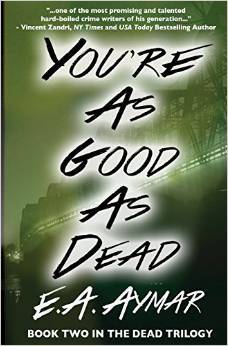
Book Review: You’re As Good As Dead by E.A. Aymar (Series, #2)
Summary:
Three years have passed since Tom Starks, a Baltimore community college professor and single father, tried to avenge his wife’s death by hiring a hit man. Tom is now hopeful that he has left the world of violence and murder behind. But he is drawn back into Baltimore’s criminal underground after he witnesses the assassination of an influential crime boss. To make matters worse, it appears the FBI has discovered Tom’s involvement, and they force him to work with them as an informer. Now Tom must navigate a deadly path between warring crime families and ruthless federal agents, even as he desperately tries to keep his involvement a secret from those closest to him.
Review:
Tom Starks is definitely an example of what happens when you make one grave error in a moment of passion. This man just can’t seem to learn from his mistakes. The book opens with him dropping off money to the crime boss to keep quiet, and he witnesses the crime boss being taken out. The FBI then approaches him to infiltrate the battle between two different crime families. It’s help them or go to prison. Tom chooses helping of course.
The most interesting part of the story to me was when one crime family sends twin Black woman assassins to live with Tom. It’s a bit unclear even to Tom if they’re there to keep him quiet or keep him safe. I liked the characterization of the sisters. Yes, they’re involved in crime, but we find out the crime family’s boss essentially found them as teenagers and saved them from the streets. So they feel obligated to the crime family. They can be violent but also kind. I was particularly fond of how the sisters interact with the family’s pet bunny.
Tom clearly thinks of himself as the good guy but to the reader he’s really not one. He did, after all, hire a hit man. It seems easy to push his boundaries and to get him to do ever increasingly ethically wrong things. He also, in his spare time, sleeps with his dead wife’s sister – who is still married. He tries to protect his adopted daughter by pushing her away out of the house and never telling her anything about what’s really going on or doing a particularly great job of listening to her. This book is a story of a man’s continual descent.
It’s been a long time since I accepted this review copy, and I feel my reading tastes changed in the meantime. I used to be more interested in violent books than I am now. Now I need the violence to be making a statement about something, and I don’t think this one is making a statement. Plus, there is definitely a lot of violence – beatings, murders, and tortures. (No sexual assault though).
This is a book about violence and an ethically questionable man falling further and further into a descent of the loss of light. There is no hope at the end of the book. There seems to be no way out. Does this count as a cautionary tale about the ever-reaching effects of choosing retaliation over transformative justice? I think maybe. For someone like myself who already believes in choosing transformative justice over retaliation, it wasn’t illuminating, though, simply a tale with an expected sad trajectory.
3 out of 5 stars
Length: 290 pages – average but on the shorter side
Source: Kindle copy from author in exchange for my honest review
Buy It (Amazon, not available on Bookshop.org)
Previous Book in Series:
I‘ll Sleep When You’re Dead, review
If you found this review helpful, please consider tipping me on ko-fi, checking out my digital items available in my ko-fi shop, buying one of my publications, or using one of my referral/coupon codes. Thank you for your support!
Book Review: Made in China: A Memoir of Love and Labor by Anna Qu

Summary:
When Anna Qu was in high school, she had her guidance counselor call child protective services because her mother was making her work without pay in the family sweatshop. Her memoir uses this moment as the way into telling her life story. Of what happens when a family member is seemingly randomly selected as the one to ostracize.
Review:
I was immediately intrigued by this book because I thought – wow, what kind of mother brings her child to the US only to turn around and force her to work in a sweatshop? I could wrap my head around a mother owning and running a sweatshop. I could even imagine having your child work in a sweatshop in a different cultural context (due to need, due to cultural expectations, etc…). But the usual immigration story is a desire for your child to have a better life than your own. How does that compute if your own life is owning the sweatshop? I had to find out.
Anna’s mother immigrated to the US from China, leaving her in the care of her grandparents. She felt loved, but that changed when she joined her mother, new stepfather, and two new half-siblings in the US. An early warning sign of what is to come is seen at her arrival party thrown to celebrate her family’s ability to bring her over from China. How that party went awry and how the relationship with her mother started to fall apart is one of the most painful and eloquent scenes in the book.
Of course because this is a memoir we never get to know Anna’s mother’s motivations. But we do see some of her perspective revealed through the case worker, case documents, and what Anna’s grandmother had to say about it. A strength of this book is how the author is able to explore her mother’s own trauma without excusing her actions.
I was a ghost haunting a family that wanted nothing to do with me, and the loneliness left a tightness in my chest.
location 392
But Anna’s family wasn’t the only one to other her. Society did as well. Classmates perceived her as different and distanced themselves from her. When she went away to college, she did so without any familial support and found nothing at college was set up for people like her. She struggled to find places to stay on winter breaks, had to advocate to be declared independent from her family so she could get financial aid, and more. Thus we see the pain of noninclusive societies. How societal inclusion is even more important for people being denied by their own families.
The author also examines the two-pronged issue of sweatshop labor and workaholism. She views this as having started out as a necessity to make it in the US that then became a way of being. Although the author acknowledges the exploitation of her own experience, she takes the time to point out how much worse it is for other people. For example, undocumented workers with no legal recourse.
Thus, the book explores what makes family, society, and workplaces abuse some and not others. It provides no easy answers but is a memorable call for greater inclusivity and empathy. Recommended for readers of memoirs with an interest in intergenerational trauma and/or immigration and labor issues.
4 out of 5 stars
Length: 224 pages – average but on the shorter side
Source: Netgalley
Buy It (Amazon or Bookshop.org)
If you found this review helpful, please consider tipping me on ko-fi, checking out my digital items available in my ko-fi shop, buying one of my publications, or using one of my referral/coupon codes. Thank you for your support!
Book Review: The Queen of the Cicadas / La Reina de las Chicharras by V. Castro

Summary:
You’ve heard of Bloody Mary and Candyman but have you heard of La Reina de las Chicharras? The legacy says she’s a Mexican farmworker named Milagros who was brutally murdered in 1950s Texas then given new supernatural life by the Aztec goddess of death, Mictecacíhuatl. In 2018, Belinda Alvarez arrives in Texas for a friend’s wedding on the farm that inspired the legacy of La Reina de las Chicharras. But is it just a legacy or is it real?
Review:
I’m a woman of a certain age. I know that shit isn’t always right.
Chapter 9
This struck me as a Latinx, female-led version of Candyman, only, over time, La Reina de las Chicharras comes to protect the downtrodden who call her.
Milagros’s life story that leads to her becoming La Reina is told in parallel with Belinda’s discovering her story and coming into her own realizations about Mictecacíhuatl. I really resonated with the Milagros chapters but struggled to relate to Belinda. She needed more depth and roundness to seem as real as Milagros. Some additional chapter breaks could also help with the jumping perspectives. In general, though, the dual perspectives worked and the uniqueness of the storyline kept me quite engaged to find out what would happen.
In addition to the strong Latinx content, the Indigenous history of Mexico is present. Milagros’s relationship especially to the Indigenous people who were brutally colonized is drawn clearly. There is also relatively significant queer content here. Milagros is a woman who loves women. There are two important gay male characters, and Belinda exhibits fluid sexuality, although she never gives a label to this.
Two things in this book were at ethical odds with me. First, Belinda is written as a woman in addiction who then never overcomes it (or even tries to) in spite of her character arc seeming to indicate that she has been transformed in a positive way. I’m ok with a realistic depiction that not everyone finds recovery, but it bothered me that it comes across as a positive transformation when she remains in addiction. It’s relatively clear that this is a bit of a vengeance fantasy. I understand the importance and role of having a place for anger at injustice to go. But my own spiritual beliefs uphold forgiveness over vengeance, so my world view differs.
If you like urban legend style horror and want to see women in the lead, then you will likely enjoy this read. Those offended or disturbed by the idea of the universe holding multiple gods and religions simultaneously should likely look elsewhere.
4 out of 5 stars
Length: 224 pages – average but on the shorter side
Source: NetGalley
Buy It (Amazon or Bookshop.org)
If you found this review helpful, please consider tipping me on ko-fi, checking out my digital items available in my ko-fi shop, buying one of my publications, or using one of my referral/coupon codes. Thank you for your support!
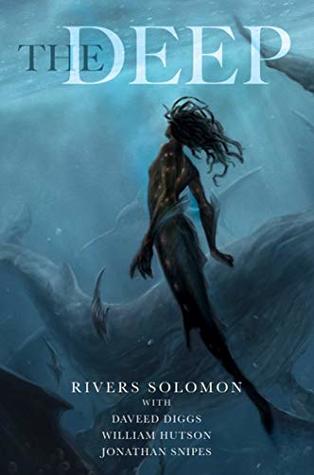
Book Review: The Deep by Rivers Solomon with Daveed Diggs, William Hutson, and Jonathan Snipes
Summary:
Yetu is the historian for her people – the mermaid descendants of pregnant enslaved African women thrown overboard from slave-ships before they could give birth. As the historian, Yetu holds the painful memories of her people, helping them to experience them once a year. But the pain of holding the memories is more burdensome for Yetu than for previous historians, as she is more sensitive than any historian before her. One year, in the middle of the history ceremony, she flees for the surface in an act of self-preservation. Can she both preserve herself and not abandon her people?
Review:
This book wowed me, taking my breath away from start to finish. If you know you like mermaid stories and want a fresh take on them, just go pick this up immediately.
The number of authors is large because this book was inspired by a song by the hip-hop group, .clipping. I love that the song authors gave permission to Rivers Solomon to write this book inspired by the song, and Solomon in turn credited them for the book. It’s a beautiful collaboration, and the song is well-worth the listen.
No one ever says explicitly that Yetu is neurodiverse, but it’s clear that she is. Her neurodiversity both made her a candidate to be the historian but also made the task soul-crushing and life-destroying for her. I love that no one in the book ever decides that Yetu is the one at fault for this. In other words, Yetu is not blamed for this problem, rather the culture is questioned and it is wondered how sustainable this model is if it doesn’t work for everyone in the culture. Similarly, although Yetu on some level wants to break fully away from her society, she also feels a responsibility to them and wrestles with how to be loyal to both them and herself. The questions that Yetu asks herself in this process struck me as so poignant and painfully real.
Was there anything about her that wasn’t a performance for others’ gratification?
(location 17%)
Is this my curse? To be unfathomable?
(location 58%)
But this isn’t just a book about a culture being a space for those both neurotypical and neurodiverse, it’s also a myth that demonstrates the role of intergenerational trauma. It shows intergenerational trauma rather than telling, and that is powerful.
As with all of Rivers Solomon’s work, there is also queer content in this book. There is gender fluidity (in the mermaids) and a queer relationship between Yetu and a two-leg. I thought this was one of the more artful relationships between a mermaid and a land dweller I’ve seen.
Recommended for readers looking for Black mermaids, a neurodiverse main character, and/or a queer relationship between a mermaid and a land dweller.
5 out of 5 stars
Length: 192 pages – average but on the shorter side
Source: Library
Buy It (Amazon or Bookshop.org)
If you found this review helpful, please consider tipping me on ko-fi, checking out my digital items available in my ko-fi shop, buying one of my publications, or using one of my referral/coupon codes. Thank you for your support!
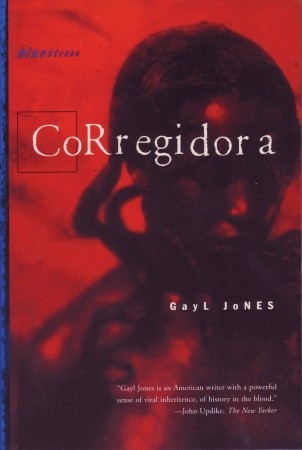
Book Review: Corregidora by Gayl Jones
Summary:
First published in 1975, this explores the adult life of Ursa Corregidora, a Black woman blues singer haunted by trauma – both intergenerational and the violent loss of her fertility. Her great-grandmother and grandmother both were enslaved by Corregidora – a Portuguese enslaver in Brazil. He raped both of them, meaning he was the father to all the Corregidora women until Ursa herself. Her female ancestors constantly told her the importance of keeping the truth of their suffering alive through telling the story down through the family. So what will happen to the story now that Ursa, an only child, can no longer have children of her own?
Review:
This made it to my to be read pile before the current surge in interest in the history of the blues, partially coming from the newly released movie The US vs. Billie Holiday. This book demonstrates how clearly the blues and the trauma inflicted on Black folks in the US are intertwined, with the blues granting an outlet for speaking on at least some of the suffering but also a source of Black joy.
I have seen some reviews talk about how this book is about Ursa’s anger. I strongly disagree. This book is about Ursa’s intergenerational and current trauma, but she is absolutely not, as the GoodReads summary states, “consumed by her hatred of the nineteenth-century slavemaster [Corregidora].” Ursa suffers from trauma and struggles to deal with this trauma, but she is not consumed by hatred. I dislike how this summary seems to place the blame for her suffering upon Ursa. Ursa is doing the best she can with a whole pile of trauma. She’s not perfect, but, in my opinion, this isn’t some cautionary tale about being consumed by hatred. It’s an eloquent depiction of the intergenerational trauma of slavery and racism.
It is so immediately understandable why Ursa’s whole world is rocked when she loses her fertility due to abuse at the hands of her husband. (This happens very early in the book and is not a spoiler). Not only does she have a drive to have children that many women have, but she also has the lifelong expectation that she will fight injustice and white supremacy by passing the true story of what happened to the women in her family down along to the next generation. How can she manage her life when it becomes impossible for her to fulfill that expectation?
This book is not just about fertility/infertility and intergenerational trauma but also about the blues. Why Ursa is so drawn to the blues and what she is willing to give up and fight for in order to continue to sing them. The balance of moving among these themes is handled very well.
There are also some difficult moments where we see that Ursa is homophobic. She has a female friend who engages in relationships with other women and Ursa is, at the very least, uncomfortable with this. However, I do not think the book is necessarily in agreement with Ursa. Time is spent discussing why two Black women might be empowered by loving each other. However, time is also dedicated to discussing how white women have also raped enslaved (and servant) Black women, and that memory is part of what makes Ursa so uncomfortable. It is not an easy topic, and there is also the additional layer that Ursa finds this out right after she’s lost her fertility and others are questioning whether she counts as a woman anymore due to this. I think this section is handled honestly but readers who are more sensitive to negative reactions to queerness should be aware of its presence in this book.
This book is an engaging, powerful, and in many ways, unexpected, read. While I think everyone could get something out of this, I specifically want to mention that if you’ve read the white women’s feminist classics of the 1960s and 1970s, you definitely need to pick this one up and diversify your perspective.
4 out of 5 stars
Length: 192 pages – average but on the shorter side
Source: Library
Buy It (Amazon or Bookshop.org)
If you found this review helpful, please consider tipping me on ko-fi, checking out my digital items available in my ko-fi shop, buying one of my publications, or using one of my referral/coupon codes. Thank you for your support!
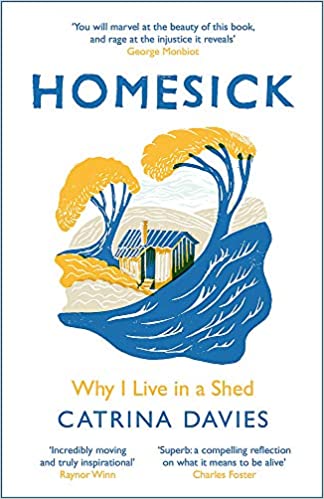
Book Review: Homesick: Why I Live in a Shed by Catrina Davies
Summary:
Catrina was 31 and very tired of never quite being sure if she could even make the rent on her box-room in a home she shared with four adult roommates (plus one child). With the cost of housing in the UK, she knew the odds were stacked against her to both be able to afford better housing and to have time for her artistic pursuits. So she decided to opt out by taking up residence in her father’s abandoned shed in Cornwall. She doesn’t have a toilet but she does have time to surf, write, and make music. This memoir both chronicles her decision and beginnings in the shed, as well as gives deep consideration to the housing crisis, consumerism, and finding the time to truly live.
Review:
I was immediately intrigued by the name of this book. It’s not why I live in a tiny house. It very explicitly calls it a shed. When I saw this was set in the UK, I was even more intrigued. As an American, my pre-existing understanding was that the UK has a robust system for caring for the poor, thinking specifically of the dole and council housing. It seemed to me that this must have been a choice to live in a shed, and I wanted to know more about this counter-cultural choice. This is indeed a beautiful counter-cultural memoir that surprised me by illuminating how much I didn’t know about the realities of the UK’s housing situation currently.
Catrina artfully weaves in both facts about housing in the UK and her own thoughts on modern culture within the story of her moving to and setting up the shed. (I would call it her first year in the shed, but the author’s note is that she actually condensed several years into one to make it more of a story). For example, while she asks her father for permission to live in his old small business’s shed, we find out that the shed is not zoned for housing, so, while she has the owner’s permission, what she is doing is still technically illegal. I also learned a lot about lords and how much of her area of Cornwall is actually owned by a lord with a castle on an island who will randomly make decisions like to charge for parking when previously people just parked for free to enjoy the ocean. Obviously a lord has no need for this money. I am still jarred by the idea of an actual lord running most of the show in a town. This is just one of the many examples of the inequities that remain in the UK that I had not previously known about.
When not discussing housing, Catrina explores gardening, surfing, making music, and writing. She discusses how living in the shed rent-free enables her to take low-paying jobs that leave her with enough time and energy to enjoy these pursuits. Living in the shed puts her closer to nature, and she becomes a bit obsessed with Walden (as a New Englander, I really wanted to enlighten her about how Walden Pond isn’t all it’s cracked up to be and how many moneyed connections, including in his own family, Thoreau actually had, partially thanks to having graduated from Harvard). While this may seem like a digression, it actually leads me quite smoothly into my main critique of the book, which is that I do wish the author demonstrated a bit more insight into her own privilege. She only can live in the shed because her father bought and paid for it. There is intergenerational assistance and provision here, even if she doesn’t recognize it as such. I’m not saying that it’s the same thing as having a trust fund handed to you, but it’s also not the same thing as her friends who squat in sheds of their own making on public land. Similarly, she, for example, showers at the homes of the people who she gardens for (often with their permission, but not always). She couldn’t take these moments of comfort she loves so much if those people hadn’t bought into the housing game. She may feel she’s opted out of society, but has she really?
Those who enjoy memoir as a way to gain insight into a different type of life than their own will not be disappointed by this book. This book made me think about what I am doing in my life because I want to versus what I am doing just because my culture pointed me here, and I appreciate that. I also enjoyed getting to vicariously surf in Cornwall.
4 out of 5 stars
Length: 256 pages – average but on the shorter side
Source: Purchased
Buy It (Amazon, this book is not available on Bookshop.org)
Get the Reading Group / Book Club Discussion Guide
A beautifully graphic designed 2 page PDF that contains: 1 icebreaker, 9 discussion questions arranged from least to most challenging, 1 wrap-up question, 3 read-a-like book suggestions
View a list of all my Discussion Guides.
If you found this review helpful, please consider tipping me on ko-fi, checking out my digital items available in my ko-fi shop, buying one of my publications, or using one of my referral/coupon codes. Thank you for your support!
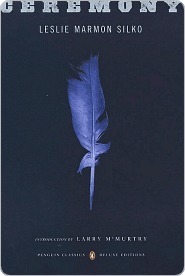
Book Review: Ceremony by Leslie Marmon Silko
Summary:
Tayo, an Indigenous Laguna man, returns from being a prisoner of war of the Japanese in WWII without his cousin. Cousin is the technically accurate word, but since Tayo grew up in his cousin’s household after his mother left him there brother felt more accurate. Tayo is half-white and has always felt estranged, but this feeling is only heightened after the war. He is suffering from shell-shock and feels emptiness in the alcohol and violence the other veterans take solace in. When his grandmother sets him up with a ceremony with a shaman with unusual ways, things start to change.
Review:
He wanted to walk until he recognized himself again.
61% location
After years of reading many books about alcoholism – both its ravages and quitting it – I’ve started having to actively seek out the stories that are a bit less well-known. Now, this book is well-known in Indigenous lit circles, but I’ve only rarely heard it mentioned in quit lit circles. I was immediately intrigued both due to its Indigenous perspective (this is own voices by an Indigenous female author) and due to its age (first published in 1986). Told non-linearly and without chapters, this book was a challenge to me, but by the end I was swept into its storytelling methods and unquestionably moved.
He was not crazy; he had never been crazy. He had only seen and heard the world as it always was: no boundaries, only transitions through all distances and time.
95% location
This book is so beautiful in ways that are difficult to describe. Its perspective on why things are broken and how one man can potentially be healed (and maybe all of us can be healed if we just listen) was so meaningful to me. I’m glad I stepped out of my comfort zone to read it.
We all have been waiting for help a long time. But it never has been easy. The people must do it. You must do it.
51% location
I really enjoyed how clear this book makes it that any care for addiction delivered needs to be culturally competent to truly serve the person who needs help. It also does not shy away from the very specific pain of being an Indigenous person in the US, and how addiction both seeks to quell that pain and rebel against the oppressive society.
It’s rare for me to re-read a book, but I anticipate this being a book I re-read over the course of time. I expect each reading will reveal new things. For those who already know they enjoy this type of storytelling, I encourage you to pick this up. Its perspective on WWII’s impact on Indigenous peoples and alcoholism is wonderful. For those who don’t usually read this type of story, I encourage you to try out something new. Make the decision to just embrace this way of telling a story and dive right into it. Especially if you usually read quit lit or post-WWII fiction.
4 out of 5 stars
Length: 270 pages – average but on the shorter side
Source: Library
Buy It (Amazon or Bookshop.org)
If you found this review helpful, please consider tipping me on ko-fi, checking out my digital items available in my ko-fi shop, buying one of my publications, or using one of my referral/coupon codes. Thank you for your support!
Book Review: An Indigenous People’s History of the United States by Roxanne Dunbar-Ortiz

Summary:
From the Revisioning History series, this explores United States history with a focus on the Indigenous peoples. History is explored in 11 short to medium length chapters in chronological order.
Review:
I majored in US History and took a full-length course on the Indigenous peoples of the US. I also previously was interested in the American Indian Movement of the 1970s, so read a few books about and by the people of that movement. I was kind of expecting, since this is a short book targeted to a mainstream audience, that I would not encounter too much that was new, but I was pleased to discover my expectations were incorrect.
This book was published in 2014 and thus took a more modern perspective than even my course late in the first decade of the 2000s took. It ensures a perspective not of we’re studying these ancient lost peoples but rather we’re studying the history of people who exist now in modern society and how genocide was enacted against them. The exploration of colonization and how it impacted Indigenous peoples is much more nuanced than the simple guns, germs, and steel history I’d studied in college. What I learned through this book is that colonization was strategic. It wasn’t just a happenstance of how germs worked out when the nations met and greater firepower. Of course, my coursework did acknowledge colonization, but not to the extent it was delineated in this book.
Through economic penetration of Indigenous societies, the European and Euro-American colonial powers created economic dependency and imbalance of trade, then incorporated the Indigenous nations into spheres of influence and controlled them indirectly or as protectorates, with indispensable use of Christian missionaries and alcohol….a colonizing regime institutionalizes violence.
4%-5%
To me an interesting aspect of this book was its discussion of Indigenous peoples and alcohol. Growing up, I definitely heard the myth that Indigenous peoples are more genetically prone to alcoholism. In recent years, I heard the theory that rates of addiction are higher in oppressed peoples, which makes sense as alcohol and other addictive substances can provide temporary relief from trauma. This book pushed my understanding two steps further. First, alcohol being used as an intentional weapon of colonization, calling it a “weapon of war” (21%), and noting that it wasn’t just introduced, it was also promoted (13%). This book also drew my attention to the idea that, for at least some Indigenous peoples, acting the part of the “drunk Indian” can be a form of protest. I read the article the author cites as the origin of this theory, and reading fiction work by Indigenous peoples seems to support this theory as well, for at least some instances. (See the book Ceremony, I’ll be reviewing it soon).
After covering the American Indian Movement, the book wraps up with a discussion of the expanding US imperialism and modern day colonization by historic colonizers (the US and the UK are specifically discussed). Through this, I learned of a potential connection between the Monroe Doctrine and overpowered policing forces. I also learned about the modern forced removal of the Chagossian people from Diego Garcia, an island in the Indian Ocean, which is now used by the US for a military based (rented from the UK). This is just one example of many given in the chapter, but it’s the one that stuck out the most to me, partially because I didn’t know the US even had a military base in the Indian Ocean but also because the book describes the forced removal including murdering every single pet dog on the island. While of course the forced removal alone is terrible there was just something about the added insult of murdering beloved pets that ground the whole event into my brain.
I have covered just a small snippet of what I learned in this book. It is well-written. The chapters are short to medium length and filled with information. There’s nothing extraneous here. It gets right to the point, which I appreciate. The chronological order is helpful as well for leaving the book and coming back to it as you have time. Highly recommended. I’ve already added several of the other books in this series to my wishlist.
4 out of 5 stars
Length: 218 pages – average but on the shorter side
Source: Amazon
Buy It (Amazon or Bookshop.org)
If you found this review helpful, please consider tipping me on ko-fi, checking out my digital items available in my ko-fi shop, buying one of my publications, or using one of my referral/coupon codes. Thank you for your support!
Book Review: The Law of Lines by Hye-Young Pyun (translated from Korean by Sora Kim-Russell)

Summary:
Two young women’s lives are told in parallel beginning with a moment of intense misfortune. Se-oh, who normally avoids leaving the home she shares with her father at all, comes home from an outing he encouraged her to go on to pick up a coat he bought for her birthday to find their home up in flames with her father inside. The detective tells her that her father set off the explosion himself due to debt, setting wheels turning in Se-oh’s life. Ki-jeong, a high school teacher, has a situation with a difficult student come to a head at the same time as she finds out that her younger half-sister’s body was found in a river. How will these two women’s lies come to entwine?
Review:
When I heard about this, it was in the context of it being a thriller. I’m not sure I’d personally call it a thriller, more of a quiet, subtle, literary mystery.
I was deeply moved by Se-oh’s story. Although I did not previously know how debt works in South Korea, once I understood I felt so much empathy for the horribly tight spot Se-oh and her father found themselves in. The more of Se-oh’s story was revealed, the more saddened I was for her. It was like if you saw the aftermath of a car crash and then watched a slow-motion replay of how it came to be. That’s what reading Se-oh’s story was like. It was through Se-oh’s story that I learned the most things that were new to me about South Korean culture, and her story was also what led to me looking up some aspects of it and learning even more.
I was less engaged by Ki-jeong’s story. While I did feel empathy for her being stuck in a job she didn’t like and the apparently difficult situation with her half-sister, I didn’t feel that enough was revealed about her that was positive for me to really be on her side. I suspect I may have gotten more out of Ki-jeong’s story if I was more familiar with South Korean culture, but this is a shortcoming of my own and not the book.
If you are looking to travel to South Korea via subtle yet engaging mystery, I would recommend picking this one up.
3 out of 5 stars
Length: 288 pages – average but on the shorter side
Source: Library
Buy It (Amazon or Bookshop.org)
If you found this review helpful, please consider tipping me on ko-fi, checking out my digital items available in my ko-fi shop, buying one of my publications, or using one of my referral/coupon codes. Thank you for your support!
Book Review: Native: Identity, Belonging, and Rediscovering God by Kaitlin B. Curtice

Summary:
This is simultaneously a memoir about her faith journey and an opinion piece from her perspective as both a Christian and a member of the Potawatomi nation (a nation Indigenous to both the US and Canada). Kaitlin fearlessly grapples with the historical and current weaponization of Christianity, how she interprets Christianity in her own life, and how her Potawatomi knowing comes into her faith.
Review:
This book, to me, is first and foremost beautiful. I read it on my kindle fire just so I could enjoy its beauty in full-color and larger size than my paperwhite. There are five parts, and each part begins with an illustrated poem from Potawotami tradition that ties into the designated part.
A lot about this book is difficult to categorize, and that is part of its strength and beauty. It is partially a memoir, although not necessarily told in a linear fashion. In fact, it reminded me quite a bit of Braiding Sweetgrass (review). It is both about a topic the author has a lot of knowledge on (the experience of Christianity as an Indigenous person), but also is a memoir because her knowledge and herself cannot be separated as they inform each other.
Although I am not biracial myself, I imagine this book would be meaningful to readers who are. Kaitlin, while a full member of the Potawatomi nation, is half white and half Potawatomi. In addition to this, her parents split up when she was young, so she also experienced both living on the reservation and living off the reservation in a white town in a white church with folks essentially considering her to be white and ignoring her Potawatomi self. She discusses what it means to her to be able to pass for white and why she generally as an adult chooses not to. (She even flies with her tribal membership card, which while officially accepted, is usually not recognized by the first TSA agent she sees).
Her insights into how to improve what is broken or ostracizing in the church in the US were simultaneously interesting and challenging. I can imagine a reader very deeply enveloped in the church may feel challenged by her willingness to question what is often accepted as the word of God and also by her desire to draw in aspects of Potawatomi ways. Similarly, I can imagine a reader who has already cast aside the church might wonder why she bothers staying with something that may seem to them to be so obviously broken. This is the beauty of the book. Kaitlin refuses to do what might seem to either side to be the easiest and rather forges her own way, encouraging others to do the same.
The problem isn’t that we search for truth; the problem is that we become obsessed with our belief that we hold the truth, and we destroy entire cultures in the process.
52%
I know I am not the only person who has been wondering lately about other white women who support the patriarchy, and Kaitlin directly addresses this with her insight that comes from being a white passing Indigenous woman in white conservative spaces. I found what she had to say helped me both establish some understanding for something I previously could not understand at all and consider new ways to potentially reach these women.
Unless your lived experience is very similar to the author’s, I expect this will be a book that challenges you. It certainly challenged me. But to be challenged is to grow, and I thank the author for sharing her understanding of the world and her experiences. Being challenged helped me to grow in my understanding. Recommended for all but especially for those who are seeking a greater understanding of the church in the US.
4 out of 5 stars
Length: 208 pages – average but on the shorter side
Source: Purchased
Buy It (Amazon or Bookshop.org)
If you found this review helpful, please consider tipping me on ko-fi, checking out my digital items available in my ko-fi shop, buying one of my publications, or using one of my referral/coupon codes. Thank you for your support!
 Support my work with a tip or browse my shop for curated book club guides, how to guides, cross-stitch patterns, and more!


This work by Amanda Nevius is licensed under a Creative Commons Attribution-Noncommercial-No Derivative Works 3.0 United States License.
 Opinions of a Wolf