
Archive
Book Review: Sula by Toni Morrison

A lyrical and haunting novel about two Black women whose lifelong friendship is tested by betrayal, love, and the weight of their small-town community’s judgment.
Summary:
Sula and Nel are two young black girls: clever and poor. They grow up together sharing their secrets, dreams and happiness. Then Sula breaks free from their small-town community in the uplands of Ohio to roam the cities of America. When she returns ten years later much has changed. Including Nel, who now has a husband and three children. The friendship between the two women becomes strained and the whole town grows wary as Sula continues in her wayward, vagabond and uncompromising ways.
Review:
This was my second Toni Morrison novel—the first being The Bluest Eye, which I read back in college. Morrison’s prose is deeply lyrical, which makes her books swift reads on the surface, even when they delve into painful and challenging themes. Sula is no exception.
Each chapter is titled with the year it takes place in, but only covers a brief vignette from that year. Despite spanning several decades, this is a short novel, structurally and in page count. Though the title suggests a singular character focus, Sula is as much about a place—the Bottom, a Black neighborhood in a Southern state situated on the hillside, land the white residents had no interest in. The reason for its ironic name is revealed in the first chapter through a racist tale, setting the tone for the book’s critique of systemic racism.
Indeed, one of the novel’s most striking accomplishments is how clearly it shows that systemic racism ruins lives, whether characters comply with social expectations or resist them. For me, Nel represents compliance while Sula represents defiance—yet neither of them leads a life free from pain. Every person in their orbit suffers in some way, and that suffering is deeply entangled with the racist systems surrounding them.
The edition I read included an introduction in which Morrison writes: “Female freedom always means sexual freedom, even when—especially when—it is seen through the prism of economic freedom.” While I respect Morrison’s craft, I don’t personally agree with this framing. Throughout the book, the freest female characters are also the most sexually unrestrained, choosing partners without regard to consequences. For me, this reflects the central tensions I’ve often felt when reading Morrison’s work: I recognize the literary prowess but don’t agree with this belief. As someone who values intentionality in relationships and ethical sexuality, I believe there is freedom in discernment. My personal worldview differs from Morrison’s here, and I think that’s worth naming—especially since this quote helped me finally articulate why I sometimes feel at odds with what I’m “supposed” to take away from her narratives.
Of course, I also acknowledge that I am not Morrison’s intended audience. She has stated clearly that she writes for Black people—and I am a white woman. I honor that intention, while also appreciating the beauty, lyricism, and cultural specificity of this novel. Morrison evokes a place, a time, and a community with precision and poetry, showing rather than telling how racial injustice permeates generations.
For readers in recovery, or those who love someone with substance use disorder or alcohol use disorder, be advised that this book contains a disturbing scene involving the violent death of a character who struggles with addiction. A mother sets her son on fire, intentionally killing him because of his drug use. It’s a horrific and deeply stigmatizing portrayal. While I understand that literature doesn’t require characters to always make the “right” choices, scenes like this can be deeply harmful and may reinforce stigma around addiction. To anyone reading this who is struggling: You don’t deserve to die. You are not disposable. You can recover. We do recover. I acknowledge that the story is set in a time when resources for addiction recovery were nearly nonexistent, especially for a Black man. But violence is never the answer, and stories like this can perpetuate dangerous beliefs about addiction and worth.
With regards to diversity, the book explores colorism in the Black community, as well as racism faced by Black folks coming from immigrant white communities. It has multiple characters who fought in World War I who struggle with mental health afterwards. It also has a character who uses a wheelchair and is missing a limb. There is not any LGBTQIA+ representation that I noticed.
This is a novel that quietly devastates, not through high drama, but through its unflinching portrayal of how systemic racism, personal grief, and societal expectations shape lives over time. It’s beautifully written, deeply character-driven, and emotionally complex. Whether or not you’re part of Morrison’s intended audience, Sula is a compelling and powerful read. If you’re in recovery or close to someone who is, approach with care due to the painful and stigmatizing depiction of addiction. For those looking for fiction that treats mental health and recovery with care, check out my novel Waiting for Daybreak.
If you found this review helpful, please consider tipping me on ko-fi, checking out my digital items in my ko-fi shop, buying one of my publications, using one of my referral or coupon codes, signing up for my free microfiction monthly newsletter, or tuning into my podcast. Thank you for your support!
3 out of 5 stars
Length: 174 pages – average but on the shorter side
Source: Library
Buy It (Amazon or Bookshop.org)
Get the Book Club Discussion Guide
A beautifully graphic designed 2 page PDF that contains: 1 icebreaker, 9 discussion questions arranged from least to most challenging, 1 wrap-up question, and 3 read-a-like book suggestions
View a list of all my Book Club Guides.
Book Review: A Sunny Place for Shady People by Mariana Enríquez, translated by Megan McDowell

A chilling yet deeply human collection of short stories where ghosts, goblins, and the macabre collide with everyday life—showcasing a rising star in Argentinian literature.
Summary:
Welcome to Argentina and the fascinating, frightening, fantastical imagination of Mariana Enriquez. In twelve spellbinding new stories, Enriquez writes about ordinary people, especially women, whose lives turn inside out when they encounter terror, the surreal, and the supernatural. A neighborhood nuisanced by ghosts, a family whose faces melt away, a faded hotel haunted by a girl who dissolved in the water tank on the roof, a riverbank populated by birds that used to be women—these and other tales illuminate the shadows of contemporary life, where the line between good and evil no longer exists.
Lyrical and hypnotic, heart-stopping and deeply moving, Enriquez’s stories never fail to enthrall, entertain, and leave us shaken. Translated by the award-winning Megan McDowell, A Sunny Place for Shady People showcases Enriquez’s unique blend of the literary and the horrific, and underscores why Kazuo Ishiguro, winner of the Nobel Prize for Literature, calls her “the most exciting discovery I’ve made in fiction for some time.”
Review:
This diabolical collection of 12 horror stories, each with at least a touch of the supernatural, blends the speculative with the deeply human. While steeped in Argentinian culture, the themes—grief, fear, injustice—resonate universally.
My favorite stories in this collection explore women’s suffering and resilience. “Metamorphosis” follows a woman undergoing a hysterectomy as she confronts medical misogyny, while “Different Colors Made of Tears” examines the far-reaching impact of domestic violence, even on those who haven’t experienced it firsthand. Other stories explore moral dilemmas, like the tension between wanting to help others while maintaining personal safety, or the existential fear of cancer.
The speculative elements vary in intensity—some stories lean fully into the fantastical, while others offer just a whisper of the supernatural. In “Different Colors Made of Tears,” a vintage clothing shop buys dresses from an elderly man—only to later discover that rumor has it he was abusive to his ex-wife. When women try on the dresses, they see horrific injuries appear on their own bodies, disappearing once the garments are removed. In contrast, “Metamorphosis” unfolds primarily as a starkly realistic medical narrative, with the speculative twist emerging only at the end, when a woman considers an unconventional body modification procedure to reclaim part of her lost uterus.
At times, I found the endings too abrupt. While this can work, in this case, I frequently felt like I was just settling in when the narrative was yanked away too soon. One small nitpick: a story features a character’s uncle who emigrated from Argentina to Vermont, where he became wealthy working for Boeing. Having grown up in Vermont and now working in the nonprofit sector here, I found this detail unrealistic. Vermont has exactly four Boeing employees—it’s just not a company with a presence in the state. A medical center, insurance company, or even Ben & Jerry’s would have been a more believable employer.
While most of the horror is not overly explicit, some stories do push boundaries. On-page content includes death, murder, torture, addiction, medical trauma, and the killing of a cat, while mentions of rape and confinement in tight spaces also appear. The collection is largely set in Argentina, with one story taking place in the U.S. To my understanding, all the characters appear to be white Argentines. Some disabilities, such as endometriosis, are explored, and one story features a gay couple. (Information on the current state of LGBTQIA+ rights in Argentina.) Another follows a woman reflecting on her codependent relationship with a partner struggling with Substance Use Disorder and being unhoused.
Overall, this is a dark, thought-provoking collection that blends psychological and supernatural horror with a sharp social lens. It tackles unsettling themes in ways that are both intimate and chilling. Recommended for readers who enjoy horror that lingers long after the final page.
If you found this review helpful, please consider tipping me on ko-fi, checking out my digital items available in my ko-fi shop, buying one of my publications, using one of my referral/coupon codes, or signing up for my free microfiction monthly newsletter. Thank you for your support!
4 out of 5 stars
Length: 257 pages – average but on the shorter side
Source: Library
Buy It (Amazon or Bookshop.org)
Get the Book Club Discussion Guide
A beautifully graphic designed 2 page PDF that contains: 1 icebreaker, 9 discussion questions arranged from least to most challenging, 1 wrap-up question, and 3 read-a-like book suggestions
View a list of all my Book Club Guides.
Book Review: The Ballad of Black Tom by Victor LaValle

Tommy is a hustler just taking care of himself and his dad in 1920s Harlem when an old white man invites him to play at his private shindig in his home.
Summary:
Charles Thomas Tester hustles to put food on the table, keep the roof over his father’s head, from Harlem to Flushing Meadows to Red Hook. He knows what magic a suit can cast, the invisibility a guitar case can provide, and the curse written on his skin that attracts the eye of wealthy white folks and their cops. But when he delivers an occult tome to a reclusive sorceress in the heart of Queens, Tom opens a door to a deeper realm of magic, and earns the attention of things best left sleeping.
A storm that might swallow the world is building in Brooklyn. Will Black Tom live to see it break?
Review:
The Lovecraft universe is a fascinating example of an author creating a world that then becomes the playground for a lot of other people’s imaginations. Legally! Beyond a story being technically set in a Lovecraft universe with Lovecraft characters, though, there’s an entire genre of speculative horror that sprung out of it called cosmic horror. Think Eldritch Gods. Secret societies. Tentacles.
I love cosmic horror. (I even have published a cosmic horror short story.) The thing is, though, most cosmic horror fans have a complex relationship with the genre because of Lovecraft’s blatant racism and xenophobia. So a lot of modern authors, fans of the universe itself but not the person, are writing their own cosmic horror stories that turn Lovecraft’s racism and xenophobia on its head. Enter The Ballad of Black Tom.
The author of this novella is a Black man who decided to take one of Lovecraft’s most xenophobic short stories (“The Horror at Red Hook“) and reapproach it from the perspective of a minor secondary character – Black Tom. Tommy lives in 1920s Harlem with a dad who’s a talented musician while he himself is not. He is, however, able to convince white folks outside of Harlem that he’s a talented musician and so he goes there to hustle them. He also has a variety of other side hustles including procuring magical items for people.
The first thing that struck me about this book was how it put a minoritized Lovecraft character front and center. I also noticed how Tommy doesn’t go by the name “Black Tom.” That comes later and, even when it does, Tommy is claiming the name from a place of power.
Part of the terror that Lovecraft’s characters often feel is that of potentially losing their place of privilege. Tommy is living in a blatantly racist society where he can’t even take a train too far out of his neighborhood without someone questioning or harassing him. Instead, what he has to lose is his community in Harlem. Something it takes him a while to figure out. Some of what tears that away from him is the cosmic horror. But some of that is the day-to-day horror of being Black man in 1920s Harlem. (Warning for police brutality in this book).
This novella hits all the notes a reader might want in a cosmic horror – existential dread, elder gods, a little blood, cult rituals. But it does it without the cringe-inducing racist asides. I found it easier to empathize with Tommy than I had with a main character in a cosmic horror in a while. Of course he wants the elder gods to come tear things up. Of course he does. What I wasn’t expecting was the note of…what have I done?…at the end or that I would agree with that too.
I will say, I didn’t enjoy was when the perspective shifted to that of the police officer. I would have preferred remaining in Tommy’s perspective throughout. There was also a hint that a song Tommy’s dad taught him would come back up in a meaningful way, and it didn’t. Perhaps I missed it.
Overall, this is a wonderful entry into the Lovecraft universe that gives voice to a character Lovecraft had maligned, written from an own voices perspective.
If you found this review helpful, please consider tipping me on ko-fi, checking out my digital items available in my ko-fi shop, buying one of my publications, using one of my referral/coupon codes, or signing up for my free microfiction monthly newsletter. Thank you for your support!
4 out of 5 stars
Length: 149 pages – novella
Source: Library
Buy It (Amazon or Bookshop.org)
Get the Book Club Discussion Guide
A beautifully graphic designed 2 page PDF that contains: 1 icebreaker, 9 discussion questions arranged from least to most challenging, 1 wrap-up question, and 3 read-a-like book suggestions
View a list of all my Book Club Guides.
Book Review: The Exorcist by William Peter Blatty

The book that came before the classic horror movie featuring a little girl who may or may not be possessed by a demon and the priest struggling with his faith called upon to help her.
Summary:
Actress and divorced mother Chris MacNeil starts to experience ‘difficulties’ with her usually sweet-natured eleven-year-old daughter Regan. The child becomes afflicted by spasms, convulsions and unsettling amnesiac episodes; these abruptly worsen into violent fits of appalling foul-mouthed curses, accompanied by physical mutation. Medical science is baffled by Regan’s plight and, in her increasing despair, Chris turns to troubled priest and psychiatrist Damien Karras, who immediately recognises something profoundly malevolent in Regan’s distorted fetures and speech. On Karras’s recommendation, the Church summons Father Merrin, a specialist in the exorcism of demons . . .
Review:
I’d seen the classic horror movie and, while I thought certain shots were gorgeous and the soundtrack was beautiful, I felt rather ho-hum about the story overall. Imagine my surprise when I found the book version simultaneously thrilling and intellectually engaging. A difference even more interesting since Blatty wrote both. (It’s more common for a different author to write the screenplay adaptation of a book.)
From the beginning of the book, there are three story threads. First there’s Chris, the divorced, wealthy, actress mother who is an atheist and her daughter who starts acting funny. Second, there’s Father Karras, a psychiatrist and a priest who is having a crisis of faith. Third, there are recent desecrations in a local church that a detective is investigating. These three threads merge by the end of the book. But their separate developments kept me simultaneously intellectually engaged and thrilled.
While there absolutely is the thrilling aspect of what is wrong with Regan and can she be healed/saved from it, I was drawn in by the exploration of faith. How it presents in different people, even those we assume must have a very strong faith or none at all. What it means to have faith. How having faith impacts people. How evil forces can use someone’s doubts and misunderstandings against them. (This part of the book reminded me of a more subtle version of The Screwtape Letters.)
I really felt both for Father Karras and for Regan. For the former, I understood how adult life had slowly worn down his youthful faith. How it was easier for him to believe in things when he was young than it was now in middle-age. And I also felt for Regan, whose mother left her completely unequipped to protect herself against forces of darkness. The fact that her mother forbid the nanny to mention God to her but also simultaneously allowed her to play with a Ouija board. If she’s so atheist as to not want a child to even know the concept of God, shouldn’t she also ban all religious items, including ones used for witchcraft, from her home? I don’t view this as a writing flaw but rather an accurate assessment of how often atheism attacks the concept of God but not of other supernatural forces. Indeed, I think demonstrating this was probably a part of the point.
The book does a good job of leaving it up to the reader to decide if Regan was actually possessed by a demon or having a psychosomatic experience in response to the trauma from her parents’ divorce. I’m sure you can tell from my review that I fall on the she was possessed side. You can see from the book how much more traumatic the 1970s viewed divorce for children than we do now. The 1970s brought no-fault divorce, and so the divorce rate went up, but there was still social stigma. So even though for the modern reader a simple, relatively amicable divorce with a bit of an absent father is nowhere near enough trauma for a child to have a psychotic break, for the audience in the 1970s with the stigma still fresh, it was. And the scientific side of why they think this might be is well-explained. It’s just to me it’s very clear this is a demon.
My experience of the book being about faith matches what Blatty said in interviews in his life. It’s interesting how that has been overshadowed by the cultural experience of the movie as a horror classic. Perhaps the book can be both. Indeed, theological horror is a genre.
The reason it’s not a full five stars for me is I felt like the last third of the book wasn’t as strong as the first two-thirds.
Let me leave you with my favorite quote from the book.
I think the demon’s target is not the possessed; it is us … the observers … every person in this house. And I think—I think the point is to make us despair; to reject our own humanity, Damien: to see ourselves as ultimately bestial, vile and putrescent; without dignity; ugly; unworthy. And there lies the heart of it, perhaps: in unworthiness. For I think belief in God is not a matter of reason at all; I think it finally is a matter of love: of accepting the possibility that God could ever love us.
page 345
Overall, this is a complex book of theological horror. It keeps the plot moving forward with multiple threads and compelling scenes while also taking the time to contemplate big questions about faith. Well worth the read, even if you have seen the movie, as it is a different experience altogether.
If you found this review helpful, please consider tipping me on ko-fi, checking out my digital items available in my ko-fi shop, buying one of my publications, using one of my referral/coupon codes, or signing up for my free microfiction monthly newsletter. Thank you for your support!
4 out of 5 stars
Length: 403 pages – average but on the longer side
Source: Library
Buy It (Amazon or Bookshop.org)
Get the Book Club Discussion Guide
A beautifully graphic designed 2 page PDF that contains: 1 icebreaker, 9 discussion questions arranged from least to most challenging, 1 wrap-up question, and 3 read-a-like book suggestions
View a list of all my Book Club Guides.
Book Review: Jaws by Peter Benchley
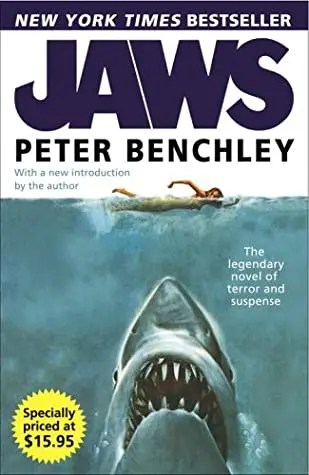
Get ready for shark week with this 1970s classic!
Summary:
A great white shark starts terrorizing a coastal town just as the money-making summer season begins. The classic, blockbuster thriller of man-eating terror that inspired the Steven Spielberg movie and made millions of beachgoers afraid to go into the water. Experience the thrill of helpless horror again—or for the first time!
Review:
As a New England girl born and raised, I can’t tell you how many times I’ve watched Jaws the movie. Everything about it is just so *chef’s kiss* perfectly small New England beach town. (The movie is set on Long Island, New York, but was filmed on Martha’s Vineyard, Massachusetts, and, let me tell you, everything about it reads New England to me.) Plus, my cat absolutely adores watching Jaws. She’s obsessed with that shark. With summer rolling around once again, I decided it was high time I read the book. The book is almost always better than the movie, right? Well, in this case, that almost really comes into play. (Spoilers ahead for both the movie and the book. If you haven’t seen this classic yet, please go watch it then come back to the book review.)
The book starts off strong with a close omniscient perspective of the shark getting ready to eat the drunk lady swimming in the ocean. The book could easily sway into anthropomorphizing territory, imagining the viciousness of the shark. But it consistently describes a creature whose instinct is to feed. What, exactly, made it come in to Amity and stick around is a mystery that is never solved. This first scene is one of the strongest in the book. But I have to admit I was hearing the absolutely classic movie soundtrack in my head while I was reading it, and we all know how essential that is at building suspense. So I’m not sure it’s safe to say I felt engaged purely because of the book.
But it didn’t take too long for the book to showcase itself as…worse than the movie. When we meet Sheriff Brody, he mentions a problem they had the previous summer where a Black gardener sexually assaulted six white women, none of whom would press charges. The only point of this from a narrative perspective is to demonstrate how the police department will keep things under wraps in order to protect the summer season. But it’s a hatefully racist way to establish this, narratively. Even if I charitably imagine that this is supposed to be pointing out the racial divide in Amity that is later even clearer in the book, there are better ways to do that than to play into this horribly racist myth of the serial Black assaulter of white women.
There are two other plot points in the book that weren’t in the movie at all. First, there’s that Brody’s wife cheats on him with Hooper because she feels some weird Feminine Mystique style ennui about her life as a housewife at a lower social class than she was before she got married. (We only see the sex in flashbacks she has about it and how strange and scary Hooper was). There is a large scene where she has lunch with Hooper first and talks about her sexual fantasies. Kind of slows down the pace of the suspense from the shark attacks.
The other additional plot point is that the mayor of the town is mixed up with the mafia because he had to take out a loan from a loan shark (har har) to pay his wife’s cancer treatment medical bills. (What on earth do other countries with nationalized health care do to justify characters taking out unwise loans? This is such a common plot device…but I digress.) The mafia wants the beaches to be kept open. This is a big motivator for why the mayor keeps insisting on it. But I don’t think this motivator is necessary. The economic pressure and need of a tourist town to keep their main tourist attraction open is more than enough motivation. Anyone who has any familiarity with a town that depends on seasonal tourism gets that. Spielberg was right to cut this from the movie. This also brings about a scene I found much more disturbing than any shark attack, which is that the mafia kills Brody’s son’s cat in front of his son, and then Brody takes the dead cat and throws it in the mayor’s face.
The final act where Quint, the old-time fisherman, takes Brody and Hooper out on his boat to hunt the shark is overall pretty good. There’s some nice tension between the three of them, and Quint really has to eat his words about the shark not being intelligent. It does not end with the 70s style bang of the movie. But I kind of liked the simplicity of the ending, leaving Brody to swim to shore and deal with the aftermath on his own without any reader audience.
I’ve seen some lists of the differences between the book and the movie with mistakes and inaccuracies on them, so I do want to clear up a couple of things. Brody is afraid of the water in the book. This is well-established; I’m not sure how people missed that. Mrs. Kintner does slap Brody in the book when she confronts him about the shark killing her son.
The version of the book I read also had an introduction by the author where we find out that he was, basically, a “summer person” himself – from a wealthy family and a legacy graduate of Harvard (his father also went to Harvard). His father was a novelist, and because of that connection, Benchley got an agent before he even had a book written. By Benchley’s own recollection, he sold the idea for Jaws and then they told him he needed to write the book, and the screenplay was sold before the book was even written. He took a first shot at the script, and Spielberg told him to throw out a lot of the stuff that I mentioned in my review as things I didn’t like. Moral of the story being privileged dude sold an admittedly solid idea based on the idea alone to someone else who directed it into it being a classic.
Overall, it was interesting to read the book behind the movie, but I also now have the perfect answer for the next time someone asks me, “When is the movie ever better than the book?”
If you found this review helpful, please consider tipping me on ko-fi, checking out my digital items available in my ko-fi shop, buying one of my publications, or using one of my referral/coupon codes. Thank you for your support!
3 out of 5 stars
Length: 320 pages – average but on the longer side
Source: Library
Buy It (Amazon or Bookshop.org)
Get the Book Club Discussion Guide
A beautifully graphic designed 2 page PDF that contains: 1 icebreaker, 9 discussion questions arranged from least to most challenging, 1 wrap-up question, and 3 read-a-like book suggestions
View a list of all my Book Club Guides.
Book Review: Hani and Ishu’s Guide to Fake Dating by Adiba Jaigirdar

In this Bangladeshi-Irish YA romance, Hani needs to convince her two best friends that she’s really bisexual. She lies and tells them she’s dating academically focused and acerbic Ishu who agrees to fake date in exchange for help being elected Head Girl.
Summary:
Everyone likes Humaira “Hani” Khan—she’s easy going and one of the most popular girls at school. But when she comes out to her friends as bisexual, they invalidate her identity, saying she can’t be bi if she’s only dated guys. Panicked, Hani blurts out that she’s in a relationship…with a girl her friends absolutely hate—Ishita “Ishu” Dey. Ishu is the complete opposite of Hani. She’s an academic overachiever who hopes that becoming head girl will set her on the right track for college. But Ishita agrees to help Hani, if Hani will help her become more popular so that she stands a chance of being elected head girl.
Despite their mutually beneficial pact, they start developing real feelings for each other. But relationships are complicated, and some people will do anything to stop two Bengali girls from achieving happily ever after.
Review:
I have a soft spot for Irish literature, and when I heard about this book by a Bangladeshi-Irish queer Muslim author with a bisexual main character, it landed on my tbr list very quickly. This was a quick read with an easy to follow story and a sweet, very low spice romance.
I enjoyed Hani and Ishu each separately as character. They take turns narrating in the first person, and I never lost track of who was speaking. This book uses the grumpy/sweet trope quite well. Ishu is only grumpy because she’s focused and willing to speak her mind. Hani quickly sees through that. Hani and Ishu’s cultures are intertwined beautifully in the book. I like it when a book doesn’t feel the need to stop and explain cultural things to the reader. It’s on us to look it up if we want to, and that’s when I really learn things. (Like when Hani makes Ishu porota for breakfast. I looked that up right away. Yum!)
As a bisexual person, I appreciated how the story highlights the specific issues for Hani in coming out as bisexual. It’s clear that her friends would have fairly rapidly accepted her as a lesbian, but they view bisexual as being either confused or attention-seeking. They also don’t believe her because they’ve never seen her date a girl. This is a very realistic depiction of biphobia. Hani is quite confident about who she is and what labels she chooses. In contrast, Ishu is uninterested in labels, although she’s definitely attracted to Hani. It’s not clear if she’s only ever been interested in girls or more or if it’s just that Hani is the first person she’s ever been interested in. But that doesn’t matter to Ishu, and it doesn’t matter to Hani either.
When this book first came out, it was praised for depicting a queer Muslim character. (This article goes into depth about representation for South Asian queer women and interviews the author as well.) There is a perception that you cannot be both queer and Muslim. Both Muslims and non-Muslims hold this viewpoint. Yet people like Jaigirdar are both and depicting this in her books is important to Jaigirdar. Thus, we see Hani engaging with her faith. She goes to the Mosque. She reads the Quran. She eats halal. There is also a perception among many non-Muslims that if someone is serious about Islam and a woman then they will wear the hijab. But it is possible for someone to be devoutly engaging with her faith and also not wearing hijab. The author depicts this in Hani, as well as how she must struggle against the perception that she must not be a “serious” Muslim because she doesn’t wear hijab.
So this book covers a lot of seriously important representation well, and the romance is sweet and believable. What didn’t work for me was the secondary characters. Whereas Hani and Ishu felt well-rounded and interesting, everyone else felt flat and two-dimensional. There also were some kind of big issues that Hani and Ishu seemed to just gloss over. Now, they’re teenagers, so maybe that’s realistic. But Ishu having to hide the relationship from her parents long-term was concerning to me. Also, we never see the characters talk about being in an interfaith relationship. We do hear that Ishu appreciates Hani’s devotion to her faith as part of her. But Ishu is atheist, and we never really hear Hani’s thoughts on that.
Overall, this was a fun read with a lot of important representation. Recommended to readers who enjoy the fake dating and/or grumpy/sweet tropes.
If you found this review helpful, please consider tipping me on ko-fi, checking out my digital items available in my ko-fi shop, buying one of my publications, or using one of my referral/coupon codes. Thank you for your support!
3 out of 5 stars
Length: 352 pages – average but on the longer side
Source: Library
Buy It (Amazon or Bookshop.org)
Get the Reading Group / Book Club Discussion Guide
A beautifully graphic designed 2 page PDF that contains: 1 icebreaker, 9 discussion questions arranged from least to most challenging, 1 wrap-up question, and 3 read-a-like book suggestions
View a list of all my Discussion Guides.
5 Short LGBT Book Club Books

So, you want to bring an LGBTQIA+ book to your book club. But Pride month is already upon us, so it needs to be short! Or maybe reading an LGBTQIA+ book will be a bit of a stretch for your group so you want to entice them into it by promising a short read.
Never fear, your friendly queer and bisexual book blogger has your back with 5 books all under 300 pages. Plus, I have discussion guides available for each and every one of them.
Let’s take a look at them from shortest to longest.

On a Grey Thread by Elsa Gidlow
Coming in at just 73 pages, this is also in the public domain – meaning everyone in your book club can read it on Archive.org for free. (They can also get it on Amazon or Bookshop.org if they prefer.)
Published in 1923, this poetry collection was the first in North American history to openly express lesbian desire. Both personal and political, Gidlow’s poems express the poet’s complex feelings as a young woman whose political ideology and sexual identity ran counter to the traditional values of her time. Whether or not this will work for your book club depends on everyone’s feelings about poetry. But it’s a nice, quick read with historical value.
Get the Discussion Guide
A beautifully graphic designed 2 page PDF that contains: 1 icebreaker, 9 discussion questions arranged from least to most challenging, 1 wrap-up question, and 3 read-a-like book suggestions.
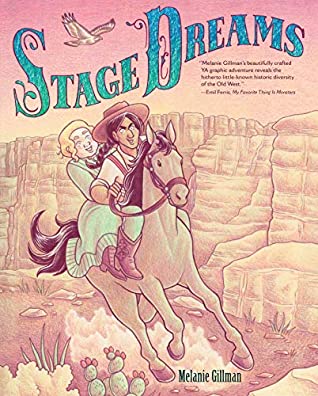
Stage Dreams by Melanie Gillman
While technically more pages than the poetry book with 104, this is a graphic novel, so it’s possible it’s actually an even quicker read. Get it on Amazon or Bookshop.org.
In this rollicking queer western adventure, acclaimed cartoonist Melanie Gillman (Stonewall Award Honor Book As the Crow Flies) puts readers in the saddle alongside Flor and Grace, a Latina outlaw and a trans runaway, as they team up to thwart a Confederate plot in the New Mexico Territory. When Flor—also known as the notorious Ghost Hawk—robs the stagecoach that Grace has used to escape her Georgia home, the first thing on her mind is ransom. But when the two get to talking about Flor’s plan to crash a Confederate gala and steal some crucial documents, Grace convinces Flor to let her join the heist.
Get the Discussion Guide
A beautifully graphic designed 2 page PDF that contains: 1 icebreaker, 9 discussion questions arranged from least to most challenging, 1 wrap-up question, and 3 read-a-like book suggestions.

Solo Dance by Lit Kotomi, translated by Arthur Reiji Morris
This 149 page read is more of a contemporary, literary selection, translated from its original Japanese. Get it on Amazon or Bookshop.org.
Cho Norie, twenty-seven and originally from Taiwan, is working an office job in Tokyo. While her colleagues worry about the economy, life-insurance policies, marriage, and children, she is forced to keep her unconventional life hidden—including her sexuality and the violent attack that prompted her move to Japan. There is also her unusual fascination with death: she knows from personal experience how devastating death can be, but for her it is also creative fuel. Solo Dance depicts the painful coming of age of a queer person in Taiwan and corporate Japan. This striking debut is an intimate and powerful account of a search for hope after trauma.
Get the Discussion Guide
A beautifully graphic designed 2 page PDF that contains: 1 icebreaker, 9 discussion questions arranged from least to most challenging, 1 wrap-up question, and 3 read-a-like book suggestions.

The Gilda Stories by Jewelle Gómez
If your book club likes the paranormal or urban fantasy genres, then this 252 page read should be right up their alley. Get it on Amazon or Bookshop.org.
A young Black girl escapes slavery in the 1850s United States. When she grows up, she is made into a vampire with her consent. We see her immortal life and her perspective of the US through an imagined 2050.
Get the Discussion Guide
A beautifully graphic designed 2 page PDF that contains: 1 icebreaker, 9 discussion questions arranged from least to most challenging, 1 wrap-up question, and 3 read-a-like book suggestions.

Coffee Will Make You Black by April Sinclair
At 256 pages, this will be a great fit for a book club that likes historic fiction set in the mid-20th century. Get it on Amazon or Bookshop.org.
Set on Chicago’s Southside in the mid-to-late 60s, following Jean “Stevie” Stevenson, a young Black woman growing up through the Civil Rights and Black Power movements. Stevie longs to fit in with the cool crowd. Fighting her mother every step of the way, she begins to experiment with talkin’ trash, “kicking butt,” and boys. With the assassination of Dr. King she gains a new political awareness, which makes her decide to wear her hair in a ‘fro instead of straightened, to refuse to use skin bleach, and to confront prejudice. She also finds herself questioning her sexuality. As readers follow Stevie’s at times harrowing, at times hilarious story, they will learn what it was like to be Black before Black was beautiful.
Get the Discussion Guide
A beautifully graphic designed 2 page PDF that contains: 1 icebreaker, 9 discussion questions arranged from least to most challenging, 1 wrap-up question, and 3 read-a-like book suggestions.
Bonus Suggestion:

Bloemetje: a speculative retelling of Hans Christian Andersen’s Thumbelina fairy tale by Amanda McNeil
Of course, I must also mention my own queer-inclusive retelling of Thumbelina, coming in at 121 pages. Available on Amazon.
A Dutch company known as The Bedrijf commences colonizing Venus via the construction of a dome filled with plants that convert its natural air into something breathable by humans. Since all workers are granted permission to bear a child, a woman and her spouse join the crew. But the woman soon discovers she is plagued with infertility. When her spouse illegally brings home a tulip from the garden, they discover a miniature baby inside who they name Bloemetje – little bloom. As the baby grows in mere days into a teenager, pushing her boundaries, she illuminates the true horrors of colonization and leads them all on a journey to decolonize.
If you’re interested in reading this for your book club, drop me a note at mcneil.author@gmail.com. I’d be happy to make a discussion guide and/or talk to your book club via Zoom or similar software.
Book Review: The Sentence by Louise Erdrich
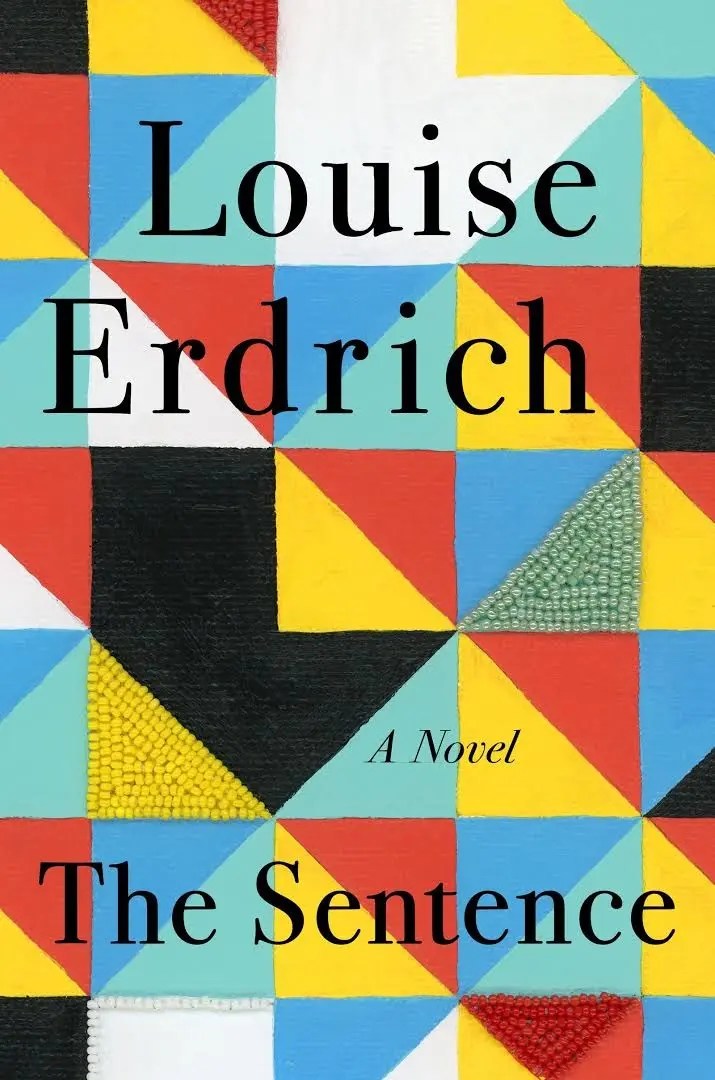
A previously incarcerated Indigenous woman loves her job at an independent bookstore focused on Indigenous literature right up until the store’s most annoying customer dies and begins haunting it.
Summary:
A small independent bookstore in Minneapolis is haunted from November 2019 to November 2020 by the store’s most annoying customer. Flora dies on All Souls’ Day, but she simply won’t leave the store. Tookie, who has landed a job selling books after years of incarceration that she survived by reading with murderous attention, must solve the mystery of this haunting while at the same time trying to understand all that occurs in Minneapolis during a year of grief, astonishment, isolation, and furious reckoning.
Review:
It’s a good thing I didn’t see that this book is magical realism or I wouldn’t have picked it up. You see, I had a serious misunderstanding of what magical realism is and thought I didn’t like it. In fact, I like it very much. I only wish I had first been introduced to it by the excellent explanation from Master Class originally. I’m excited that this book has helped me see past the magical realism label.
The thing that I love structurally about this book is how the title has so many different meanings. There’s the sentence that Tookie serves for her crime. There’s the sentence found within the book that Flora is reading when she dies. And there’s many other sentences throughout the book. I love when one title has many meanings.
The book starts with Tookie thinking back briefly on her incarceration and what landed her there. Part of what made the beginning so readable was how Tookie told this story. It was like speaking with a friend about a piece of their past. Raw and real but quick and to the point. It got me invested in the book right away. Then we jump to Tookie’s present, working in the bookstore, and the haunting, and this is utterly engaging right away as well. Tookie is flawed but so relatable. I think most readers will find her to be this way because she’s such a huge reader herself.
I also found her relatable because she’s in long-term recovery. I like how she sometimes thinks about how she was but it’s not like any single bad day gives her an urge she has to fight. A lot of times in literature and movies only early sobriety is shown, and the fact is, the experience in long-term recovery is different. I was so glad to see that in Tookie, and to see her breaking the multi-generational disease. But I also appreciated the very realistic depiction of her being concerned about talking about the haunting with her husband, Pollux, for fear he would think she had relapsed. I also should mention that both Tookie and her niece are bisexual. Their sexual fluidity is never judged or questioned. It’s just a part of who they are, which I really appreciated.
The book centers around a difficult question that it doesn’t provide answers for. Flora is a “wannabe Indian.” She’s a white woman who claims Indigenous heritage based on one photo she says is of a great-grandparent. The Indigenous community is dubious but doesn’t want to tell her she can’t belong. She spends much of her life working for the betterment of Indigenous people, including even taking in an unhoused teenager and caring for her so much that when she’s grown she refers to her as mother. So everyone has complex feelings about her. There are also some scenes that show white people behaving in offensive ways and smoothly depict how hard it is for Indigenous people to deal with these aggressions on a regular basis. One that really stuck in my mind was the white woman who shows up at the Indigenous bookstore and talks about her grandmother reassembling Indigenous bones she found on her land and winning a blue ribbon for it. She doesn’t understand why this is offensive to the Indigenous people she’s speaking with. To me the examples like this throughout the book demonstrate two types of white people who are hurtful to Indigenous people. The book is never preachy with these scenes. They come across as very realistic depictions of, unfortunately, regular interactions between Indigenous people and white people. If you yourself aren’t sure why these two types of interactions are hurtful, then I think this book would show you.
I wasn’t sure how I would feel reading a fictional book set during the first year of the pandemic. Overall, even though Tookie’s experiences and mine were different from each other (she was much older than me and had an essential worker, public facing job), I still found it realistic and relatable. The book never dwelled too much on any individual aspect of the pandemic but had scenes that were necessary reminders of how things were in the early days, like when Tookie goes to the grocery store to stock up just in case and ends up buying the best she can from what’s left, such as a tube of cookie dough. Similarly, Minneapolis was where George Floyd was killed and followed by the protests that spread throughout the country in 2020, and so this had to be a part of the book. At the start of the book it’s established that Tookie’s husband, Pollux, is who actually arrested her. By the time she was out of prison, he had left the tribal police force. But her household still must deal with the complex situation of having a previously incarcerated person and an ex-cop in the same household during this tumultuous time. There’s also the nice addition of Pollux’s niece, Hetta, living with them and, as a young person, being more involved in the protests. This thoughtful characterization allowed for multiple perspectives on the protests. For example, while there is support, there is also sadness and concern about the small businesses being impacted.
In spite of all that comes in the middle, the last part of the book deals mainly with Tookie’s relationship with Pollux and Tookie dealing with Flora’s ghost. This provides closure even while the reader knows the difficulties didn’t end in November 2020. In many ways I found this to be a story about relationships and reconciliation.
Overall, this is a strong piece of contemporary magical realism. If you’re ready to read a book featuring the pandemic while not being about the pandemic itself, this is a great place to begin.
If you found this review helpful, please consider tipping me on ko-fi, checking out my digital items available in my ko-fi shop, buying one of my publications, or using one of my referral/coupon codes. Thank you for your support!
4 out of 5 stars
Length: 387 pages – average but on the longer side
Source: Library
Buy It (Amazon or Bookshop.org)
Get the Reading Group / Book Club Discussion Guide
A beautifully graphic designed 2 page PDF that contains: 1 icebreaker, 9 discussion questions arranged from least to most challenging, 1 wrap-up question, and 3 read-a-like book suggestions
View a list of all my Discussion Guides.
Holiday Sale! All Digital Items 80% Off (Or More!)

My Kofi shop features entirely digital downloads as pdfs. Now through the holiday season, everything is on sale for 80% off or more! Once you purchase a pdf, you can download it and then provide it to your intended recipient however you chose. Send an email, send a DropBox link, or go old school and load up a usb drive with files and gift that. An ideal stocking stuffer.
I have 15 book club guides available for just $1.99 each. They are beautifully graphic designed 2 page PDFs that contain:
- An icebreaker specific to this book
- 9 discussion questions based out of this specific book arranged from least to most challenging.
Choose as many or as few as you wish to discuss. - A wrap-up question specific to this book
- 3 read-a-like book suggestions
I also have 2 cross-stitch patterns available featuring native New England plants. These are on sale for 99 cents.
Also for 99 cents I have a homework helper. It’s a how to guide for writing a book review of a play. It features the entire text of a review of the play “A Dolls House” by Henrik Ibsen with instructional offering guidance on how and why the review works.
Everything is set to pay what you can with the minimum price being the sale price. This means you can choose to pay more if you so wish, but the sale will go through with the minimum sale price as well.
If you have any questions please don’t hesitate to ask in the comments.
I wish a very happy holiday season to all!
Book Review: The Gilda Stories by Jewelle Gómez
Summary:
A young Black girl escapes slavery in the 1850s United States. When she grows up, she is made into a vampire with her consent. We see her immortal life and her perspective of the US through an imagined 2050.
Review:
The author herself stated in a recent article that she wrote this because she wanted “to see a lesbian of color embark on the adventure of eternal life.” This was something that was hard to find in 1991 when it first came out, and is only a little easier to find even now. There’s more of a twist to this, though, than a Black lesbian vampire.
How vampires work in this story is perhaps the most unique take I’ve read. They usually glamor their sources of blood while they are asleep. They come into their dreams and see something they wish for and leave something behind to help. An example is one time a teenager is hoping to do well on a test, so Gilda clarifies some of his mathematics homework for him. They also don’t use their teeth to draw blood but rather make a slice with a fingernail and then heal the wound magically without a trace. Most fascinatingly, these vampires must always keep their “home earth” close to themselves, or they will lose their powers. They must take large pallets of dirt from their home and sew it into their blankets, clothes, and shoes. One complain I have is that it was unclear to me if this dirt was from where they grew up or from where they were turned. It seems sometimes it’s one and sometimes the other. They also are weakened by all water, not just holy water.
Each of the chapter is set in a different year and place in Gilda’s life. It reads almost like a series of interconnected short stories more than a novel. I was reticent to ever stop in he middle of a chapter. I felt compelled to read each in its entirety in one sitting. This blipping in and out of Gilda’s life helps give the reader a sense of the jarringness of immortality. We just get to know a human, and then they’re gone. But that’s how it is for Gilda too.
This is not an erotic book. Gilda’s maker and another vampire named Bird (who also helps make her) are a couple when we first meet them. Gilda repeatedly becomes infatuated with women, both human and vampire, throughout the book. But we only rarely see any sexual interactions. I’m including even kissing here. The book is less about the sexuality and more about the community formed by queer people, often necessarily in the shadows. The often unrequited yearning. Gilda also has a vampiric encounter with a man that some readers view as sexual. I didn’t read it that way myself. I viewed it as a purely vampiric encounter. But you might feel differently.
Gilda’s perspective as a Black woman is ever-present, as it should be. She is othered by white society even when they don’t sense her vampire nature because of her blackness. But she also finds belonging in a variety of Black communities ranging from rural activists to singing nightclubs. Gilda also later in the book is left wondering how humans can feel such atrocities as slavery are so far in the past when for her it was a blink of an eye. An artful way of getting the reader to question how much time and distance is really between us and our history.
Overall, this is a unique take on vampire lore that centers a Black lesbian. It delivers both fantastic historic fiction and Afrofuturism in the same read. An engaging read for lovers of either.
If you found this review helpful, please consider tipping me on ko-fi, checking out my digital items available in my ko-fi shop, buying one of my publications, or using one of my referral/coupon codes. Thank you for your support!
4 out of 5 stars
Length: 252 pages – average but on the shorter side
Source: Library
Buy It (Amazon or Bookshop.org)
Get the Reading Group / Book Club Discussion Guide
A beautifully graphic designed 2 page PDF that contains: 1 icebreaker, 9 discussion questions arranged from least to most challenging, 1 wrap-up question, and 3 read-a-like book suggestions
View a list of all my Discussion Guides.
Counts For:

 Support my work with a tip or browse my shop for curated book club guides, how to guides, cross-stitch patterns, and more!


This work by Amanda Nevius is licensed under a Creative Commons Attribution-Noncommercial-No Derivative Works 3.0 United States License.
 Opinions of a Wolf