
Archive
Book Review: The Death of Mrs. Westaway by Ruth Ware

A moody, character-driven thriller about survival, intuition, and the blurry line between opportunity and deception.
Summary:
On a day that begins like any other, Hal receives a mysterious letter bequeathing her a substantial inheritance. She realizes very quickly that the letter was sent to the wrong person—but also that the cold-reading skills she’s honed as a tarot card reader might help her claim the money.
Soon, Hal finds herself at the funeral of the deceased…where it dawns on her that there is something very, very wrong about this strange situation and the inheritance at the centre of it.
Review:
I’m a big fan of Ruth Ware. With this book, I’ve now read eight of hers (all but two—I’m currently reading her newest release), although I’ve only reviewed four on my blog. When I spotted one I hadn’t read yet at the library, I figured it would be the perfect way to scratch my summer thriller itch while waiting for her latest.
As I was reading, I wondered if it was one of her earlier books. Although the main character is quite young, the writing itself also felt like a newer author’s voice. It turns out this was her fourth book. My hunch was right! I liked it more than the other early ones I’ve read—though I enjoy all of her work.
The book does a good job of making Hal likeable and well-rounded. She doesn’t believe in the tarot, but she’s not out to scam people either. She’s just trying to survive, doing her best with what she inherited from her mother. Both the booth on the pier and the knowledge to read cards (and people). Her grief, youth, and trouble with a loan shark add a sense of urgency and vulnerability that draws you in.
It would be easy to write the Westaway family as wealthy caricatures, but each of them (with the possible exception of the housekeeper) is written with a mix of strength and flaws. Even the housekeeper gains complexity later in the book.
That said, the plot depends heavily on a coincidence: Hal’s mother and her cousin had the exact same name—Margarida Westaway. That’s a pretty specific and unusual name for two relatives to share, especially in an upper-class British family. A quick explanation or justification for that naming choice could have made the premise easier to accept.
I didn’t figure out every twist, but I had the gist pretty early on. Some elements felt like things Hal probably should’ve picked up on too. But of course, it’s easier to put things together when you’re not the one in danger. The twists were still fun, and the ending was satisfying, even if it wrapped up quickly.
I especially liked how the tarot was integrated. Hal doesn’t believe in it literally, but she respects it as something people find meaning in, and she does her best to be helpful. It also connects her to her mother—not through magic, but through memory. When she recalls how her mother approached readings, it offers a window into her grief and her past.
There’s no racial or ethnic diversity in this book. That’s a missed opportunity, especially among the secondary characters or romantic partners. One of the uncles is gay and has a bisexual partner, but the bisexual representation is frustrating. The partner cheats, and it’s presented as an even worse betrayal because it’s with a woman. Oof. Hal acknowledges she developed problem drinking habits after her mother died and by and large chooses no longer to imbibe. (There is one night when she does).
There’s no sex in the book. The violence is mild by thriller standards: one drawn-out survival fight, a few off-page murders, and a jump-scare involving a dead body.
About the twists…spoilers in this paragraph.
It was fairly easy to guess that some sort of mix-up had happened between Maud and Maggie—both nicknames for Margarida. I suspected from early on that the woman who died in the car crash wasn’t Hal’s biological mother. That twist didn’t surprise me. The others—the fate of Hal’s bio mom and her father’s identity—were partially predictable. I guessed the mother was murdered and suspected the father did it. I thought it was the grandfather, given how no one mentioned him and how angry the grandmother was about the pregnancy. So I was surprised to learn it was actually the youngest uncle, Abel. The book frames him as the golden child—the one least abused by the family matriarch, but perhaps the most like her. That worked, even if it felt a little like older sibling wish fulfillment. But this also means Hal is the child of two first cousins, and the book doesn’t address that at all. Hal doesn’t even seem fazed. I had to remind myself that cousin marriage is legal in the UK, although it’s illegal in most U.S. states. Still, I would’ve liked at least a moment of acknowledgment or emotional reaction to this knowledge.
Overall, this was a fun thriller that delivered chills and mystery without being too gory or scary. About half the twists were predictable, but the rest kept me guessing. Strong characters and the layered use of tarot added depth. It’s not a perfect read, and it lacks diversity, but it’s a solid summer pick for fans of slower-paced, atmospheric thrillers.
If you found this review helpful, please consider tipping me on ko-fi, checking out my digital items in my ko-fi shop, buying one of my publications, using one of my referral or coupon codes, signing up for my free microfiction monthly newsletter, or tuning into my podcast. Thank you for your support!
4 out of 5 stars
Length: 368 pages – average but on the longer side
Source: Library
Buy It (Amazon or Bookshop.org)
Book Review: Beautiful Ugly by Alice Feeney
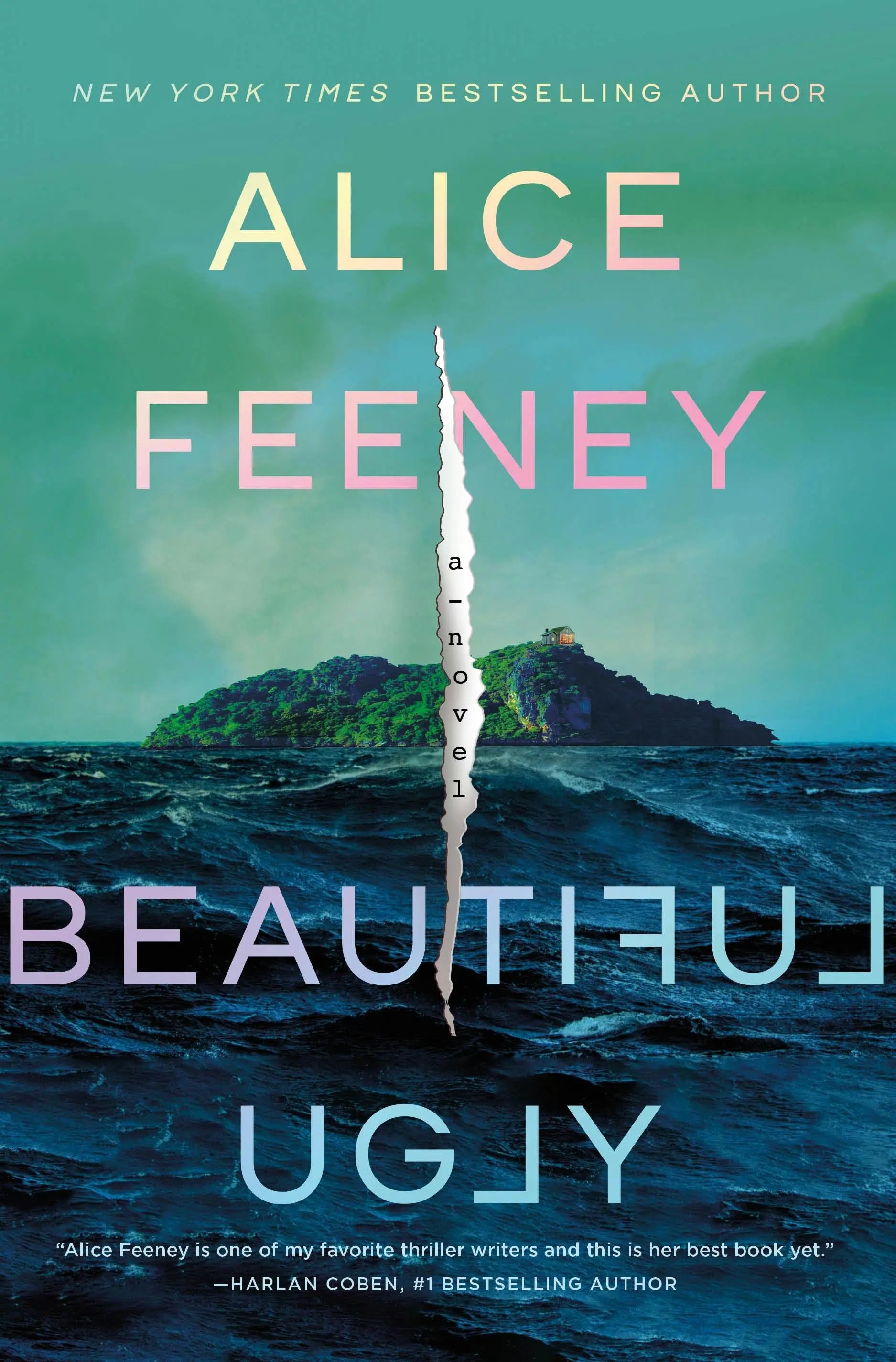
A psychological thriller about a grieving husband who sees his missing wife’s double on a remote Scottish island.
Summary:
Author Grady Green is having the worst best day of his life.
Grady calls his wife to share some exciting news as she is driving home. He hears Abby slam on the brakes, get out of the car, then nothing. When he eventually finds her car by the cliff edge the headlights are on, the driver door is open, her phone is still there. . . but his wife has disappeared.
A year later, Grady is still overcome with grief and desperate to know what happened to Abby. He can’t sleep, and he can’t write, so he travels to a tiny Scottish island to try to get his life back on track. Then he sees the impossible — a woman who looks exactly like his missing wife.
Wives think their husbands will change but they don’t.
Husbands think their wives won’t change but they do.
Review:
My memory told me I loved Alice Feeney’s thrillers—but after reading Beautiful Ugly and looking back at my past reviews, it turns out I only truly loved one (Rock Paper Scissors) and was lukewarm on another (Daisy Darker). With this latest being a miss, I probably won’t be rushing to pick up her next.
Right away, I was thrown a bit off course by the main character. When I reach for a thriller by a woman author, I typically expect a woman protagonist. Here, we follow Grady, a grieving husband and struggling novelist. We do get flashbacks to his wife before her disappearance, but Grady’s perspective never quite worked for me. I also rarely enjoy main characters who are writers—it often feels too navel-gazey (with the notable exception of Misery). That worked against Grady, too.
When Grady travels to a remote Scottish island—sent there by his agent-slash-his-wife’s-godmother—it should have been an atmospheric pivot. But while the setting is strange, it didn’t strike me as compelling. The book leans heavily on Grady’s alcoholism to make him an unreliable narrator, a device that can be effective (as in The Girl on the Train), but here felt more like a trope than an integral part of the story.
And unfortunately, it wasn’t just Grady. I didn’t connect with any of the characters—not the wife, the godmother, the ferrywoman, or the shopkeeper. That can still work if it’s a “love to hate them” type of book, but this wasn’t that. And when a book doesn’t give you characters to root for, you need a satisfying plot to carry the weight. Instead, I felt let down.
The book hinges on two major twists, and both left me feeling frustrated. One relies on the main character deliberately withholding information from the reader, which feels like a cheat—especially when we’re in his head for much of the book. The second twist is more straightforward, but felt over-the-top and unearned.
That said, there are a few bright spots. I appreciated the inclusion of a woman pastor and a same-sex couple among the tiny island’s population. The cast also includes a bit of racial and ethnic diversity. Also Grady’s dog is a breath of fresh air in every scene he’s in. However, the second twist somewhat undercut those thoughtful touches in a way that felt disappointing.
Content notes: CSA, death of children, infertility treatment, and murder.
Despite my frustrations, I’ll give the book credit for being readable and engaging. I wanted to know what happened, and I did enjoy the shifting points of view and timelines.
Overall, this is a thriller for readers who don’t mind a twist that plays unfairly with what the narrator reveals, and who enjoy mysterious settings and shifting perspectives—even if there’s no one to root for.
If you found this review helpful, please consider tipping me on ko-fi, checking out my digital items in my ko-fi shop, buying one of my publications, using one of my referral or coupon codes, signing up for my free microfiction monthly newsletter, or tuning into my podcast. Thank you for your support!
3 out of 5 stars
Length: 306 pages – average but on the longer side
Source: Library
Buy It (Amazon or Bookshop.org)
Book Review: Love on the Menu by Mimi Deb

A London romcom whose meet-cute is a get your life together list accidentally dropped in a take-out bag leading to notes being passed back and forth.
Summary:
Gia thrives on risks. Ben plays it safe.
She crossed continents to chase her London dream; he works the same job in the same restaurant, night after night.
Then fate steps in. When Gia’s takeout is delivered, her embarrassing list of New Year’s resolutions accidentally makes its way to Ben’s restaurant, stuck to the bottom of a delivery backpack.
With each delivery Gia orders, Ben slips in a note of his own and eagerly awaits her reply. One by one, these notes transform their lives in unexpected ways, and an unlikely love story is written.
Review:
The only thing I can say without spoilers was I loved the meet-cute idea but ultimately disliked both halves of the pairing. The rest of this review will contain spoilers.
I didn’t know when I requested this book that Ben, the love interest, is in long-term recovery (5 years plus) from alcohol. As a sober person myself, when I realized this about the love interest, I was ecstatic to see that representation. It’s what kept me hanging on after a shaky opening that I’ll talk about in a moment. But ultimately the representation left me disappointed. Plus I wound up not liking Ben. So let’s get into it.
First, the opening chapter. Gia gets drunk at a work event and accidentally kisses her boss while dancing. How, you ask? I’m still confused by it. She was doing the Single Ladies dance, they were dancing back-to-back, and when she jumped to turn 180 degrees, her lips landed on her boss’s. I do not think this would actually be possible to do without either bonking noses or hitting teeth together.
Now I need to explain a bit about the plot to talk about what didn’t work for me. So, after this, she convinces herself she’s about to lose her job and writes the get your life together list Ben ultimately finds. When she returns to work after the holidays, she becomes convinced that her boss is out to get her, thanks partially to her work-friend, Jay’s warnings. They are both immigrants. She immigrated from India, and he from China. He explains that the boss can’t legally fire her for such a thing in Britain but she can set her up to fail by giving her too much responsibility then a warning then a firing. When she does suddenly get more responsibility at work, she becomes convinced this is what is happening. Meanwhile she keeps ordering delivery from a local Indian takeaway that reminds her of home, plus she’s getting to exchange cute notes with one of the employees, Ben, through them. He coaches youth football on the weekends and has a large and loving family. Ben becomes enamored with Gia. Eventually they get a chance to meet when she needs a caterer for a big important work event.
Gia repeatedly drinks too much throughout the book. I was ok with this at first because I thought maybe she would have an ah-hah moment and cut back (or stop entirely). But she doesn’t. She thinks maybe she should. She puts it on her list. (Heartbreakingly the list at the ends says: “Don’t Drink. Drink less. Drink responsibly.”) But then she doesn’t actually do it. She even continues binging up through her marathon run. Her mother at one point in the last chapter says to her boss that Gia drinks too much. The boss agrees. And Gia blows it off. In the last chapter! There’s nothing I can root for with a person in long-term recovery getting together with someone with an active alcohol problem that’s bad enough that their family and boss have noticed and yet they won’t acknowledge it.
There is a giant reason I don’t think Ben is right for Gia either. Essentially, when Ben was in the throes of his addiction, he made some choices that led to an immigrant getting fired from his brother’s company. Instead of standing up for the guy and taking responsibility for what happened that night, Ben let him be fired and then took his job (only to quit it a few weeks later). Everyone makes mistakes, and I’m ok with a hero being imperfect. But later – five years later – when this comes up, he says, “Why didn’t he just get another job?” and “Why do you make looking for a job sound like a marathon?” This was a very heartless thing to say. It’s even more heartless given that Ben knows that Gia is also an immigrant whose ability to stay in London is tied to her employment which she at that moment feels is precarious. Ben never actually apologizes for this. He reads Gia a letter in which he talks about how wonderful she is, but he never apologizes for how flippantly he regarded the immigrant work situation.
These two people don’t belong together, and that is what left me feeling sour at the end. I don’t see a HEA or even a HFN but the first few seconds of a train wreck.
So, while the meet-cute was adorable, and I loved seeing diversity both in race and mental health in this book, I ultimately felt that the two leads did not belong together, although with some different plot directions, they could have been. Ben could have made a real apology and done something to try to make up for his lack of compassion for immigrants. Gia could have realized she had a problem with alcohol and taken Ben up on the offer to hook her up with a sponsor. If these two conditions were met, there could have been a very cute one year later they get together with a new meet-cute epilogue. But instead the book just swept the important issues under the rug with a Beyonce song at the end.
If you found this review helpful, please consider tipping me on ko-fi, checking out my digital items available in my ko-fi shop, buying one of my publications, or using one of my referral/coupon codes. Thank you for your support!
3 out of 5 stars
Length: 416 pages – average but on the longer side
Source: NetGalley
Buy It (Amazon or Bookshop.org)
Book Review: In the Event of Love by Courtney Kae

Summary:
With her career as a Los Angeles event planner imploding after a tabloid blowup, Morgan Ross isn’t headed home for the holidays so much as in strategic retreat. Breathtaking mountain vistas, quirky townsfolk, and charming small businesses aside, her hometown of Fern Falls is built of one heartbreak on top of another . . .
Take her one-time best friend turned crush, Rachel Reed. The memory of their perfect, doomed first kiss is still fresh as new-fallen snow. Way fresher than the freezing mud Morgan ends up sprawled in on her very first day back, only to be hauled out via Rachel’s sexy new lumberjane muscles acquired from running her family tree farm.
When Morgan discovers that the Reeds’ struggling tree farm is the only thing standing between Fern Falls and corporate greed destroying the whole town’s livelihood, she decides she can put heartbreak aside to save the farm by planning her best fundraiser yet. She has all the inspiration for a spectacular event: delicious vanilla lattes, acoustic guitars under majestic pines, a cozy barn surrounded by brilliant stars. But she and Rachel will ABSOLUTELY NOT have a heartwarming holiday happy ending. That would be as unprofessional as it is unlikely. Right?
Review:
This is a thoroughly queer holiday romance for your holiday needs. It has the returning to my small town from the big city to try to save a small business trope. It also has the second chance love trope.
The two main characters in this sapphic romance are BOTH (!) bisexual (and say the word), which I don’t think I’ve ever seen before in a romance. There’s a secondary male character who I think is bisexual, although it’s possible he’s gay and has dated women in the past (no one ever says which). There’s another secondary gay character, and a trans woman of color. The owner of the business Morgan works for is a woman of color. A tertiary character is a woman of color married to a Jewish man. Chrismukkah happens briefly. There’s also a pine tree decorated for a mix of Hanukkah and Kwanzaa.
The sex scenes are steamy and on-screen (all f/f), and there were at least three? Maybe more? I lost count. There’s also one ahem, self-love scene, which I honestly skimmed over because that’s not something I’m personally into reading. I appreciate that it did move the plot forward and wasn’t pointless though. (The character essentially clears her head in this way and then is able to solve a problem she’s been puzzling over).
The one thing I didn’t like was how alcohol is handled in this book. Rachel (the love interest)’s dad has alcoholism. That’s absolutely fine to include. In fact, it’s generally something I’m happy to see. But the representation of this struck false. The main thing that really bothered me is how Rachel interacts with alcohol herself. The book establishes that she’s traumatized by her dad’s alcoholism. It tore the family apart in high school. He’s been in and out of rehab that her and her brother pay for. Her mom left the family after Rachel (the youngest) graduated high school. Rachel routinely drops by her dad’s apartment (that she and her brother pay for) to check for signs of alcohol. YET she STILL drinks regularly. Not occasionally. Regularly. Most people I know who’ve seen this much of the negative impacts of alcohol won’t even allow it in their homes, let alone go out drinking themselves regularly.
Plus, there’s the whole instigation event to Morgan coming back to Fern Falls. (I don’t consider this a spoiler because it happens in chapter one). She gets wasted out at a bar and accidentally kisses the fiancé of someone whose wedding she’s organizing. He’s “in disguise” because he has a hoody on, but we all know she’d have recognized him if she wasn’t drunk. Anyway, everyone knows about this because the news wrote it up. We know Rachel knows about it. She still goes for Morgan. No way. No adult child of an alcoholic would set themselves up like that. I overlooked it because it’s a cheesy romance, but this is not a realistic depiction of an adult child of an alcoholic who’s actively engaged in their recovery. Adult children of alcoholics tend to fall either into the camps of also alcoholics themselves or sober. Rachel falls into neither. I feel weird complaining about realism in a holiday romance novel, but this is real life for a lot of us, and I disliked it being used as a plot device poorly. Alcoholism is serious, and Rachel wouldn’t be casually getting drunk with some love interest who’s only home because she became a hashtag while doing something drunk. In fact, I think this was a missed opportunity for some real bonding. They could have been at a town event and both noticed they were drinking hot chocolate. Rachel reveals the stuff about her dad. Morgan reveals she’s decided to dial it way back with the alcohol after possibly losing her career on that night out. Instant believable bond. But no….they just share spiked drinks.
All of that said, I still gave it four stars because this is a fun holiday romance. It’s not supposed to be that serious! And the bisexual rep is so uncommon and needed. I just wish the alcoholism/adult children of alcoholics rep was just as well done.
If you found this review helpful, please consider tipping me on ko-fi, checking out my digital items available in my ko-fi shop, buying one of my publications, or using one of my referral/coupon codes. Thank you for your support!
4 out of 5 stars
Length: 320 pages – average but on the longer side
Source: NetGalley
Buy It (Amazon or Bookshop.org)
Get the Reading Group / Book Club Discussion Guide
A beautifully graphic designed 2 page PDF that contains: 1 icebreaker, 9 discussion questions arranged from least to most challenging, 1 wrap-up question, and 3 read-a-like book suggestions
View a list of all my Discussion Guides.
Book Review: The House Across the Lake by Riley Sager

Summary:
Casey Fletcher, a recently widowed actress trying to escape a streak of bad press, has retreated to the peace and quiet of her family’s lake house in Vermont. Armed with a pair of binoculars and several bottles of liquor, she passes the time watching Tom and Katherine Royce, the glamorous couple who live in the house across the lake. They make for good viewing—a tech innovator, Tom is rich; and a former model, Katherine is gorgeous.
One day on the lake, Casey saves Katherine from drowning, and the two strike up a budding friendship. But the more they get to know each other—and the longer Casey watches—it becomes clear that Katherine and Tom’s marriage is not as perfect and placid as it appears. When Katherine suddenly vanishes, Casey becomes consumed with finding out what happened to her. In the process, she uncovers eerie, darker truths that turn a tale of voyeurism and suspicion into a story of guilt, obsession and how looks can be very deceiving.
Review:
I have read every single Riley Sager book almost as soon as I could get my hands on them. I find them all enjoyable, although I enjoy some more than others. I particularly appreciate their twists on common horror movie tropes. So I was excited to have a new one available for my summer thriller season.
Unlike the other books, I’m not sure what horror movie trope this is playing with. (Is it playing with one at all?) Nothing stuck out to me, but it’s also not like I’ve watched every single horror movie on the planet. At the beginning of the book, that dialed down my enjoyment a bit, because in general I find Sager’s fictional commentary on these tropes to be snappy and witty. I missed it. What made up for it a bit to me was the setting at a lake in Vermont. I grew up in Vermont, and I really enjoyed the whole a bunch of too wealthy for their own good New Yorkers come to their vacation homes and cause trouble plot while the local Eli sighs heavily and tries to make sure no one drowns in the lake. Again.
That said, the beginning dragged a little bit for me. Setting up Casey’s backstory felt like it could’ve been a bit tighter, partially because it’s not the first alcoholic lonely woman main character in a thriller I’ve read, so I didn’t need it super spelled out. Maybe someone else would. I’m glad I persevered though because WOW did I not see those twists coming. That’s right. I said twists.
I found the ending satisfying. I appreciated how alcoholism was handled, although I will say, I didn’t find its handling particularly mind-blowing or moving. I’d say it was accurate but not earth-moving to me.
I would definitely recommend reading this because I found the twists unique and genuinely surprising and yet I was kicking myself for not figuring it out sooner. I feel like there were enough clues there that I could have figured it out. I just didn’t. And if you know what horror trope this is playing with, let me know in the comments!
If you found this review helpful, please consider checking out my digital items available in my ko-fi shop, buying one of my publications, using one of my referral/coupon codes, or tipping me on ko-fi. Thank you for your support!
4 out of 5 stars
Length: 368 pages – average but on the longer side
Source: library
Buy It (Amazon or Bookshop.org)
Book Review: The Good House by Ann Leary

Summary:
Hildy Good is a successful realtor in her small town on the North Shore of Massachusetts. She’s also a grandmother, dog owner, and divorced. She’s also recently back from rehab for alcoholism from an intervention her two daughters staged for her. Hildy is not an alcoholic, but she went along with the whole thing to ensure access to her grandbaby. Inconveniently now, she must continue to pretend to abstain in public and suffer through parties sober until she can get home to a glass of wine or two in the evening. She also begins to befriend a newcomer to town she sold a very expensive home to – Rebecca. She is obsessed with horses and her one-time psychiatrist. When a cluster of secrets become dangerously entwined, the reckless behavior of one threatens to expose the other, with devastating consequences.
Review:
The North Shore of Massachusetts is a really fun and unique place, and this book artfully and realistically depicts both that location and the unfortunate realities of alcoholism, especially as it is seen in the older generation. I particularly like that alcoholism in an older woman is featured.
Hildy clearly thinks the story is about her own ability to be a successful businesswoman in the face of encroaching real estate chains and her daughters’ “ridiculous” belief that she’s an alcoholic putting a damper on her socializing. She also likes her new friend Rebecca but can’t understand why Rebecca and her psychiatrist care that Hildy knows they’re seeing each other. The thing is, the reader can clearly see that the real story is about Hildy, alcohol, and the havoc she’s wreaking across her own and other people’s lives. But the story isn’t heavy-handed about this. It comes across as this is the day to day life of this woman in this North Shore community. It’s just her day-to-day life is impeded by alcohol. Occasionally at first, but ever increasingly as the story progresses. It’s a slow burn of moderation quantifiably not working.
My absolute favorite scene in the book is when Hildy has a bottom moment and goes out to walk her dogs the next morning. She’s uncharacteristically angry at them and berates them verbally. Normally she loves these dogs to pieces. She gets to the shore, sees a heron, has an ah-hah moment, and breaks down crying. What was so gorgeous about this to me was how real this moment is. Being hungover and doing something ordinary yet suddenly connecting to something higher than yourself and realizing you’ve really messed up. But it was bittersweet because I just knew this wasn’t Hildy’s bottom yet. (Even a person with no addiction experience would realize this as it does not occur anywhere near the end of the book). But Hildy doesn’t realize it. You think all it will take is one powerful moment but in fact it takes so much more than that.
The book does not shy away from the worse features of late-stage alcoholism, and these come to a head alongside other issues in the town at the end of the book. I really appreciate that it goes there.
What kept me from loving the book is how Hildy treats her love interest. Not when she’s drunk. But when she’s sober. I know no one is perfect, but it really saddened me to see how she treats this lovable old New England man. Is it accurate to how I’ve seen men like that treated here? Yes. But I wanted a bit more escapism in that regard in my read. For me that held me back from complete love.
Recommended to readers looking to visit the North Shore or see the trajectory of alcoholism in an older main female character.
4 out of 5 stars
Length: 292 pages – average but on the shorter side
Source: Audible
Buy It (Amazon or Bookshop.org)
If you found this review helpful, please consider tipping me on ko-fi, checking out my digital items available in my ko-fi shop, buying one of my publications, or using one of my referral/coupon codes. Thank you for your support!
Publication Announcement: Monologue: “One Glass of Wine with Dinner”
I am thrilled to say that a monologue I wrote – “One Glass of Wine with Dinner” – was produced by De Frente Productions as part of their Monologue Marathon on December 5th with a lovely performance by Casey Marie Ecker.
View the monologue here for free.
Be sure to check out my Publications Page for my other work.
Liked my piece? Then….
If you found this review helpful, please consider tipping me on ko-fi, checking out my digital items available in my ko-fi shop, buying one of my publications, or using one of my referral/coupon codes. Thank you for your support!
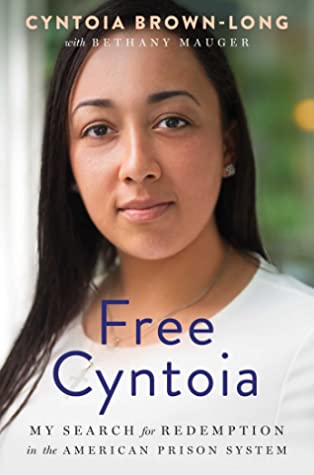
Book Review: Free Cyntoia: My Search for Redemption in the American Prison System by Cyntoia Brown-Long and Bethany Mauger
 Summary:
Cyntoia Brown was sentenced to life in prison for a murder she committed at the age of sixteen. Her case became national news when celebrities and activists made the hashtag #FreeCyntoia go viral in 2017. She was granted full clemency after having served fifteen years, walking out a free woman on August 7, 2019.
This is her story, in her own words.
Review:
I think how people will respond to this memoir will depend a lot on what they believe justice to be. Do certain levels of crime deserve never-ending punishment? Can people change or be redeemed? Then there’s another level of do teenagers, people who are still growing and whose brains have not fully developed (brains do not complete developing until approximately age 25), deserve to spend the rest of their lives being punished for an act committed at this age? This memoir aims to be proof that people can be redeemed and, indeed, if we want people to change, they need to have hope that an end could be in sight for them.
The fact of the matter is that no one but Cyntoia, God, and Johnny Michael Allen know what truly happened that night. Cyntoia has never denied killing Johnny but has maintained it was in self-defense. The only facts that we know are that she, a sixteen-year-old who had been being sold for sex by her pimp, was picked up by Johnny Allen, a 43-year-old, and brought home with him, and they were alone in his bedroom together. Both potential stories told by each side are possible. It’s possible he brought her home for sex, like Cyntoia says. It’s possible he brought her home in an attempt to take care of a teenager he found living on the street, like Johnny Allen’s family says. Regardless, Cyntoia ended up killing him. The memoir dances around exactly what happened, with Cyntoia describing him picking her up and bringing her home but then describing the night as a red haze with no details. Was that to protect a guilty conscience or to protect details that would hurt Johnny Allens’ family that no one really needs to know? It’s very hard to say. But in a way I think this is appropriate because Cyntoia admits that she killed him, and the true point of the story is first, how did this girl end up here and second, can she be redeemed?
How she got here contains two of the more interesting aspects of the memoir. First, the school to prison pipeline is painfully obvious in Cyntoia’s story. She originally was placed in a gifted class, acted up some (didn’t get along with the teacher) and was downgraded. She started to be told over and over again she was bad. It was all downhill from there with her hanging out with the crowd of kids who were always in trouble and being constantly told she was bad and not listened to. The police were even called on her at school for her not wanting to give the teacher her purse in detention. If we want our children to rise to their potential, having school tied to prison in the way that it is is not the solution, and treating children like they’re “bad” when they’re just children who mess up sometimes is sending them a clear message that many children will just accept or fail to.
The other issue that came up during one of Cyntoia’s trials is that her birth mother admits to drinking alcohol while she was pregnant, and some doctors have diagnosed her as having fetal alcohol spectrum disorder. This is relevant, because fetal alcohol spectrum disorder can cause poor judgment, hyperactivity, poor reasoning, and problems in school. It seems, given both doctors’ testimonies her birth mother’s admission, and Cyntoia’s own perspective that this sad tale is likely, therefore, partially entwined with alcohol abuse. Cyntoia herself states multiple times that she doesn’t know why she has tended to act so impulsively. This could partially help explain it and be another of the many tentacles of how alcohol impacts our society with poor outcomes and violence.
Cyntoia ultimately chooses to have faith that she could possibly be redeemed and decides, even if she can’t be, she doesn’t want to waste her life. She goes to a unique program available in her prison that allows her to go to college. She pursues self-improvement and mentorship of others, and she works to help young girls who have also been trafficked like she was. (It is not a question that Cyntoia was trafficked as she was underage and had a pimp). Cyntoia attests much of her self-improvement to her new-found faith that she solidified after meeting her now-husband via letters in jail. (He felt called to write to her). A spiritual practice is important for anyone to have a well-rounded recovery, and I think it is also significant that the school that offered the college program inside the prison was also a religious school. I am glad for her that she has found comfort and faith, but I also hope it’s not too entwined with her husband and is her own source of strength. While healthy relationships are important, and it’s nice to share a faith, it’s also important for that strength to come from oneself and not from relying upon another fallible human being.
Overall, I think this shows a personal look at the school to prison pipeline, the potential impact of alcohol on a child’s life, and how redemption could look. It’s important to come into this book with an open mind and a willingness to not crave more than Cyntoia is willing to share, nor to think that this book will reveal all the truth or all the answers.
4 out of 5 stars
Length: 320 pages – average but on the longer side
Source: Purchased
Buy It (Amazon or Bookshop.org)

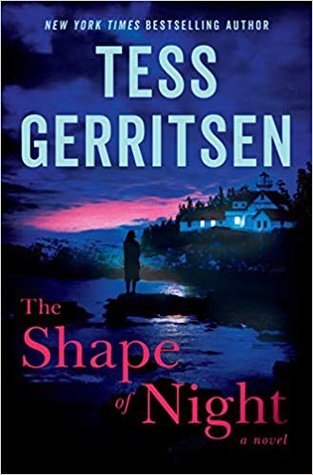
Book Review: The Shape of Night by Tess Gerritsen
First, a note….
I hope all of my readers are as safe and well as possible in these difficult times we are living in. A few people have asked me what I recommend reading to get through things. My advice is what my advice always is – read what most entertains you. Read what distracts you. Feel no guilt for what you enjoy reading. Read whatever it is you most enjoy. I think now more than ever it’s important for all of us to get a respite from the world around us and visit another world, whether that’s fiction or nonfiction, romance or thrills. In the spirit of this, I’m just going to keep reviewing the books I’ve most enjoyed recently.
 Summary:
Ava is writing a cookbook of what Maine fisherman communities ate during the 1800s. She’s hit a bit of a writer’s block, so she rents a summer home on the coast of Maine for inspiration – and maybe to run away from the tragedy that is haunting her. But when she arrives at the home in Maine she starts to think it might actually be haunted. She also discovers the previous renter mysteriously disappeared.
Review:
I love house-sitting or house-renting thrillers. There is something decidedly spooky about short-term rentals, and I love how this type of thriller just goes there. It reminded me of the Victoria Holt books I would borrow from my grandmother in middle school only set in modern day Maine.
What I wasn’t expecting from this book or its summary was its deft handling of alcohol addiction. Ava’s alcohol addiction isn’t her entire personality – far from it. She is very well-rounded. We get to know her incredible talent at both cooking and researching then recreating historic recipes. She is intelligent and caring. She loves her sister. But she has definitely made a giant mistake that is haunting her, and I would argue it’s a mistake that was rooted in her alcohol problem although before it became as serious as it is in Maine.
There are no easy answers in this book – not for the “ghost” of Captain Brodie. Not for the disappearances. Not for how small towns handle things. Not for Ava straightening her life back up. The lack of neat ends makes it all feel more real which really works for a book with a creepy ghost.
There were many aspects of this book that kept me staying up too late reading it: the mystery, Ava’s addiction, the ambience, is there really a ghost, what happened in Ava’s past. I also just liked visiting the house and waterfront, which was well described and realistic. It had just the right amount of twists and turns and well-rounded characters.
5 out of 5 stars
Length: 288 pages – average but on the shorter side
Source: Library
Buy It (Amazon or Bookshop.org)
If you found this review helpful, please consider tipping me on ko-fi, checking out my digital items available in my ko-fi shop, buying one of my publications, or using one of my referral/coupon codes. Thank you for your support!
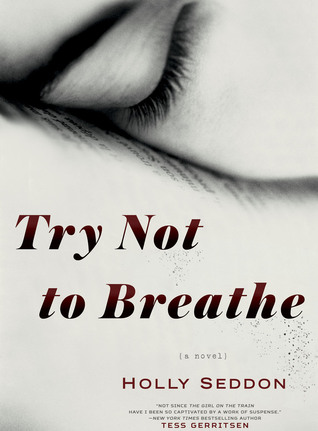
Book Review: Try Not to Breathe by Holly Sedon
 Summary:
Amy Stevenson was the biggest news story of 1995. Only fifteen years old, Amy disappeared walking home from school one day and was found in a coma three days later. Her attacker was never identified and her angelic face was plastered across every paper and nightly news segment.
Fifteen years later, Amy lies in the hospital, surrounded by 90’s Britpop posters, forgotten by the world until reporter Alex Dale stumbles across her while researching a routine story on vegetative patients.
Remembering Amy’s story like it was yesterday, she feels compelled to solve the long-cold case.
The only problem is, Alex is just as lost as Amy—her alcoholism has cost her everything including her marriage and her professional reputation.
In the hopes that finding Amy’s attacker will be her own salvation as well, Alex embarks on a dangerous investigation, suspecting someone close to Amy
Review:
I devoured this book so quickly that I forgot to mark it read in GoodReads for a few weeks. It’s a thrilling read on a lot of levels. Amy’s questionably vegetative state would give anyone chills, as would how she wound up there. Even before full details of the attack are known, everyone knows it was pretty gruesome. Alex’s “functional” alcoholism also sends chills down the spine. She’s lost almost everything, but she still drinks enormous amounts of alcohol every day. The juxtaposition of the two women is what makes the psychological thriller so thrilling. They’re both being held paralyzed in a state by an illness and any one of us could fall to either of those states.
I know the average reader is probably most interested in the mystery aspect of the thriller–the whodunit. I will say in short that it’s a well-done mystery. I had my suspicions but exactly how things ultimately went down was still enough of a surprise that I was delighted, and I thought the resolution was well-done. What I was much more fascinated by though was Alex.
A “trouble-making journalist” or a detective who drinks too much is the norm of thrillers and noir but usually that is played up as something slightly dangerous but also sexy. Here there is nothing sexy about Alex’s alcoholism. She wets the bed every night. It at first seems this is because she drinks at least one glass of water per glass of alcohol to stave off hangovers but later it’s clear it’s from her body shutting down from her alcoholism. Alex is a great example of a “functional” alcoholic. She’s holding down a job (sort of, her alcoholism stole her dream career from her), she runs every day, she’s capable of looking into this mystery of Amy. But slowly other things are revealed that makes it ever clearer that no, she’s not homeless, but she is far from functional, unless by functional you simply mean she can sort of exist in human society. She is nowhere near what she could be because of the alcohol, and she’s lost almost everything (career, husband, and more). I really liked that the reader is both compelled to respect Alex’s smarts and tenacity as a reporter but also to feel empathy and horror at how much alcoholism is stealing from her. Even if the reader doesn’t have an interest in addictions, it still makes Alex a well-rounded character. She is more than just that smart journalist. There are whole worlds going on in her own life outside of her investigation.
Overall, if you’re looking for a thriller with a twisting plot that also turns some thriller/noir conventions on their head (not least of which the fact that both leads are women), then you should pick this book up.
If you found this review helpful, please consider tipping me on ko-fi, checking out my digital items available in my ko-fi shop, buying one of my publications, or using one of my referral/coupon codes. Thank you for your support!
4 out of 5 stars
Length: 368 pages – average but on the longer side
Source: Library
Counts For:
Mental Illness Advocacy (MIA) Reading Challenge
Specific illness –> Addictive Disorders
Trigger Warning/Content Note:
Contains discussions of rape and sexual assault.
 Support my work with a tip or browse my shop for curated book club guides, how to guides, cross-stitch patterns, and more!


This work by Amanda Nevius is licensed under a Creative Commons Attribution-Noncommercial-No Derivative Works 3.0 United States License.
 Opinions of a Wolf