
Archive
Book Review: Soulless by Gail Carriger (Series, #1) (Bottom of TBR Pile Challenge)
 Summary:
Alexia Tarabotti isn’t just suffering from being half-Italian in Victorian England, she also is soulless. Unlike vampires, werewolves, and other supernaturals who successfully changed thanks to an excess of soul, or even having just enough soul like day dwellers, she simply has none. Plus as a preternatural she turns the supernaturals human when she touches them. Obviously they aren’t a fan of that. Except for one particularly persnickety werewolf, Lord Maccon, who is Scottish to boot. And to top it all off a mysterious wax-faced man suddenly seems very interested in kidnapping her. None of this seems particularly civilized.
Review:
The Parasol Protectorate series was all the rage when this book made it onto my tbr pile back in 2010. That was kind of the beginning of the steampunk craze, before you could find gears on everything in the costume shop. I can see why this series is popular, but it’s just not my cup of tea.
The world building is wonderful and is what kept me reading. A good steampunk blends history, science, and fashion to make for a semi-familiar but deliciously unique world that’s delightful for history and science geeks alike to play around in. Carriger pulls this off beautifully. The fashion is Victorian with a steampunk edge. The politics are recognizable but with the supernatural and steampowered sciences taking a role. A great example of how well this world works is that in England the supernatural came out and became part of society, whereas America was the result of the Puritans condemning the acceptance of the supernatural who they believe sold their souls to the devil. This is a great blend of reality and alternate history.
The plot wasn’t a huge mystery, which is kind of sad given the complexity of the world building. What really bothered me though was the romantic plot, which suffered badly from a case of instalove. Although we hear of delightful prior encounters between Alexia and Lord Maccon, we didn’t see them. We mostly see him going from hating her to loving her and demanding her hand in marriage. It just felt lazy compared to the other elements of the book. I get it that Carriger could be poking fun at Victorian era romances, but I think that would have worked better if it didn’t have such a Victorian ending. Plus, I didn’t pick up this book to read a romance. I wanted a steampunk mystery with a strong female lead. I didn’t like how quickly the romance took over the whole plot.
Potential readers should take a glance at the first chapter and see if Carriger’s humor works for them. I can see how if I was laughing through the whole book I’d have enjoyed it more, but the…decidedly British humor just did not work for me. It didn’t bother me; I just didn’t find it funny. I mostly sat there going, “Oh, she thinks she’s being funny…..” Humor is highly personal, so I’m not saying it’s bad. It just isn’t my style. It might be yours.
Overall this is a creatively complex steampunk world with an unfortunately average plot overtaken by instaromance and seeped in dry, British humor. It is recommended to steampunk fans who find that style of humor amusing and don’t mind some instalove all up in their story. That does not describe this reader, so I won’t be continuing on with the series.
3.5 out of 5 stars
Source: PaperBackSwap

Book Review: Bad Glass by Richard E. Gropp
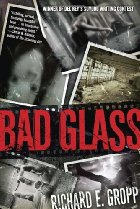 Summary:
Something strange is happening in Spokane, and the US military has taken control of the city, closing it and its happenings to the press. Dean sees this as the perfect opportunity to break into photography before he graduates from college and is forced into giving up on his artistic dreams to work a regular 9 to 5 job. So he sneaks into Spokane, where he meets an intriguing young woman and her rag-tag household of survivors, and quickly starts to see the inexplicable things that are going on inside the city.
Review:
Dark fantasy is one of my favored genres, but unfortunately not a ton comes out in it in any given year. So when I saw this title available on NetGalley, I just had to snatch it up. I’m glad I did, because it’s a truly enjoyable read.
The basic plot uses a trope of dark fantasy–a creative outsider comes to a town where bizarre things supposedly happen then starts to document them happening. The twist here is that the creative type is a photographer, so the art form being used is photography. This was an incredibly refreshing way to approach the topic. Each chapter opens with a description of a shot that Dean will get at some point in that chapter. It’s fascinating foreshadowing, and also Gropp shows real talent in describing photographs of both the fantastical and more ordinary varieties. The descriptions also talk about more technical aspects of photography, and these show up within the story too (such as lighting and shutter speed). Describing instead of showing the photographs was a choice that I at first was not certain of but I ultimately appreciated. By not reproducing the photographs, Gropp leaves quite a bit of the mystery up to the reader and doesn’t spoil whatever images the reader has already established within her own mind. But the descriptions are also so well-done that the impact of seeing one brief moment in this surreal world is still rendered. It’s a unique and well-done choice, and I’d recommend this read to people based on that creative storytelling aspect alone.
It’s also great to see a story centering primarily around 20-somethings. Often literature tends to stick to YA (teens) or jump right over those of us who are in that truly young adult phase of our lives and into 30-somethings. Although the primary focus of the story is what precisely is happening in Spokane, conflicts frequently faced by 20-somethings come up within this framework–what to do for a career, do you give up on your dreams and settle down into a cubicle or not, when and with whom should you settle down, should you settle down at all, when should you respect your parents and their experience and when should you stand up to them, etc… Long-time followers know that one reason I enjoy genre literature is it addresses these real life issues within the context of the fantastic, and the good ones do it integrated and in a thought-provoking manner. This book achieves that.
The main character also is bisexual, while being primarily interested in a woman. It was so awesome to get to see a bi male main character and have it be presented as just a part of who he is and not a big deal at all. Although there is certainly a need and a place for the coming out tales and stories where the character’s sexuality is a central issue, it is also nice to see queer characters where that is just one aspect of who they are and is not dwelled upon much. It is just a part of who Dean is.
As for the central plot–what is happening in Spokane–I admit that I hoped for slightly more answers than we ultimately get. Readers looking for nicely tied up endings or even a hint at an answer will be left wanting. I enjoy an ambiguous ending, but I also felt that perhaps the plot could have been a bit clearer. In particular, without giving anything away, I felt that the scenes revolving around the hospital while powerful left me feeling a bit like perhaps even the author doesn’t really know what’s going on in Spokane. Perhaps that is the point, but it did leave me feeling that the plot was not as up to par as the world building and characterization.
Overall, this is a wonderful addition to the dark fantasy genre. Gropp gives us a unique main character and also utilizes writing about photography in a creative manner. I highly recommend it to fans of dark fantasy, particularly 20-somethings and those with an interest in photography.
4 out of 5 stars
Source: NetGalley

Book Review: Fuzzy Nation by John Scalzi (Audiobook narrated by Wil Wheaton)
 Summary:
Jack Halloway–disbarred lawyer now contracted prospector on the planet Zarathustra–just wants to collect his massive amount of money from discovering a large sunstone vein. He seems to be doing fairly well at finagling ZaraCorp into giving him the sizable portion of the profits that he totally deserves, but one day some local creatures that he dubs Fuzzies invite themselves into his home. Small and cat-like, only with hands, the Fuzzy family quickly endear themselves to him. When he shows them to his ex-girlfriend, a biologist, she starts to suspect that they are sentient. And sentience would mean a cessation of all mining on the planet. What’s a morally ambiguous guy to do?
Review:
I picked this up for three reasons. 1) It was on sale at Audible. 2) I read John Scalzi’s The Android’s Dream
This book is interestingly a reimagining of a YA series written in the 1960s (starting with Little Fuzzy
Scalzi’s writing is humorous, although, with the exception of the first couple of chapters, not to the laugh out loud level found in The Android’s Dream
As an animal rights advocate, I appreciated the basic storyline that just because you can’t hear creatures communicating doesn’t mean they don’t have relationships and caring amongst themselves. I wasn’t a fan of the way that sentience was determined with such a human bias or that killing a Fuzzy is only considered truly heinous if it is established that they are sentient. I would have preferred an ultimate conclusion rejecting speciesism, rather than the quite conservative focus on proving the human-like qualities of the Fuzzies.
Wil Wheaton’s narration was great for the first half of the book. It’s Wil Wheaton. If you’re not sure if his acting style is for you, just look up his scenes in The Big Bang Theory
I don’t often comment on the cover, but I must say that I don’t think that this cover does the book justice. I particularly dislike it when a cover tries to draw out an alien creature that frankly comes across as much more adorable within the book. Also, even the background of the planet itself doesn’t look right.
Overall, this is a witty piece of scifi with adorable alien creatures that call to mind websites like Cute Overload. I recommend it to fans of scifi who also enjoy some courtroom proceedings in their reading.
4 out of 5 stars
Source: Audible

Book Review: American Science Fiction: Four Classic Novels 1953-56
 Summary:
The Library of America collects together great pieces of American literature into themed books. This can be anything from an author, to writing on aviation, to the Harlem Renaissance, to transcendentalism. Clearly this is a collection of classic 1950s scifi, in particular covering the time period from 1953 to 1956. The books included in the collection, in order of publication date, are:
The Space Merchants
More Than Human
The Long Tomorrow
The Shrinking Man 
Review:
This is my second Library of America read, and I think I’m officially addicted. There’s something delightful about burying yourself in a topic or theme of American literature complete with useful notes that are not overwhelming but still give you enough background knowledge to come away with more than just the joy of reading the books but some understanding of the time period and genre. Since this collection gathers up books written by different authors, I will review the books individually but first I want to say that any Library of America book is always worth your time. Just be sure to choose a topic or author that interests you.
The Space Merchants
This was my favorite book in the collection by far. I’ve been telling anyone who will listen that it is basically Mad Men IN SPACE. What is not to love about that?! In addition to that, it can sometimes be difficult to be sucked in by older scifi because even if the theme or ideas it addresses was new in its time, I’m from a later time and have heard it a million times already. This book somehow manages to be unique in spite of all the books about a future awash in consumerism that I’ve read. I think what gives it the unique edge is the dual focus on advertising and the conservationist movement. Also the relationship between the main character and his doctor wife is progressive and refreshing. She is smart, her own person, has her own career and ideas, and she is still depicted in a positive light. Also the idea of a trial marriage is essentially the couple living together before getting married, which was surprising to see in something from the 1950s. It also manages to be witty while addressing hard-hitting issues. It’s the perfect scifi.
5 out of 5 stars
More Than Human
This book in contrast was dull and borderline offensive, repeatedly, throughout. Sturgeon utilizes lyrical prose to the extent that the plot suffers. He gets so caught up in making the language beautiful that the plot gets shoved to the side, and the reader is left wondering what, precisely, is going on. The book is divided into thirds, and the first third is the most confusing of all. Sturgeon repeatedly changes perspectives between different characters with no rhyme, reason, warning, or even signal. There’s not even handy squiggly lines letting you know you’re into a new section. This improves a bit in the final two sections of the book, but only a bit. The borderline offensiveness comes in with three of the characters. There are twin girls who can teleport, and beyond their teleportation skills their most identifiable characteristics are: 1) they never keep their clothes on and 2) they are black. They of course are referred to as “Negro” or “colored” throughout the book, which is better than the baby with Down’s Syndrome who is described as a “mongoloid,” and never even is given a name but is simply referred to as “Baby.” The crux of the idea–that people come together with different psychic abilities as the next step of evolution–is creative and interesting, but the execution is dull and drags.
3 out of 5 stars
The Long Tomorrow
It’s not an unheard of idea for a post-apocalyptic society to revert to less technology-laden ways of doing things, but the execution is certainly unique here. Many people are fascinated by Mennonite and Amish culture, and this takes that culture and adapts it to a scifi, post-nuclear future. It is definitely engaging. The plot is strong and consistent. I was particularly impressed with how Brackett shows the passage of time when nothing necessarily happens, such as when the main character spends a few months laying low and helping with the crops. Motivation is clear, and the setting is well-done. I was disappointed though with the very narrowly envisioned role for women. It makes sense that women would be put into traditional roles in the groups modeled after the Mennonites and the Amish, but even the most progressive group presented in the book still seems to think women can only cook and clean. It’s disheartening. The male main characters spend their time striving for knowledge and indeed the point of the book seems to be about the need humans have to acquire knowledge, but it also gives the impression that this should only be embraced in men. The one female character who shows any similar leanings is fairly quickly quashed back to the home. I found this extra disappointing since this is the only book in the collection written by a woman. The rest of the read is enjoyable and imaginative though.
4 out of 5 stars
The Shrinking Man
This book feels the most formulaic of the bunch, perhaps because this trope has made its way so solidly into scifi. Some person finds something about themselves slowly changing and they can’t do anything to stop it. Toss in the ant-sized person, and it struggles to find anything unique to say. I’m no expert, so perhaps this was the first book to have this kind of plot, but the fact remains that there’s nothing that makes this one stick out as special. In fact, as a child of the 90s, I found myself repeatedly thinking that Honey, I Shrunk the Kids

3 out of 5 stars
In Conclusion
This is an interesting collection of 1950s scifi that clearly shows what scientific advancements had people thinking and concerned, primarily nuclear war/weapons/power but also the newly highly commercialized culture, as well as possibilities in psychiatry. A couple of the books fall short of being truly entertaining in modern times, but they are still interesting to anyone who enjoys the history of scifi. Additionally, The Long Tomorrow
4 out of 5 stars
Source: NetGalley

Book Review: Finding Bluefield by Elan Barnehama
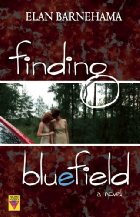 Summary:
It’s the 1960s, and Barbara thinks she has enough on her hands handling medical residency as a woman. She doesn’t need the complications of dating women on top of that…or the risk to her profession of rumors that she’s a lesbian. But when she meets local cook, Nicky, all these cautions go out the window. Soon they’re a couple, and Nicky is determined to have a baby for them to raise together.
Review:
I read this book because my previous read from this indie publisher (Bold Strokes Books) was such a unique, well-written piece of LGBTQIA+ lit, and I was excited to get more. Unfortunately, the quality of this book does not come close to that of Lemon Reef
The plot is moderately common in lesbian fiction. Girl meets girl. Couple wants a baby. Girl gets pregnant. Can they raise the baby and keep the relationship going. With the added backdrop of prejudice and changing rights from the 1960s through the 1980s, it had the potential to be more unique and add an interesting twist, particularly since Nicky is supposed to be involved in the Civil Rights movement. Unfortunately, none of this really pans out. There are tantalizing teases of something more or something unique such as when Nicky gives a ride to a black man trying to escape from mob “justice” in the small town or when Barbara cheats on Nicky in New York City, but none of these ideas are brought to fruition. In fact, the whole book feels more like a moderately fleshed-out plot outline for a future book. Like, here are the key points, and I’ll flesh them out later. Only this is the finished book. There will be no more fleshing out of the plot. It’s frustrating to read because just when you think something is about to happen, the idea gets dropped and you skip ahead a few years.
Similarly, the characters are never fully realized. They are extremely two-dimensional, even the two main characters. I actually found myself mixing Barbara and Nicky up repeatedly, which is intensely problematic. They are two separate people, and their relationship is the focus of the novel, yet even after the entire book they are mostly unclear to me, except that Nicky has green eyes. They simply don’t feel like real people to the reader at all, which is a problem in general but even more so when the book is trying to both be character-driven and address rights issues.
A book needs at least a compelling plot or engaging characters to be readable and both to be great. This book has neither. I can see potential in the plot and sentence structures for good writing, but the author needs to work on both expanding into greater plot detail as well as on improving characterization.
2 out of 5 stars
Source: Netgalley

Publication Announcement: Short Story in Crack the Spine Literary Magazine
Hello my lovely readers!
Just a quick post to let you all know that my literary short story “Closest Thing to Heaven” published today in issue 40 of Crack the Spine literary magazine.
Here’s the blurb:
Mama’s sleeping, and it’s super-hot out, so Brother says he’ll take me to the swimmin holler.
I do hope you all will check it out!
Book Review: The Chicken Thief by Fiona Leonard
 Summary:
Alois used to work for the Ministry, but he felt stifled and quit. Now he steals chickens. One night the white owner of one of the large, walled-in houses he steals from stops him. He wants him to get a letter for him. A letter from Gabriel, a revolutionary leader who has been long-thought to be dead. Alois accepts for the money, but soon finds his whole world changing around him.
Review:
This book was a gift from a one-time friend who also enjoys African lit. She enjoyed it and thought I would, but remember that problem I mentioned in my last review where I don’t seem to like books other people recommend to me? Yeah. Still a problem. I do enjoy African lit, and I thought when I saw the cover and heard the title that this book would be more of a social justicey kind of plot. But it’s actually quite a bit of a political thriller, and I personally don’t like those. Putting that element aside, though, I am still able to review the quality of the book.
The plot takes the less common method of looking at political upheavals and developments through the eyes of an average person dragged into the situation. There are a few chapters that show us the president’s perspective, but primarily things are seen through Alois’s eyes. I think this is what made it readable to me, because honestly who cares about politicians? It’s the everyman that is interesting. The plot is also interesting in that it looks at both a past revolution and a present-day coup. That makes it more unique in the world of political thrillers.
The writing can only be described as flowery. For example:
In truth he saw her everywhere, but you couldn’t say to a woman, not one who was meant to be just your friend, “Here, I have brought you this tree because its branches moved as you do” or “see here this bucket, when the water falls from it I hear your voice. (page 104)
Pretty much the entire book has that kind of meandering, highly descriptive cadence. I know that works for lots of readers. It’s just not personally something I enjoy, and I did find it odd in a political thriller.
One thing that bothered me is that it’s never entirely clear what country in Africa this is. I think it might be a fictional country in the southern region of Africa. The author herself lived in Ghana for a time so perhaps the idea was inspired by Ghanaian culture, but not based on anything factual in Ghana. In a book like this, a political thriller, I prefer real countries. Or at least a clearly defined country. That might bother other readers less though.
Overall then, there are some aspects of this political thriller that make it unique in the genre. It examines both a past revolution and a current coup through the eyes of a non-political youth who was not alive for the previous revolution. The writing is surprisingly flowery for the genre, so fans should be aware of that difference going in. Recommended to fans of political thrillers looking for something different.
3 out of 5 stars
Source: Gift

Counts For:
Specific country? Uncertain. Southern region of Africa. Australian author who has lived in Ghana.

Book Review: Poison Study by Maria V. Snyder (Series, #1) (Bottom of TBR Pile Challenge)
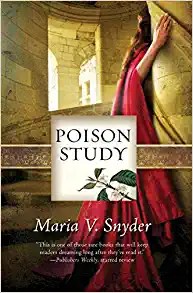
Summary:
Yelena is on death row for killing a man in the military state of Ixia but on the day of her execution she faces a choice. Become the Commander’s food taster and face possible death by poison every day or be hanged as planned. Being a smart person, Yelena chooses the former. Now that she has admittance to the inner circle of the military state, she quickly comes to see that not everything is quite as it seems….not even her own personal history or her heart.
Review:
*sighs* You guys. I have got to stop letting people convince me to pick up books using the phrase, “I know you don’t like [blank] but!” That is how this book wound up on my tbr pile. “I know you don’t like fantasy, but!” and also “I know you don’t like YA, but!” oh and “I know you don’t like romance in YA, but!” A reader knows her own taste. And I don’t like any of those. I still came at it with hope, though, since I did like one fantasy book I read this year (Acacia). There’s a big difference in how they wound up on my pile though. I chose Acacia myself because its reviews intrigued me. Poison Study was foisted upon me by well-meaning friends. So, don’t get my review wrong. This book isn’t bad. It’s just what I would call average YA fantasy. Nothing made it stand-out to me, and it felt very predictable.
The world of Ixia felt similar to basically every other fantasy world I’ve seen drawn out, including ones friends and I wrote up in highschool. Everyone has to wear a color-coded uniform that makes them easily identifiable. There are vague similarities to the middle ages (like Rennaisance-style fairs). There are people in absolute control. There is magic and magicians who are either revered or loathed. There are all the things that are moderately similar to our world but are called something slightly different like how fall is “the cooling season.” Some readers really like this stuff. I just never have. I need something really unique in the fantasy world to grab me, like how in the Fairies of Dreamdark series the characters are tinkerbell-sized sprites in the woods who ride crows. That is fun and unique. This is just….average.
Yelena’s history, I’m sorry, is totally predictable. I knew why she had killed Reyad long before we ever find out. I suspected early on how she truly came to be at General Brazell’s castle. I didn’t know the exact reason he had for collecting these people, but I got the gist.
And now I’m going to say something that I think might piss some readers off, but it’s just true. What the hell is it with YA romance and exploitative, abusive douchebags? This may be a bit of a spoiler, but I think any astute reader can predict it from the first chapter who the love interest is, but consider yourself warned that it’s about to be discussed. Yelena’s love interest is Valek, the dude who is the Commander’s right-hand man and also who offers her the poison taster position and trains her for it. He manipulates her throughout the book, something that Yelena herself is completely aware of. There are three things that he does that are just flat-out abusive. First, he tricks her into thinking that she must come to see him every two days for an antidote or die a horrible death of poisoning. (Controlling much?) Second, he sets her up in a false situation that she thinks is entirely real to test her loyalty to him. (Manipulative and obsessive much?) Finally, and this is a bit of a spoiler, even after professing his love for her, he asserts that he would kill her if the Commander verbally ordered it because his first loyalty is to him. What the WHAT?! Even the scene wherein he professes his love for Yelena he does it in such a way that even she states that he makes her sound like a poison. There’s a healthy start to a relationship. *eye-roll* All of this would be ok if Yelena ultimately rejects him, asserting she deserves better. But she doesn’t. No. She instead has happy fun sex times with him in the woods when she’s in the midst of having to run away because Valek’s Commander has an order out to kill her. This is not the right message to be sending YA readers, and yet it’s the message YA authors persist in writing. I could go into a whole diatribe on the ethics of positively depicting abusive relationships in literature, especially in YA literature, but that should be its own post. Suffice to say, whereas the rest of the book just felt average to me, the romance soured the whole book. It is disappointing.
Ultimately then, the book is an average piece of YA fantasy that I am sure will appeal to fantasy fans. I would recommend it to them, but I feel that I cannot given the positively depicted unhealthy romantic relationship the main character engages in.
2 out of 5 stars
Source: PaperBackSwap

Waiting For Daybreak Blog Tour: Author’s Wrap-up!

Wow. It’s hard to believe my first book release blog tour is over. Overall, this was a very wonderful experience, and I learned a lot about running a tour, which I will share with other indie authors in future posts. This post though is about Waiting For Daybreak
I of course was pleased (and relieved) to see that bloggers mostly enjoyed my first novel. Getting so much feedback and opinions let me see what quips and qualms were personal and what were things to bare in mind for my future books.
So what things did people disagree on? The ending was mostly loved, although a few people thought it was a bit abrupt. The length was deemed just right by some and too short by others. Some people found the level of information about the zombies and amount of horror content just right. Others wanted more. These are all choices that are ultimately up to the author, and I’m still pleased with the choices I made (or rather with the direction Frieda dictated the story to go).
The one universal quip, and which I admit I have always known is a fault of mine, was a desire for stronger setting/world building. Although the world is always 100% clear in my mind, I can sometimes struggle to be sure that it is coming through on the page. I have come up with a few strategies to improve this in future books and appreciate the honest feedback from all the bloggers.
The fact that everyone was so honest means I can trust that the one thing that everyone loved is truly good. That is character building. People loved Frieda, and they loved Snuggles. They found her three-dimensional and well-rounded. Flawed, aggravating sometimes even, but ultimately understandable. A few people even mentioned that they came away with more empathy for people with a mental illness. You guys, this feedback blew me away. My whole concept and point was to create a main character in a genre book with a mental illness as a way to fight stigma and ableism. The fact that this worked on any level at all…. Well. It rocked my world. I hope seeing people talk about relating to Frieda and feeling for her will be an encouragement to people dealing with mental illnesses. Plus, on a writer’s level, it’s just good to know that I can create deeply flawed characters who are still someone readers can root for.
I couldn’t’ve asked for much more from a blog tour for a debut book. It’s strong, solid feedback for a first novel. I know more clearly what I do well and what to keep a closer eye on in my editing process.
In addition to the feedback, I got to get to know a bunch of book bloggers. I’ve never interviewed an author on my own blog before, and participating in interviews made me see how much fun they can be! They gave me the chance to explain where my idea came from, clarify some aspects of who I am and how I write, and just connect on a more personal level with my readers. It was so much fun! Also having the blogs host giveaways of my book brought it to a broader audience. It was so nice for me to see who chose to enter the giveaways and why. I also greatly appreciated the space for guest posts to talk more about my own perspective of my book. It was all-in-all a very positive experience for me.
One thing that came up repeatedly during the tour was people wondering precisely what mental illness Frieda has. I honestly didn’t realize people would be so curious about this! I’ve added an author’s note explaining her mental illness to the ebook versions (although I couldn’t add a note on to the print version). I will reproduce it here now so those with review copies, giveaway copies, or the print book can satisfy their curiosity. :-)
Frieda has Borderline Personality Disorder, commonly known as BPD. The Diagnostic Statistical Manual IV-TR, which psychiatrists use in diagnosing mental illnesses, requires that a person exhibit at least five of the nine symptoms associated with BPD. Frieda has all except for number one.
The diagnostic criteria are:
“(1) frantic efforts to avoid real or imagined abandonment. Note: Do not include suicidal or self-mutilating behavior covered in Criterion 5.
(2) a pattern of unstable and intense interpersonal relationships characterized by alternating between extremes of idealization and devaluation
(3) identity disturbance: markedly and persistently unstable self-image or sense of self
(4) impulsivity in at least two areas that are potentially self-damaging (e.g., spending, sex, substance abuse, reckless driving, binge eating). Note: Do not include suicidal or self-mutilating behavior covered in Criterion 5.
(5) recurrent suicidal behavior, gestures, or threats, or self-mutilating behavior
(6) affective instability due to a marked reactivity of mood (e.g., intense episodic dysphoria, irritability, or anxiety usually lasting a few hours and only rarely more than a few days)
(7) chronic feelings of emptiness
(8) inappropriate, intense anger or difficulty controlling anger (e.g., frequent displays of temper, constant anger, recurrent physical fights)
(9) transient, stress-related paranoid ideation or severe dissociative symptoms”
MICHAEL B. FIRST, M.D., ed. 2000. Diagnostic and Statistical Manual of Mental Disorders – 4th Ed. (DSM-IV-TR™, 2000). Washington, DC. American Psychiatric Association. ISBN 0-89042-024-6, ISBN 0-89042-025-4. STAT!Ref Online Electronic Medical Library. http://online.statref.com/document.aspx?fxid=37&docid=314. 8/30/2012 12:18:14 PM CDT (UTC -05:00).
For more information on BPD, please see the DSM-IV-TR cited above.
There were two other things everyone wanted to know. 1) will there be a sequel? and 2) what am I currently working on?
I didn’t write Waiting For Daybreak
My current work in progress is a dark fantasy. It is set in the Lovecraft universe and follows four siblings fifteen years after the Dark Ones have taken over Boston. It will examine many themes, but the primary ones will be sibling relationships and what makes family family. Each of the siblings will take turns expressing themselves, and I’m very excited about the opportunity to get into four very different minds. I’ve had a love for Cthulhu for a long time, so I am truly enjoying getting to bury myself in this world.
I think that’s about it for my wrap-up, except for the all-important huge THANK YOU to every single participating blogger!!! Thank you for being willing to accept indie books in general and mine in particular. Thank you for your honesty in reviewing and positivity in hosting guest posts, interviews, and giveaways. Thank you for helping my writing to reach a broader audience. Thank you for everything you did to help make my first blog tour and novel release a success! There wouldn’t even have been a blog tour without you all, and I look forward to hopefully working with you all again in the future.
Note: If you would like to see the reviews, interviews, and guest posts, please check out the blog tour and reviews page. It will remain up and be updated with new reviews as they show up, even though the tour is now over. If you are interested in more of my writing, please check out my publications page. Thanks!
Book Review: Fire in the Ashes: Twenty-Five Years Among the Poorest Children in America by Jonathan Kozol
 Summary:
Jonathan Kozol’s books about his social justice work among inner city children in the 1980s and 1990s brought attention to the starkly uneven educational opportunities presented to children in America. Now the children he originally met are young adults, and through this memoir telling of his friendships with them, he explores their lives and what it means to be successful when everything is stacked against you.
Review:
Long-time followers of my blog know that my undergraduate university (Brandeis University) seeks to instill in its students a sense of social justice, and that certainly worked with me. So when books like this pop up, I’m instantly interested in reading them. True equality means equal opportunities and safety for all, and a book like this is a bit unique in that it doesn’t just look at inequalities but also examines the long-term effects of attempts at intervening and helping people who basically got the short end of the stick. Kozol succeeds quite well in analyzing what has worked and what hasn’t in the Bronx where a large part of his social justice career has been.
The chapters each focus on a different child, although a couple of children get their own chapters. Kozol met the children either in one of the infamous 1980s NYC homeless shelters or at an after-school tutoring program offered at a church (St Ann’s) in the Bronx. There are a few things that are immediately apparent from observing the long-term trajectory of these kids, which is why a book like this is so valuable for social justice work.
First, all of the kids who were homeless or who spent a long time in homeless shelters had many more problems and difficulties later in life. It is clear that homelessness has a long-lasting negative impact on children, no matter how many good opportunities come to them later in life. Similarly, girls seem to stand a better chance than boys of climbing out of the poverty they grew up in. Kozol never makes any clear speculative statements as to why he thinks this is, but the multiple lives we observe clearly demonstrate that boys are more targeted than girls both by the crime lords and by the police. They are both presumed to want to participate in crime and presumed to already be participating in crime. If you live in just this neighborhood and see just this world where almost everyone you see except maybe a parent or a teacher expects you to become a criminal, it’s no wonder that the boys are struggling more than the girls. This is a great example of how patriarchy hurts men too. These assumptions about masculinity and roles in the community are hurting them.
The other big theme of the book is of course how educational inequality entrenches classism and racism. Kozol has spent most of his career working in improving education so it’s not surprising this is a theme of the book. One thing that stood out to me was how quickly kids are lost if they never get a firmly established literacy and sense of confidence in their ability to learn. Once kids start getting held back a grade or fall below grade level, it is incredibly easy to become discouraged and turn to what appears to be an easier life of crime. And it’s not the kids’ fault that they are struggling at school. The class sizes are too large, the teachers are frequently inexperienced or, in the case of one school, were never even trained as teachers at all. There is frequent teacher turnover, too heavy of a focus on just getting the kids to pass the achievement tests and not establish real learning and literacy. There is a real problem with violence and bullying. The list goes on and on. It goes beyond the schools though. Outside of school the children are never truly safe. There are shootings and stabbings and rapes, and we’re not talking down an alley. We’re talking in the lobby or stairwell or elevator of their apartment buildings. How can anyone focus on learning and growing up when that is all around them? It’s a big problem, and one that is not easily solved.
Kozol ends the book by talking about what he sees as progress and how the now grown-up kids he worked with see possible solutions. He’s adamant that even small gains are gains. He views any child whose life ultimately is one of peace and self-worth as an accomplishment, whether they even completed high school or not. To a certain extent I agree with him, but to a certain extent I agree much more with one of the grown-up kids (who just so happens to be about my age) who argues that small changes aren’t good enough. That the inequality is so deeply entrenched that we must truly rock the system and not just save one child at a time. She does ultimately agree that the small changes are still worthy of praise and is working on a degree in sociology so she may go back to the Bronx and focus in on small changes. That then is the question at the heart of this book and one for which there are no easy answers. How do we fix this problem?
It’s difficult to say who this book will appeal to. It’s not a clear treatise on the educational system or social justice. It is one man’s observations of the lives and life stories of inner city youth he worked with. It is not academic per se but it’s also not exactly a memoir either. I think perhaps that it will appeal most to anyone whose day to day job involves having small influences on the education of individuals. It clearly shows how much impact one person can have on another person’s life, particularly when it comes to education and literacy.
Overall then I recommend this to those who work in education whether formally or informally. It is encouraging to see the perspective of an older person who has clearly seen how his life work has impacted the kids he worked with.
4 out of 5 stars
Source: Netgalley

 Support my work with a tip or browse my shop for curated book club guides, how to guides, cross-stitch patterns, and more!


This work by Amanda Nevius is licensed under a Creative Commons Attribution-Noncommercial-No Derivative Works 3.0 United States License.
 Opinions of a Wolf