
Archive
Book Review: Yesteryear by Caro Claire Burke
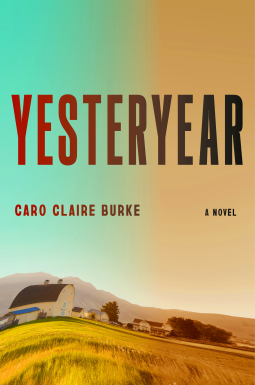
Yesteryear by Caro Claire Burke is an attempted satirical takedown of tradwife influencer culture that ultimately reflects a shallow understanding of fundamentalist Christianity and collapses under the weight of its third act.
This review contains major spoilers and discusses themes of religious fundamentalism, mental illness, and queerness.
Summary:
My name was Natalie Heller Mills, and I was perfect at being alive.
Natalie lives a traditional lifestyle. Her charming farmhouse is rustic, her husband a handsome cowboy, her six children each more delightful than the last. So what if there are nannies and producers behind the scenes, her kitchen hiding industrial-grade fridges and ovens, her husband the heir to a political dynasty? What Natalie’s followers—all 8 million of them—don’t know won’t hurt them. And The Angry Women? The privileged, Ivy League, coastal elite haters who call her an antifeminist iconoclast? They’re sick with jealousy. Because Natalie isn’t simply living the good life, she’s living the ideal—and just so happens to be building an empire from it.
Until one morning she wakes up in a life that isn’t hers. Her home, her husband, her children—they’re all familiar, but something’s off. Her kitchen is warmed by a sputtering fire rather than electricity, her children are dirty and strange, and her soft-handed husband is suddenly a competent farmer. Just yesterday Natalie was curating photos of homemade jam for her Instagram, and now she’s expected to haul firewood and handwash clothes until her fingers bleed. Has she become the unwitting star of a ruthless reality show? Could it really be time travel? Is she being tested by God? By Satan? When Natalie suffers a brutal injury in the woods, she realizes two things: This is not her beautiful life, and she must escape by any means possible.
Review:
What it does well
I love the set-up of this book. A tradwife influencer wakes up in the 1800s she was pretending to want to live back in and has to face the stark reality of that. Told in the tradwife “present,” flashbacks to her life before her influencer status, and flash forwards to her 1800s time travel. I was hooked. I needed to know how the time travel happened. The set-up reminded me of Kindred by Octavia Butler only with a hateable main character.
A note on my perspective:
I was raised a closeted bisexual cis girl in a fundamentalist Evangelical family. I, in modern terms, deconstructed and have become a progressive queer Christian adult. Nattie’s culture is the one I was raised in and am deeply familiar with. I was literally a rurally raised homeschooled girl who wasn’t allowed to wear pants. The author gets a lot wrong.
Religious inaccuracy and cultural flattening:
It is deeply unclear precisely what religion Nattie is. This should be clear, as a twisting of a specific faith into something for the far-right to weaponize is at the core of tradwife influencer culture. She goes to church every Sunday growing up with her mother and sister. She and her young, rich husband share a religion. But she only ever says “Christian.” If we are to assume that it is a fundamentalist version of US American Christianity, then it could broadly be Evangelical, traditional Catholic, or Latter-Day Saint. And that’s not even getting picky about denomination (Non-denominational? Baptist?). Here’s what we do know. She goes to church, not temple, so probably not LDS, even though she’s very clearly inspired by Ballerina Farm who is LDS. She gets full-immersion baptized as a teenager, so not Catholic. However, the book says a PRIEST baptizes her. The only denominations that refer to their leaders as priests do not perform full-immersion baptism. It’s a factual error that made me cringe. A lot.
Later in the book, Nattie crosses herself. She also has a hallucination that is clearly based on confession. Both of these are only done, again, by denominations with priests (Anglicans, Catholics). But she does none of the other things those denominations might do like observe a liturgical calendar or acknowledge saints. Despite this confusion, Nattie is portrayed as truly devout. We see inside her head. She prays a lot. She desires to be close to God. Yet, she never studies her Bible. She never brings her children to church, in spite of going every Sunday herself growing up. And church isn’t replaced by home church with her husband.
Another issue is AFTER she deconstructs, Nattie’s mother tells her she’s simply never been nice enough. The demand to “keep sweet” is a very common demand made of evangelical girls and women. We saw it in the Duggar family, and I lived it myself. Girls and women are supposed to be nice all the time. It makes no sense to me that her deconstructed mother’s main argument against her tradwife influencer daughter is she isn’t nice enough. A deconstructed person would be much more likely to say, “you’re lashing out because you’ve been asked to be something you’re not for so long. I want to know who you really are.” Not “why can’t you be nice?!”
All of these details point to an author writing from outside this culture who did not do the work required to understand it, resulting in a shallow, flattened portrayal of fundamentalist Christianity that borrows its aesthetics without engaging its lived realities. It’s this weird mash-up of things tradwife influencers mention without any understanding that tradwives come from different denominations with different ways of doing things and different belief systems.
Queer representation:
As a queer person myself, I’m deeply bothered by the way Nattie’s assault on her employee, Shannon, is presented. First of all, her first person account seems to be that she attempted to strangle her. But later Shannon says she sexually assaulted her. Which is the truth? The end of the book takes Shannon’s statement as face value. Nattie assaulted her because she’s a closeted lesbian. Nattie never admits to this, but she doesn’t deny it either. Does she think this is less bad than attempting to strangle her? Given her entire family’s response (and my own lived experience of fundamentalist opinions of queer people), it seems unlikely. If it is the case that we’re supposed to read this as Nattie has always been a closeted lesbian, then this is horrible representation. Not that LGBTQ folks can’t ever be the villain, but closeted people don’t automatically abuse their children and assault their employees.
Mental health representation:
Then there is the mental health representation. It is clear that Nattie first starts to fall apart after the birth of her first child when she develops very clear post-partum depression that a nurse expresses concern over and wants to get her help for but her mother intervenes and says she just needs to start running again. Her post-partum depression never gets better, she doesn’t actually enjoy mothering, but she keeps having children both because it’s what God wants and because it’s what her father-in-law demands in exchange for funding their hobby farm.
Ok, so here we get to the full mess. The big twist is that Nattie hasn’t time traveled to the 1800s. She hasn’t been kidnapped. After the big PR disaster of Shannon revealing the assault, her husband tells her that his father wants her to be killed. She suggests instead that what her husband really has always wanted is just to be left alone and they can do that. They can cut themselves off from the world and live like it’s the 1800s. They do just that, with the older children running away, and they are left with just the toddler and the children born after her. She thinks it’s literally the 1800s when she wakes up one day because she has periodic psychotic breaks. She thinks she might be being filmed for a reality tv show because, again, she’s lost her mind.
When her oldest daughter finally shows up years later with a court order for the children (there is no way on earth that would have taken that long, but that’s another tangent for another day), she expresses some sympathy for her mother but the court system prosecutes her and puts her in prison for 30 years for child abuse. Of course she did abuse her children but she is also very clearly very mentally unwell, and many other people boosted up this scheme of hers (her husband, other family that brought food to the edge of the property for the husband to pick up, the husband was escaping to a cabin with electricity and tv every day to watch football while she was actually living like the 1800s). The novel wants to have it both ways: to explain her behavior through mental illness while denying her any meaningful context, care, or accountability framework.
Final verdict:
I saw another review that said this book feels like it was written by one of the “Angry Women” Nattie talks about. The liberal women who are angry at her for existing. You can have a problem with far right culture and tradwife influencers and write a book about it. But you also need to actually understand the culture and not stomp on people with mental illnesses and necessarily closeted LGBTQ folks in the process.
Ultimately, while the satire of influencer culture is sharp, the novel’s handling of fundamentalism, queerness, and mental illness is reductive and stigmatizing. Additionally. its explanation for how Natalie ends up “in the 1800s” is far less imaginative and less effective than a true speculative or magical realist turn would have been.
If you found this review helpful, please consider tipping me on ko-fi, checking out my digital items in my ko-fi shop, buying one of my publications, using one of my referral or coupon codes, signing up for my free microfiction monthly newsletter, or tuning into my podcast. Thank you for your support!
2 out of 5 stars
Length: 400 pages – average but on the longer side
Source: NetGalley
Buy It (Amazon or Bookshop.org)
Stories That Heal: 5 Books for Mental Health Awareness Month
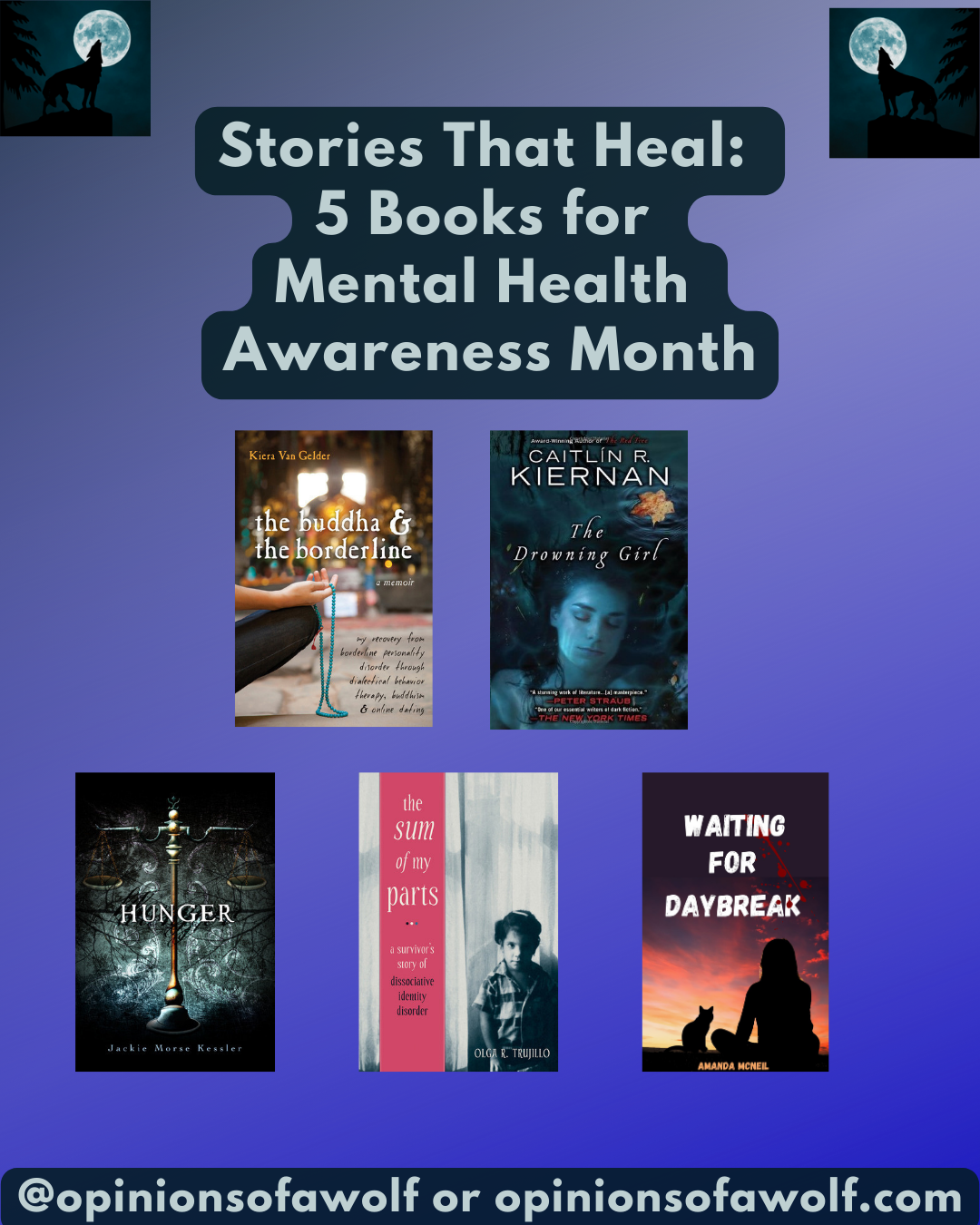
May is Mental Health Awareness Month—an annual observance founded by Mental Health America in 1949 to highlight the importance of mental wellbeing, educate the public, reduce stigma, and promote support for those affected by mental health conditions.
As someone who believes in the power of books to change lives, I thought this was the perfect time to share a mental health–focused reading list. Whether you frequently read books centered on mental health or are exploring this space for the first time, I hope you’ll find something here that resonates. This list includes a mix of fiction and nonfiction across genres—something for every reader.
The Buddha and the Borderline: My Recovery from Borderline Personality Disorder through Dialectical Behavior Therapy, Buddhism, and Online Dating by Kiera Van Gelder
(Amazon, Bookshop.org)
memoir
In this candid memoir set largely in Boston, Kiera Van Gelder traces her journey through Borderline Personality Disorder—from self-harm and addiction to healing through Dialectical Behavior Therapy and Buddhism. It’s an honest, hopeful account of finding stability and meaning after years of chaos.
(Read full review)
The Drowning Girl by Caitlin R. Kiernan
(Amazon, Bookshop.org)
literary fantasy, LGBTQIA+
In this haunting literary mystery, India Morgan Phelps—Imp to her friends—tries to untangle what really happened the summer she met Eva Canning. Was Eva a mermaid? A werewolf? Or is Imp’s memory altered by her schizophrenia? Told in lyrical, first-person prose, The Drowning Girl explores mental illness, identity, and unreliable memory, with nuanced queer representation and a mystery that unfolds entirely from within.
(Read full review)
Hunger by Jackie Morse Kessler
(Amazon, not available on Bookshop.org)
fantasy, YA
In this early 2010s YA standout, Hunger blends biting fantasy with raw realism to explore anorexia through a supernatural lens. When teen Lisabeth Lewis is visited by Death and becomes Famine—one of the Four Horsemen of the Apocalypse—she’s forced to confront the eating disorder that controls her life. With Buffy the Vampire Slayer-style humor and emotional honesty, this novel offers a powerful, metaphor-rich take on the inner voice of anorexia and the path to healing.
(Read full review)
The Sum of My Parts: A Survivor’s Story of Dissociative Identity Disorder by Olga Trujillo, JD
(Amazon, Bookshop.org)
memoir
In this powerful memoir, Olga Trujillo—once a successful attorney in D.C.—recounts their journey through the diagnosis, treatment, and recovery process of Dissociative Identity Disorder. As long-repressed memories of childhood abuse begin to surface, Olga works to integrate their parts and reclaim their life. With compassion, clarity, and survivor-centered care, this memoir offers both insight and hope to anyone seeking to understand trauma, dissociation, or the long path to healing.
(Read full review)
(Note: At the time I wrote my original review, Trujillo had not yet come out as nonbinary, so older references use previous pronouns.)
Waiting for Daybreak by Amanda McNeil
(Amazon, Bookshop.org)
zombie horror
In my own novel, Waiting for Daybreak, a young woman with Borderline Personality Disorder unexpectedly finds sobriety from alcoholism and strength when a zombie outbreak turns Boston upside down. Frieda has spent years battling emotional chaos and isolation—but when a mysterious virus brings society to a halt, she discovers survival suits her better than daily life ever did. As she sets out to save her sick cat, her solitary routine shatters, and she’s forced to reengage with a world that no longer plays by the rules. A character-driven post-apocalypse, Waiting for Daybreak explores mental illness, addiction recovery, and the fragile resilience that can grow in even the bleakest moments.
(See what readers are saying)
I hope you’ve found something here that speaks to you. If you have a favorite book that explores mental health—fiction or nonfiction—I’d love to hear about it in the comments!
Book Review: The Arctic Curry Club by Dani Redd

Summary:
Soon after upending her life to accompany her boyfriend Ryan to the Arctic, Maya realises it’s not all Northern Lights and husky sleigh rides. Instead, she’s facing sub-zero temperatures, 24-hour darkness, crippling anxiety – and a distant boyfriend as a result.
In her loneliest moment, Maya opens her late mother’s recipe book and cooks Indian food for the first time. Through this, her confidence unexpectedly grows – she makes friends, secures a job as a chef, and life in the Arctic no longer freezes her with fear.
But there’s a cost: the aromatic cuisine rekindles memories of her enigmatic mother and her childhood in Bangalore. Can Maya face the past and forge a future for herself in this new town? After all, there’s now high demand for a Curry Club in the Arctic, and just one person with the know-how to run it…
Review:
Fun destinations, delicious descriptions of homemade Indian cuisine, and a plot that you think is going to mainly be about a boyfriend but then isn’t. This book was a real treat!
Maya starts the book out as one of those women who has lost her own identity and just kind of follows her boyfriend around in his life. Not great! But it soon becomes apparent that she’s struggling like this due to mental illness (anxiety) and childhood trauma. When challenges begin to arise, Maya surprises by rising to them, and in delightful ways. I was pleasantly surprised by the trajectory of the book. I started it out thinking I was going to be reading a romance and by the end I felt like I read a story about self-actualization. It kind of reminded me of Talia Hibbert only without the steamy scenes. Plus, Maya is biracial. She’s half Indian and half white British.
The handling of mental illness in this book is really adept. There is a perfect combination of sympathy but also the realization that, even with a mental illness, you have to self-advocate and push yourself. I especially appreciated that getting set up with a therapist on Zoom (due to being in the Arctic) was featured. But do take the trigger warning that some traumatic events are briefly described that feature some of the darker sides of mental illness. They are a necessary part of the story, but they are there.
The settings of the Arctic and India were both wonderfully written. I truly felt like I was in both places – the good and the bad! I loved the juxtaposition of the two as well. The descriptions of the food were divine, leaving me hungry. Finally, I found myself rooting for Maya as she found footing in her career.
Overall, this was a fun reading trip to two interesting locations, featuring lots of delicious sounding food, artful and realistic depictions of mental illness, and a gal who’s about herself, rather than changing for a guy.
4 out of 5 stars
Length: 400 pages – average but on the longer side
Source: NetGalley
Buy It (Amazon)
If you found this review helpful, please consider tipping me on ko-fi, checking out my digital items available in my ko-fi shop, buying one of my publications, or using one of my referral/coupon codes. Thank you for your support!
Book Review: Brain on Fire: My Month of Madness by Susannah Cahalan
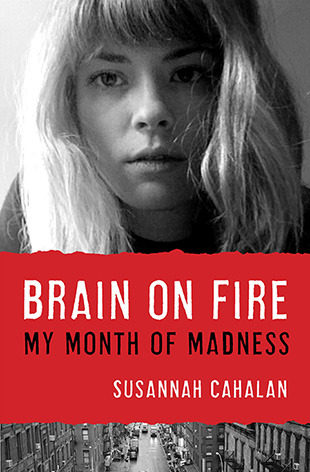 Summary:
When twenty-four-year-old Susannah Cahalan woke up alone in a hospital room, strapped to her bed and unable to move or speak, she had no memory of how she’d gotten there. Days earlier, she had been on the threshold of a new, adult life: at the beginning of her first serious relationship and a promising career at a major New York newspaper. Now she was labeled violent, psychotic, a flight risk. What happened?
Review:
Written by a journalist, the reader soon discovers this memoir is a survivor’s tale of brain encephalitis. Divided into three parts, the first establishes Susannah’s life when she came down with the illness and the first appearance of symptoms. The second covers the time period of her illness that she actually can’t remember, and features her own investigative journalism into what happened during that time. The third part covers the first part of her recovery time in the first year or so after she recovers her memory.
The first two thirds of the book are quite strong for different reasons. In the first third, Susannah recalls with such clarity the feeling of is this really happening or am I losing my mind? Specifically, the first thing that happens is she’s sure she has bed bugs but other people (including the exterminator) see no evidence of them. To this day, no one knows if Susannah really had bed bugs or if hallucinating them was a first symptom of her illness.
The second third of the book highlights her skills as an investigative journalist. Since she herself doesn’t remember the worst of her sickness immediately prior to or during her hospitalization, she is able to take an impartial distance to the whole situation and report on how her divorced parents put aside their differences to care for her together, as well as look at how the medical system both cared for her but also almost missed her critical diagnosis. Susannah recognizes how lucky she was to have people on her side advocating with the hospital for her, as well as to be in a city with such high-quality and cutting edge medical care.
The last third where she talks about her years of recovery and her life now was the weakest. The level of insight and analysis found in the first two parts was absent. While Susannah clearly empathizes with those with mental illness, there’s a clear sense that she thinks that all mental illness is just an illness making you look mental and not actually maybe a different way of interacting with the world. A different kind of normal you’re just born with. I think Susannah fails to take into consideration what if she was just born seeing colors more brightly and seeing the walls breathe? What if that was just always her normal? That’s the reality for many with a mental illness, and she kind of just glosses over that and comes down on the it’s all just a physical illness side. I’m more of a believer that it’s ok for there to be different ways to be “normal” and maybe society should stop shoving us all into the same shaped peghole. While it’s true that situations like Susannah’s where your whole personality changes overnight are devastating, that’s not how all mental illness presents, and I think she misses that in her quest to find and diagnose those with a brain inflammation misdiagnosed.
Overall, this is an intensely readable book that leaves you questioning what is truly madness and what is just abnormality? And what makes us who we are? If a person is unable to remember what they are doing, does that mean they’re behaving as themselves authentically or as quite the opposite?
If you found this review helpful, please consider tipping me on ko-fi, checking out my digital items available in my ko-fi shop, buying one of my publications, or using one of my referral/coupon codes. Thank you for your support!
4 out of 5 stars
Length: 250 pages – average but on the shorter side
Source: ARC from publisher in exchange for my honest review
Book Review: Made You Up by Francesca Zappia
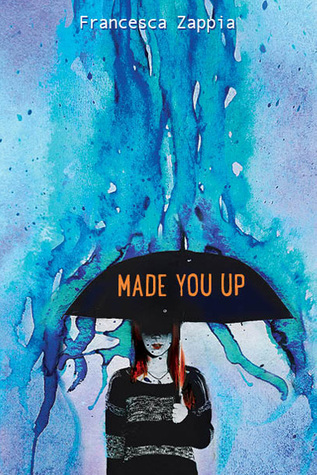 Summary:
Alex fights a daily battle to figure out the difference between reality and delusion. Armed with a take-no-prisoners attitude, her camera, a Magic 8-Ball, and her only ally (her little sister), Alex wages a war against her schizophrenia, determined to stay sane long enough to get into college. She’s pretty optimistic about her chances until classes begin, and she runs into Miles. Didn’t she imagine him? Before she knows it, Alex is making friends, going to parties, falling in love, and experiencing all the usual rites of passage for teenagers. But Alex is used to being crazy. She’s not prepared for normal.
Review:
A YA book featuring a main character with schizophrenia has a lot of potential — both to be great and to go awry. While Alex is always written with empathy, something I appreciated, I ultimately found other elements of the story to be too detracting for me to be able to wholeheartedly recommend it.
Alex, her battle with schizophrenia, and her parents’ attempts yet simulatneous inability to really deal with it fully, are all depicted well in this story. While I think the plot comes dangerously close to making Alex’s parents look like bad guys, ultimately enough other perspectives are shown that it does appear more like a mistake on their part, and a consequence of dealing with such a serious illness and situations for such a long time, rather than something truly mean-spirited or cruel. Alex has enough of a grip on reality to be relatable, while her struggles with aspects of her mental illness are heart-breakingly represented. So why so few stars?
First, while it may be part of her delusions, it’s never made clear if Miles’ grandfather was actually alive during WWII. Alex takes it as fact, and it’s not one that’s ever disputed the way others are. It’s a real stretch for someone Miles’s age to have a grandparent who was alive in WWII as anything other than a baby (and even then, that’s a stretch), particularly since this grandfather is through his maternal line, and women have less of a window in which to have children than men do. It may seem like a small issue, but it’s something that really bugged me. I’m ok with it if it’s ultimately part of one of Alex’s delusions but I do think that should be made clear somewhere in the book.
I also didn’t like the entire plot surrounding Miles’s mother. Essentially, his father falsely convinces the authorities that she’s crazy so that she’ll get locked up in a mental institution and not be able to leave her abusive marriage with her son. The fact that she’s been locked up for years and no one has noticed is just not something I believe could happen in this day and age. The initial mental health screening? Yes. A sane woman remaining in an institution for years against her will? No. It’s clearly established that this is a real thing that happens, not one of Alex’s delusions, and it just had me rolling my eyes.
The ending struck a sour note for me as well. Without giving anything away, Alex is presented as a strong young woman battling an equally strong illness and in the end she kind of just loses her gumption. While I think accepting help is good, the way she accepts it and the way she graduates from it both rubbed me the wrong way. I’m not sure about the message it’s sending to the YA audience.
So while I really appreciate the character of Alex and seeing schizophrenia represented to realistically and while the plot did keep me reading, enough sour notes were hit for me that I ultimately just found it to be an average read.
If you found this review helpful, please consider tipping me on ko-fi, checking out my digital items available in my ko-fi shop, buying one of my publications, or using one of my referral/coupon codes. Thank you for your support!
3 out of 5 stars
Length: 428 pages – average but on the longer side
Source: Library
Counts For: Mental Illness Advocacy Reading Challenge
Specific Illness –> Schizophrenia
Book Review: Girl Against the Universe by Paula Stokes
 Summary:
Maguire is bad luck.
No matter how many charms she buys off the internet or good luck rituals she performs each morning, horrible things happen when Maguire is around. Like that time the rollercoaster jumped off its tracks. Or the time the house next door caught on fire. Or that time her brother, father, and uncle were all killed in a car crash—and Maguire walked away with barely a scratch.
It’s safest for Maguire to hide out in her room, where she can cause less damage and avoid meeting new people who she could hurt. But then she meets Jordy, an aspiring tennis star. Jordy is confident, talented, and lucky, and he’s convinced he can help Maguire break her unlucky streak. Maguire knows that the best thing she can do for Jordy is to stay away. But it turns out staying away is harder than she thought.
Review:
I picked this up because I heard it featured mental illness in a realistic manner, and I think that’s something that’s important, particularly in YA. I was not disappointed.
Maguire has a form of Obsessive-Compulsive Disorder (OCD) that developed in response to trauma. She’s been around when some very bad things happened, and her survivor’s guilt has kind of gotten out of control. The reader meets Maguire initially through her therapy session, where she is definitely a sullen teenager. Maguire’s approach to her mental illness is one of the more realistic parts of the book. She at first very firmly believes that everyone else is crazy in refusing to acknowledge her “bad luck.” But slowly with the help of her therapist she comes to see that maybe it’s all in how she’s perceiving the random universe, and that her magical thinking won’t really fix anything.
While I didn’t think having a love interest was necessary (why couldn’t it be a friend for once), I get why Jordy was included and I liked him beyond the love interest part. Jordy’s existence shows that therapy can be useful for things beyond more serious mental illnesses, such as relearning coping mechanisms or dealing with issues in your family. I also appreciated that for once there wasn’t a love triangle.
I did think the writing was a little bit too simplistic for the audience, and I also thought that sometimes the descriptions were rocky. Some sentences read early first draft with the list of descriptors that are then repeated every time characters show up again. But I also think that YA readers who aren’t used to seeing themselves (or their loved ones) in literature will be so enthralled by Maguire and her realistic therapy assignments and issues that they will quickly gloss over that.
Recommended to fans to contemporary YA lit looking for a realistic mental illness depiction.
If you found this review helpful, please consider tipping me on ko-fi, checking out my digital items available in my ko-fi shop, buying one of my publications, or using one of my referral/coupon codes. Thank you for your support!
4 out of 5 stars
Length: 400 pages – average but on the longer side
Source: Library
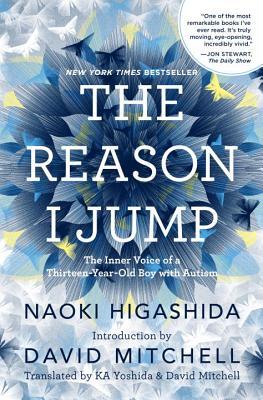
Book Review: The Reason I Jump: The Inner Voice of a Thirteen-Year-Old Boy with Autism by Naoki Higashada
 Summary:
Born in 1992 and diagnosed with Autism at the age of 5, Naoki uses an alphabet board to painstakingly write. In this book, he addresses answers to common questions neurotypicals have about people with Autism, such as “Why do you line up your toy cars and blocks?” and “Why don’t you make eye contact when you’re talking?” Mixed in with answers to these questions are short stories that Naoki has written, squashing the myth that those with Autism lack imagination.
Review:
I read this for Katie of Doing Dewey’s Nonfiction Book Club back in April, which was also Autism Awareness Month. I don’t often have the time to do group reads, but this book appealed to me and was short, would count for the Mental Illness Advocacy Reading Challenge I host, and I was able to get a digital copy from the Boston Public Library. I read this in one day in just my morning and evening commutes. It’s a short but mind-opening work.
For those who don’t know, Autism is a spectrum disorder. This basically means that Autism can severely or minorly impact how a person with it functions with the world (and everything in-between). Someone who is high functioning may mostly just strike others as a bit odd, whereas those most severely impacted are unable to communicate at all. You may read more about Autism here.
Naoki’s Autism is more severe. He is mostly unable to speak but he has learned how to communicate by pointing to an alphabet board with an assistant who writes down what he points at. Since Autism is so individualized, bare in mind when reading this book that his answers might not necessarily apply to everyone with Autism. That said, Naoki generally answers the questions with the word we, not I. My suspicion is this may be due to cultural reasons. Naoki is Japanese, which is generally a less individualized culture than our own. Additionally, his words have been filtered through a translator. It’s important, I believe, for a reader to keep all of these things in mind when reading this book.
This is a short book and an easy read, so I won’t say too much beyond the two biggest takeaways I had. First, I think in general people often wonder if people with Autism are similar to neurotypicals inside or are completely foreign. I think Naoki’s book smashes that question with a sledgehammer. It left me with the distinct impression that people with Autism are extremely similar to neurotypicals, but their signals from their bodies interfere with their ability to interact with the world. But Naoki puts this better than me.
It’s as if we’re remote-controlling a faulty robot. (page 16)
My second takeaway was that we should never make assumptions about anyone with Autism. The biggest example of this is that it is generally assumed people with Autism do not have an imagination. (I’ve even seen having an imagination being used as a way to rule out some people as having high functioning Autism). But Naoki, who very clearly has Autism, also very clearly has a bright imagination. His own short stories are inter-mixed throughout the book. They struck me as things any 13-year-old might write. That may sound simple, but that’s a big deal for a person who others might assume is “abnormal” for 13 with “no imagination.”
I do wish that the person interviewing Naoki had asked a wider variety of questions. Some of the questions can get a bit repetitive, and I wondered why they didn’t ask something deeper. Instead of continually asking things like why do you do this or why do you do that ask more about what he enjoys. What his hopes and dreams are. Does he think there’s a god. Things like that.
Overall, though, I highly recommend this book to anyone who is curious about what it’s like to have Autism, as well as to those who do or may come into contact with someone with Autism.
If you found this review helpful, please consider tipping me on ko-fi, checking out my digital items available in my ko-fi shop, buying one of my publications, or using one of my referral/coupon codes. Thank you for your support!
4 out of 5 stars
Length: 135 pages – short nonfiction
Source: Library
Counts For:
Mental Illness Advocacy Reading Challenge
Book Review: Stuff: Compulsive Hoarding and the Meaning of Things by Randy O. Frost and Gail Steketee
 Summary:
It may be difficult to describe a hoard, but you know one when you see one. Maybe you have a neighbor who keeps their shades drawn but when you enter their home you see piles and piles of stuff that either they keep for a project they’ll do one day or because every scrap of it contains important information (according to them). Maybe you’ve only encountered hoarding through reality tv shows focused around the forced clean-up of homes that immediately appear unlivable to you but yet that the person on the show insists is full of treasures. Or maybe you grew up in a home where the hoard slowly encroached on your own room
Between 2 and 5 percent of the population suffers from Hoarding Disorder. Frost and Steketee were the first to begin scientifically studying it. Here, couched in tales of real interactions with and homes of clients (who granted their permission to be featured in an anonymized fashion) Frost and Steketee present both what we know and what we don’t know about hoarding, as well as best practices for helping someone with the disorder.
Review:
As an outside observer of a hoard, it can often be difficult to imagine what leads a person to believe trash is treasure. But of course it’s more complicated than someone just being unable to recognize trash. After all…one man’s trash is another man’s treasure. The authors attack this head-on by first giving a true definition to what counts as hoarding and then talking about various causes and possible presentations of the disorder. So what counts as hoarding?
It hardly matters how much stuff anyone owns as long as it doesn’t interfere with his or her health or happiness or that of others….Hoarding is not defined by the number of possessions, but by how the acquisition and management of those possessions affects their owner. (page 58)
So basically, it counts as hoarding if the collection of items interferes with the person’s health or happiness or the health or happiness of others nearby. The complicated gray area of course is that the sufferer may not realize that the hoard is interfering with their happiness and health. That is the point of conflict for many loved ones of people who hoard.
After establishing and defining what hoarding disorder is and is not, the authors continue on to analyze the behavior and mind of someone suffering from hoarding. Fascinatingly, hoarding shares commonalities with many other mental illnesses, seeming to a certain extent to defy categorization, although the DSM 5 currently lists it among “Obsessive Compulsive and Related Disorders.” Are you shocked? Did you think that OCD always means cleanliness? The fact is that is often not what OCD means. It’s a misunderstanding spurred on by popular culture. OCD is an obsession. It can be with cleaning and germs but it can also be with anything. It also often features repetitive behaviors. If you think about it, you can see what hoarding has in common with this. People who hoard become obsessed with the idea of not losing something important, of collecting everything relevant to a certain idea, of not wasting things. They also can come to establish repetitive behaviors such as maybe always buying a newspaper from a certain store on the way home from work. Another similarity with OCD is that hoarders often are perfectionists. Part of why their homes become cluttered is they are obsessed with only doing a perfect job of cleaning up or of fixing something or using some item for a project, and they become paralyzed with the fear that they can’t do it good enough, so they never start.
The authors also talk about how hoarding has commonalities with Impulse-Control Disorders, such as gambling and compulsive buying. Many people who hoard also struggle with both of these ICDs, and it’s easy to see the relationship here. Similarly, many hoarders show symptoms of ADD. They often do much better cleaning up if there is simply someone there to help them maintain focus, rather than being easily distracted.
Hoarding is also often a result of trauma. People suffer a trauma and essentially attempt to build a protective space around themselves by hoarding.
Compared to people who do not suffer from hoarding problems, clutterers report a greater variety of traumatic events (an average of six versus three), as well as a greater frequency (an average of fourteen versus five) of such events. The type of trauma most often experienced by hoarders include having had something taken by threat or force, being forced into sexual activity, and being physically assaulted. (page 87)
Interestingly, there’s a comparatively low incidence of PTSD among hoarders, in spite of such a high incidence of trauma. (A 2006 study found only 6% of hoarders had PTSD, page 91). It is possible that hoarding prevents the development of PTSD. Many hoarders also report a childhood devoid of warmth and support, so even if they were not traumatized, it is still likely that they had a cold, distant childhood. In contrast to PTSD, the majority of hoarders (nearly 60%) meet the criteria for major depression, and it is posited that this depression could be in response to the hoarding itself.
People draw conclusions about their worth and competence based on their inability to control their living space, and not being able to entertain people in their homes isolates them and limits their social lives. (loc 532)
The authors then talk about what may be going on in the heads of people who hoard. People don’t do things completely irrationally. There are reasons for it. There are multiple possibilities for hoarding of what may be going on. No single aspect has been determined yet. However, in general, hoarders suffer from a different type of threat signal. They fear something being removed, rather than the presence of something. It has also been posited that they have the opposite of claustrophobia. They feel safer in small, tight spaces, so they artificially create them. Hoarders also frequently struggle with identity. Rather than knowing who they are, they often are defined by the question “Who am I?” and collect items to try to show who they are. In addition to the aforementioned perfectionism, hoarders also seem to view items differently from the rest of us. They are generally very optimistic about future usefulness and can be quite creative as to reusing things. It has been posited that hoarding may be creativity run amok. However, many hoarders also gamble compulsively and the relationship between a hoarder’s positive thinking and a gambler’s is interesting.
“Seeing the scratch tickets over the counter at the convenience store leads me to think, One of those tickets is surely a winner, maybe a million-dollar winner. How can I walk away when the opportunity is there?” Our hoarders have said similar things about items they’ve wanted to acquire. (loc 202)
Distress avoidance is also often a common feature. Distress avoidance is when a person seeks to avoid a situation that they think will cause them distress. They then build up that situation in their heads to be more of a stressor than it actually would be. Continual avoidance of these types of situations also weakens a person’s ability to deal with them (due to lack of practice), so it’s a bit of a self-fulfilling prophecy.
Animal hoarding is its own special subcategory, and it seems that in addition to all of the other possible hoarding issues, animal hoarders may suffer from a form of an attachment disorder where their bonds with other humans are frayed and easily broken and replaced by bonds with animals.
So, essentially, hoarders are often people who are perfectionists who tend to perform rituals and struggle with impulse control. They may compulsively shop and/or gamble in addition to hoarding. They often had cold, distant childhoods and/or suffered a trauma (or traumas). They tend to come at life from a basis of fear and feel safer in tight, closed spaces, and their fear is heightened by removal of things, rather than appearance of new things. At some point, they started avoiding distress, and this distress avoidance became a self-fulfilling cycle. They also frequently struggle with knowing who they are internally, rather looking outward to possessions for identity signals. In addition to these compulsions and fears, hoarders also often see things differently or in more detail than non-hoarders, and they also struggle to focus or concentrate, making cleaning up even more difficult for them.
The authors conclude by discussing both how to treat hoarding and effects on family members and loved ones (as well as on communities). The authors stress repeatedly that forced clean-ups are the absolute worst possible solution or treatment option. A forced clean-up just fulfills the person’s fear that people are out to get them, and simply makes them cling on to their possessions even more aggressively. It also can make them more depressed. Since their identity is wrapped up in their possessions, getting rid of them by force can cause emotional trauma akin to someone chopping off your hair by force. I was stunned to learn that there have been cases of people who hoard committing suicide after a forced clean-up. The authors strongly advocate for the much slower, but with more long-term positive results, method of going through the hoard with the person slowly and basically teaching them new ways to think about both their possessions and their identity. They also state that it’s easier to treat compulsive buying and gambling than hoarding, so when possible treat that first to prevent the arrival of new items into the hoard. It is a long, difficult treatment plan to go through a hoard slowly, and sometimes it may be necessary to remove the person from the home for safety but then to return with them repeatedly to work on cleaning out the hoard.
The fact that forced clean-ups are the worst possible solution for the sufferer and the fact that hoards get worse over time leads me to believe that early interventions are absolutely critical to render the most help to those suffering from hoarding. But this is a complex thing. Since many cases of hoarding start due to a cold home environment or from trauma, it may be difficult to get parents behind addressing the situation early. Many people who hoard interviewed in the book talk about their hoarding beginning to get out of control by late in their freshman year of college. Perhaps this is something colleges should be keeping an eye out and offering help for. Additionally, shame is often mentioned as a factor in keeping the problem hidden. Perhaps PSAs and other public service campaigns could both lessen the stigma and offer help to people early on in the development of a hoard.
So much of hoarding is stigmatized. To a certain extent this is understandable. It often isn’t seen by the public until it has reached a public health crisis level or in situations where animal hoarders are keeping their hoards in deplorable conditions. Often loved ones of those who hoard feel trapped and frustrated by the hoarding. They feel as if the loved one loves their stuff more than them. These are complex issues and professional help is required to address them. I honestly don’t think this is a situation that is easily handled one family at a time. A family member must be well-informed and patient and empathetic enough to wait through the long treatment process. Often that family member is the child of the hoarder and therefore a minor with no power, which makes the issue even more complex. This is definitely a situation in which public health education campaigns on things like early warning signs of hoarding tendencies and ways to seek help could be extremely helpful long-term. I do believe the authors could have taken things one step further at the end of the book to this connection to public health, rather than mostly focusing on individual therapy. They do mention less consumerism would be helpful, but that simply is not much of an observation. It is a small complaint, but I do feel that this interdisciplinary leap is important.
Overall, this was a fascinating, enlightening book. The authors have conducted extensive scientific research for years, and they do an awesome job of writing this information at the consumer level, as well as humanizing it by bringing in real cases with clients who they render in a three-dimensional fashion. I know I for one will never be able to stomach watching forced clean-ups on the tv show “Hoarders” again. Recommended to really everyone. Anyone could potentially know someone who struggles with hoarding, whether now or in the future, and the book is very readable.
If you found this review helpful, please consider tipping me on ko-fi, checking out my digital items available in my ko-fi shop, buying one of my publications, or using one of my referral/coupon codes. Thank you for your support!
4 out of 5 stars
Length: 309 pages – average but on the longer side
Source: Library
Counts For:
Illness(es) featured: Hoarding Disorder
Book Review: Bird Box by Josh Malerman
 Summary:
Malorie thought the hardest thing she was going to have to face was dealing with her pregnancy and impending single motherhood. She thought the warnings about seeing something that makes you go crazy and become violent was just the news blowing things out of proportion, or at least just hysteria. Her sister believed in it, but not herself.
But that was all years ago, and now Malorie is alone in a house with her two children. Children who have never been outside without blindfolds on. She only leaves the house blindfolded, tapping the ground with a stick to find the well. But now it is time for her to be brave and to take a boat on the river, just she and her two children, blindfolded, in the hopes of finding salvation.
Review:
I was drawn to this book for two reasons. First, the mere thought of a mother and two young children boating down a river blindfolded had me intrigued. Second, it’s set in Michigan, which is where my husband is from, and honestly I can’t recall the last time I saw a book set in Michigan. These two elements came together to tell me this book is probably unique. So when I saw the kindle version on sale on Amazon, I snatched it up. What I found was a chilling tale that could easily fit within the Lovecraft mythos.
The order the story is told in helps build the suspense and keeps it from being a same old apocalypse and survivors’ tale. The book opens with Malorie and her two children living alone in the house. It opens post-apocalyptic. Through flashbacks we learn various things such as who used to live in the house with Malorie, why there are certain parts of the house she doesn’t like to go to, and why neither she nor the children leave the house without blindfolds on. From here, the reader is then taken forward into Malorie’s action onto the river, going down it trying to find a safe haven of other survivors that she knows used to be there years ago. It’s a nice combination of flashback and plot progression forward that keeps the suspense interesting.
It is no spoiler to say that what caused the apocalypse is something that causes people to go stark raving mad when they see it. This is included in the official book blurb. What was interesting to me was how Malerman kept this from being purely straight-forward. Some characters believe in the mysterious creatures right away, others don’t. Some think that merely believing it will cause you to go crazy makes you go crazy. Some think that some are affected and others aren’t. Some wonder if animals are affected too, and no one knows where the creatures came from or, if you don’t believe in the creatures, how the phenomenon started. The lack of clear-cut answers reflects reality. In general, with large-scale catastrophes, it’s hard to know exactly what happened or what is going on. This lack of knowing made the situation read as real, even if the exact situation is an absurd sounding one at first.
I was also struck by how well Malerman wrote a female version of experiencing the apocalypse. Malorie is both focused on surviving for herself and her baby but also distracted from the apocalypse because she is having normal hormonal reactions to pregnancy. Similarly, while some characters embrace her as a symbol of hope, others see her as a burden. Malorie was a refreshing change from the young, virile, kick-ass heroine often seen in post-apocalyptic books. She is strong, yes, but not in a kick-ass way. She is strong in a she’s doing her best to be a good mom and still survive type way. And that’s a nice thing to see in post-apocalyptic horror fiction.
The book naturally ends up pondering “madness” a lot. The creatures drive any who see them into near-caricature depictions of madness. Sometimes the person becomes violent against others. Sometimes the person turns on themselves, killing themselves or self-injuring to the extent that they die. There are a lot of questions about what the human mind can handle. There is a lot of argument in the book for agency against all odds.
It’s better to face madness with a plan than to sit still and let it take you in pieces. (loc 4034)
On the one hand, I appreciate the argument for agency and fighting for your sanity and humanity. On the other hand, I’m not sure how I feel about a metaphor where madness happens to people who just aren’t careful enough or don’t have enough of a plan. While it’s valid that a mental illness must be fought every day and some have more natural resiliency than others, there’s a tone of blame to the theme that strikes me the wrong way.
*small spoiler*
At one point, it is postulated that perhaps the only ones immune to being driven mad by the creatures are those who are already mentally ill because they are already mad. There is no science behind this thought. There is simply a character who appears to have paranoid schizophrenia who firmly believes the creatures are not actually dangerous because he has seen them and is fine. Yet he is a character who ends up instigating an incredibly violent scene. While it is true that there are violent extremes of mental illness, there are also those that are not. The book fails to bring out the subtleties and varieties of mental illness. Imagine the power that could have been from a character who had, for instance, OCD and was able to see the creatures and interact with them without harming anyone and able to understand that others cannot see them safely. Imagine if it was simply that seeing the world differently already, being abnormal, protected one from being driven truly mad by the creatures. What an interesting direction that could have taken the story.
*end spoilers*
Thus, in general, while I appreciate the more unique and interesting things the book did, such as focusing on a pregnant woman and then a young mother as the main character and telling the plot in a non-linear way, ultimately the book did not push the boundaries or the ideas far enough to truly enrapture me. Recommended to horror, Lovecraft, and post-apocalyptic fans looking for a read with a young mother as the focus.
If you found this review helpful, please consider tipping me on ko-fi, checking out my digital items available in my ko-fi shop, buying one of my publications, or using one of my referral/coupon codes. Thank you for your support!
4 out of 5 stars
Length: 305 pages – average but on the longer side
Source: Amazon

Book Review: An Artificial Night by Seanan McGuire (Series, #3)
 Summary:
When two of Toby’s good friends’ children go missing from their own bedroom and another won’t wake up from being asleep, they call Toby in immediately to look for them. Soon the King of Cats reports that some of his kingdom’s children are missing too, and Quentin’s human girlfriend disappears as well. It quickly becomes clear that it’s time for the 100 year cycle of Blind Michael’s Hunt. Blind Michael, the Luidaeg’s brother, is incredibly powerful, and only three roads lead to his realm. Toby can only take each road once. That means she has only three chances to save the children and stop the Hunt.
Review:
I picked this book up immediately after finishing the second in the series and, oh man, it did not disappoint. This book presents an old school Brothers Grimm style blood-curdling, toes-curling fairy tale, peppered with characters we’ve already come to know and love.
Blind Michael is scary. What he does to the children is really scary. He turns the fae children into “Riders” monstrous twists on real fae features. He turns the human children into their horses for them to ride. Everything about Blind Michael and his twisted land scared the crap out of me, and I don’t scare easily. It was exactly the sort of scare I used to seek out as a child from the original Grimm Fairy Tales (the ones that are not cleaned up). This book goes a lot darker than the first two, which were already dark, and it went there in such a different way from the first two plots. The first two plots were entirely about murder, here we have someone stealing children from their beds. It’s a completely different type of scare and different sort of mystery for Toby to have to figure out.
The plot tells more than just this one mystery, though, it also brings out some information that is key to the overarching plot of the series. I really enjoyed how smoothly this was worked together, and I also must say I didn’t predict at all where it was going.
There are basically two themes in the book, one I appreciated and the other I didn’t particularly agree with. Let’s start with the one I didn’t agree with.
There’s a theme in the book that children on some level must deal with and be held responsible for the choices of their parents. Toby tries to pretend otherwise, but that doesn’t work out so well for her.
Blood will tell. I tried to pretend it wouldn’t that we could change, but blood always tells. We carry the burdens of our parents. (loc 312)
It basically reads as the idea that you can’t run away from your family or from your blood, your nature. Personally, I don’t like that frame of thought. You can leave your family of birth and not have to be held responsible for them. You are not your parents. You are your own person. You are not responsible for what your parents do after you leave home. So this theme didn’t sit well with me. Other readers who agree with this theme will obviously enjoy it more.
The other theme was one I was quite happy to see so directly addressed in an urban fantasy and that is of suicidal ideation. There are many different ways that suicidal ideation can manifest, but with Toby her symptoms are that she firmly believes her death is imminent and is planning for it, and she repeatedly throws herself into risk situations because she doesn’t care if she dies. Suicidal ideation essentially means that a person is lacking self-preservation instincts and is ok with dying. They won’t actually commit suicide but they will put themselves into dangerous situations because part of them does want to die. So they might run across a street without looking, go walking alone at 2am in a dangerous neighborhood, etc… Toby’s depression from the first two books has grown so much that she is now at this point, and people have started calling her out on it. Seeing her realize that she’s, in layman’s terms, got a death wish, is interesting and well-done. What I appreciate most about it is how directly it is addressed.
Because, dear October, you’re the most passively suicidal person I’ve ever met, and that’s saying something. You’ll never open your wrists, but you’ll run head-first into hell. You’ll have good reasons. You’ll have great reasons, even. And part of you will be praying that you won’t come out again. (loc 3876)
Overall, this entry in the series brings back the characters readers have come to love and puts them into a new mystery much more terrifying than the first two. Two strong themes in the book include nature/nurture/ties to parents and dealing with suicidal ideation. Fans of the series won’t be disappointed. This is a roller coaster ride of emotions and peril.
If you found this review helpful, please consider tipping me on ko-fi, checking out my digital items available in my ko-fi shop, buying one of my publications, or using one of my referral/coupon codes. Thank you for your support!
4 out of 5 stars
Length: 368 pages – average but on the longer side
Source: Library

Previous Books in Series:
Rosemary and Rue, review
A Local Habitation, review
Counts For:

 Support my work with a tip or browse my shop for curated book club guides, how to guides, cross-stitch patterns, and more!


This work by Amanda Nevius is licensed under a Creative Commons Attribution-Noncommercial-No Derivative Works 3.0 United States License.
 Opinions of a Wolf