
Archive
Book Review: The Drowning Girl by Caitlin R. Kiernan (Audiobook narrated by Suzy Jackson)
 Summary:
India Morgan Phelps, Imp to her friends, is sure that there were two different Eva Cannings who came into her life and changed her world. And one of them was a mermaid (or perhaps a siren?) and the other was a werewolf. But Imp’s ex-girlfriend, Abalyn, insists that no, there was only ever one Eva Canning, and she definitely wasn’t a mermaid or a werewolf. Dr. Ogilvy wants Imp to figure out for herself what actually happened. But that’s awfully hard when you have schizophrenia.
Review:
I’d heard that this book was a chilling mystery featuring queer characters and mental illness. When I discovered it on Audible with an appealing-sounding narrator, I knew what I was listening to next. This book is an engaging mystery that also eloquently captures the experience of having a mental illness that makes you question yourself and what you know while simultaneously giving a realistic glance into the queer community.
Imp is an unreliable first person narrator, and she fully admits this from the beginning. She calls herself a madwoman who was the daughter of a madwoman who was a daughter of a madwoman too. Mental illness runs in her family. She states that she will try not to lie, but it’s hard to know for sure when she’s lying. This is due to her schizophrenia. Imp is writing down the story of what she remembers happening in journal style on her typewriter because she is trying to figure out the mystery of what exactly happened for herself. The reader is just along for this ride. And it’s a haunting, terrifying ride. Not because of what Imp remembers happening with Eva Canning but because of being inside the mind of a person suffering from such a difficult mental illness. Experiencing what it is to not be able to trust your own memories, to not be sure what is real and is not real, is simultaneously terrifying and heart-breaking.
Imp’s schizophrenia, plus some comorbid anxiety and OCD, and how she experiences and deals with them, lead to some stunningly beautiful passages. This is particularly well seen in one portion of the book where she is more symptomatic than usual (for reasons which are spoilers, so I will leave them out):
All our thoughts are mustard seeds. Oh many days now. Many days. Many days of mustard seeds, India Phelps, daughter of madwomen, granddaughter, who doesn’t want to say a word and ergo can’t stop talking. Here is a sad sad tale, woebegone story of the girl who stopped for the two strangers who would not could not could not would not stop for me. She. She who is me. And I creep around the edges of my own life. Afraid to screw off the mayonnaise lid and spill the mustard seeds. (Part 2, loc 55:35)
The thing that’s great about the writing in the book is that it shows both the beauty and pain of mental illness. Imp’s brain is simultaneously beautiful for its artistic abilities and insight and a horrible burden in the ways that her mental illness tortures her and makes it difficult for her to live a “normal” life. This is something many people with mental illness experience but find it hard to express. It’s why many people with mental illness struggle with drug adherence. They like the ability to function in day-to-day society and pass as normal but they miss being who they are in their own minds. Kiernan eloquently demonstrates this struggle and shows the beauty and pain of mental illness.
Dr. Ogilvy and the pills she prescribes are my beeswax and the ropes that hold me fast to the main mast, just as my insanity has always been my siren. (Part 1, loc 4:08:48)
There is a lot of queer representation in the book, largely because Kiernan is clearly not just writing in a token queer character. Imp is a lesbian, and her world is the world of a real-to-life lesbian. She is not the only lesbian surrounded by straight people. People who are part of the queer community, in multiple different aspects, are a part of Imp’s life. Her girlfriend for part of the book is Abalyn, who is transwoman and has slept with both men and women both before and after her transition. She never identifies her sexuality in the book, but she states she now prefers women because the men tend to not be as interested in her now that she has had bottom surgery. The conversation where she talks about this with Imp is so realistic that I was stunned. I’m not sure I’ve ever seen a conversation about both transitioning and the complicated aspects of dating for trans people that was this realistic outside of a memoir. Eva Canning is bisexual. It’s difficult to talk about Eva Canning in-depth without spoilers, so, suffice to say, Eva is out as bisexual and she is also promiscuous. However, her promiscuity is not presented in a biphobic way. Bisexual people exist on the full spectrum from abstinent to monogamous to poly to promiscuous. What makes writing a bisexual character as promiscuous biphobic is whether the promiscuity is presented as the direct result of being bi, and Kiernan definitely does not write Eva this way. Kiernan handles all of the queer characters in a realistic way that supports their three-dimensionality, as well as prevents any queerphobia.
The plot is a difficult one to follow, largely due to Imp’s schizophrenia and her attempts at figuring out exactly what happened. The convoluted plot works to both develop Imp’s character and bring out the mystery in the first two-thirds of the book. The final third, though, takes an odd turn. Imp is trying to figure out what she herself believes actually happened, and it becomes clear that what she ultimately believes happened will be a mix of reality and her schizophrenic visions. That’s not just acceptable, it’s beautiful. However, it’s hard to follow what exactly Imp chooses to believe. I started to lose the thread of what Imp believes happens right around the chapter where multiple long siren songs are recounted. It doesn’t feel like Imp is slowly figuring things out for herself and has made a story that gives her some stability in her life. Instead it feels like she is still too symptomatic to truly function. I never expected clear answers to the mystery but I did at least expect that it would be clear what Imp herself believes happened. The lack of this removed the gut-wrenching power found in the first two-thirds of the book.
The audiobook narration by Suzy Jackson is truly stellar. There are parts of Imp’s journal that must truly have been exceedingly difficult to turn into audio form, but Jackson makes them easy to understand in audio form and also keeps the flow of the story going. Her voice is perfect for Imp. She is not infantilized nor aged beyond her years. She sounds like the 20-something woman she is. I’m honestly not sure the story would have the same power reading it in print. Hearing Imp’s voice through Jackson was so incredibly moving.
Overall, this book takes the traditional mystery and changes it from something external to something internal. The mystery of what really happened exists due to Imp’s schizophrenia, which makes it a unique read for any mystery fan. Further, Imp’s mental illness is presented eloquently through her beautiful first-person narration, and multiple queer characters are present and written realistically. Recommended to mystery fans looking for something different, those seeking to understand what it is like to have a mental illness, and those looking to read a powerful book featuring queer characters whose queerness is just an aspect of who they are and not the entire point of the story.
If you found this review helpful, please consider tipping me on ko-fi, checking out my digital items available in my ko-fi shop, buying one of my publications, or using one of my referral/coupon codes. Thank you for your support!
4 out of 5 stars
Length: 332 pages – average but on the longer side
Source: Audible

Counts For:

Book Review: Charlotte Sometimes by Penelope Farmer (Series, #3) (Bottom of TBR Pile Challenge)
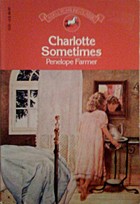 Summary:
When Charlotte goes away to boarding school for the first time, she’s very excited to get the bed with the particularly pretty wheels right next to the window. When she wakes up, though, the view from the window looks different, and people are calling her Clare! She discovers she’s traveled back in time to the same bed in the same boarding school, but during World War I. The next morning, though, she wakes up in the present again as Charlotte. This pattern continues, meaning both she and Clare are Charlotte….sometimes.
Review:
I picked this book up because I have an affinity for both boarding school books and time-travel books. This looked like the best of both worlds to me. A fun middle grade book that introduces to the reader to two different past time periods–the late 1960s of Charlotte’s present and the nineteen-teens of Clare’s present.
This book is the third in a series, but it is completely possible to read it as a standalone. No mention is made of the events in the first book, and the second book is actually about what Charlotte’s little sister does while she’s away at boarding school.
The concept is intriguing, because instead of time-travel happening once and landing the person stuck in the past (or future), Charlotte keeps switching, spending every other day in the 60s and every other day in the teens. (I get a migraine when the barometric pressure changes….I can only imagine how I’d feel if I time travelled! Do you think I could bring my green lamp therapy with me?)
In addition to the usual issues time-travel books bring up, such as what stays the same and what is actually different throughout time, it also brings up the key question of identity. What makes Charlotte Charlotte? Is she still Charlotte when she’s being called Clare? Why does hardly anyone notice that Clare has changed? Or Charlotte for that matter? The book thus addresses identity issues that middle grade readers might be going through, but in a subtle way through the time-travel trope.
Were you some particular person only because people recognized you as that? (page 66)
The time-travel itself is left as a fantastical mystery, rather than being given a scientific explanation. There’s something magical about the bed that only makes Charlotte and Clare switch places, but no one else. This works without an explanation because the young girls being subjected to the time-travel just accept it without explanation. This is their reality, and it doesn’t matter why it’s happening, they just have to deal with it. Some readers, though, might struggle with the fact that the time-travel itself is never explained.
The one thing that disappointed me about the book, and that I think would have made it a classic and a five star read, is that the book only explores what happens to Charlotte when the girls switch places. Clare, her experiences, and her perspective are only heard about through third parties. The book, while in third person, is entirely Charlotte’s perspective. Clare, a reserved, proper girl from the nineteen-teens must have been shocked by both the technology and the mores of the 1960s she suddenly found herself in. So much more could have been explored by telling both Charlotte’s and Clare’s story. The book misses an opportunity by only focusing on the modern day girl going back in time. The girl being thrust into the future, a future where she finds out Britain wins the war, and there is suddenly no food rationing or flu epidemic, that is such a cool story in and of itself, and Farmer just never ventures out to tell it.
Interestingly, the British band The Cure released a song called “Charlotte Sometimes” that they admitted was pulled directly from this book. Not just the title, but song lyrics are pulled from the first couple of lines of the book. Even the music video features scenes from the book. It seems to be quite a mystery who the actress was who played Charlotte in the video. She wasn’t credited, and there’s a lot of posts on the internet with people speculating about who she might be. In any case, Penelope Farmer was…not amused by the whole thing. But back to the book.
Overall, this is a book that sets up a fantastical world of time-travel within a boarding school. It utilizes the switching of two girls with each other in time to explore questions of identity in a way that surely will appeal to many middle grade readers. The book does not fully explore the story the way it possibly should have, but the young reader will probably enjoy filling in those gaps themselves. Recommended to all fans of boarding school, time-travel, or historic fiction set during World War I’s homefront.
If you found this review helpful, please consider tipping me on ko-fi, checking out my digital items available in my ko-fi shop, buying one of my publications, or using one of my referral/coupon codes. Thank you for your support!
4 out of 5 stars
Length: 174 pages – average but on the shorter side
Source: Better World Books

Previous Books In Series:
The Summer Birds
Emma in Winter


Edit note: Thanks to Vicky for pointing out it was published in 1969.
Book Review: The Edible Woman by Margaret Atwood (Bottom of the TBR Pile Challenge)
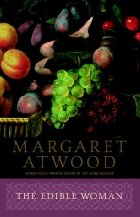 Summary:
It’s the 1960s in Canada, and Marian McAlpin is working writing and analyzing surveys for a marketing research firm. She has a feminist roommate she doesn’t quite understand, and hangs out with the three office virgins for lunch. Her boyfriend is comfortable and familiar. When he proposes to her, the office virgins think she’s hit the jackpot, her roommate questions why she’s following the norm, and her married and very pregnant friend seems hesitant about her fiancee. None of this really bothers Marian, though. What does bother her is that, ever since her engagement, there are more and more things she simply can’t eat. First meat then eggs then even vegetables! She thinks of herself causing them suffering, and she just can’t stomach them. What will happen to her if there’s eventually nothing left for her to eat?
Review:
I’m a fan of a few Margaret Atwood books, and the concept of this book intrigued me. Since I run the Mental Illness Advocacy Reading Challenge, I was also wondering if this might actually be a new take on anorexia. Unfortunately, Marian is not really anorexic, it’s more of an elaborate, overdone metaphor. Perhaps the plot is simply dated, but the interesting concept, when fleshed-out, comes out rather ho-hum.
The novel is divided into three parts, with Marian using first-person narration for the first and third parts, with third person narration taking over for the second. This is meant to demonstrate how Marian is losing herself and not feeling her own identity. It’s an interesting writing device, and one of the things I enjoyed more in the book. It certainly is jarring to suddenly go from first to third person when talking about the main character, and it sets the tone quite well.
It’s impossible to read this book and not feel the 1960s in it. Marian is in a culture where women work but only until marriage, where women attending college is still seen as a waste by some, and where there is a small counter-cultural movement that seems odd to the mainstream characters and feels a bit like a caricature to the modern reader. However, the fact that Marian feels so trapped in her engagement, which could certainly still be the case in the 1960s, doesn’t ring as true, given the people surrounding Marian. Her roommate is counter-cultural, her three office friends claim to want a man but clearly aren’t afraid of aging alone and won’t settle. Her married friend shares household and child rearing with her husband, at least 50/50. It’s hard to empathize with Marian, when it seems that her trap is all of her own making in her own mind. She kind of careens around like aimless, violent, driftwood, refusing to take any agency for herself, her situation, or how she lets her fiancee treat her. It’s all puzzling and difficult to relate to.
The Marian-cannot-eat-plot is definitely not developed as anorexia. Marian at first stops eating certain meats because she empathizes with the animals the meat came from. As a vegetarian, I had trouble seeing this as a real problem and fully understood where Marian was coming from. Eventually, she starts to perceive herself as causing pain when eating a dead plant, bread, etc… The book presents both empathizing with animals and plants as equally pathologic, which is certainly not true. Marian’s affliction actually reminded me a bit of orthorexia nervosa (becoming unhealthily obsessed with healthy eating, source) but the book itself presents eliminating any food from your diet as pathologic. Either Marian eats like everyone else or she is going off the deep-end. There is no moderate in-between.
What the Marian-cannot-eat-plot is actually used for is as a metaphor for how Marian’s fiancee (or her relationship with him) is supposedly consuming her. The more entwined with her fiancee she becomes in society’s eyes, the closer the wedding comes, the less Marian is able to consume, because she herself is being consumed. This would be quite eloquent if Marian’s fiancee or her relationship with him was actually harmful or consuming, but it certainly does not come across that way in what we see of it in the book.
Marian presents herself to her boyfriend then fiancee as a mainstream person, and he treats her that way. He does one thing that’s kind of off-the-rocker (crashes his car into a hedge) but so does she on the same night (runs away in the middle of dinner, across people’s backyards, for no apparent reason and hides under a bed while having drinks with three other people at a friend’s house). The only thing that he does that could possibly be read as a bit cruel is when she dresses up for a party he states that he wishes she would dress that way more often. It’s not a partner’s place to tell the other how they should dress, but it’s also ok to express when you like something your partner is wearing. Personally I thought the fiancee really meant the latter but just struggled with appropriately expressing it, and Marian herself never expresses any wants or desires directly to him on how they interact, what they wear, what they eat, how they decorate, etc…, so how could he possibly know? In addition to never expressing herself to her fiancee, Marian also cheats on him, so how exactly the fiancee ends up the one being demonized in the conclusion of the book is a bit beyond me. He’s bad because he wanted to marry her? Okay…… The whole thing reads as a bit heavy-handed second-wave feminism to me, honestly. Marriage seems to be presented in the book as something that consumes women, no matter if they choose it or are forced into it by society. It is not presented as a valid choice if a woman is able, within her society and culture, to make her own choices.
In spite of these plot and character issues, the book is still an engaging read with an interesting writing style. I was caught up in the story, even if I didn’t really like the ideas within it.
Overall, this is a well-written book with some interesting narrative voice choices that did not age well. It is definitely a work of the 1960s with some second-wave feminism ideas that might not sit well with modern readers. Recommended to those interested in in a literary take on second-wave feminism’s perception of marriage.
3 out of 5 stars
Source: Better World Books

Book Review: Something Spectacular: The True Story of One Rockette’s Battle with Bulimia by Greta Gleissner (Audiobook narrated by Dina Pearlman)
 Summary:
Greta Gleissner finally achieved her lifelong dream of making a living just from her professional dancing. She landed the prestigious job of being a Rockette in the New York City show. She hoped that this newfound stability and prestige would cure her of her bulimia. What was there to binge and purge about when she was living her dream? But her eating disorder she’d had since a young age won’t just disappear because of her newfound success. Soon, her bulimia is putting her job–and her life–at risk.
Review:
I was immediately intrigued by the elements of this eating disorder memoir that make it different from the, sadly, so many others that exist. Greta’s eating disorder peaks in her 20s, not her teens. She was a Rockette, and she’s a lesbian. An eating disorder memoir about someone in their 20s in the dance industry who is also queer was very appealing to me. What I found was a memoir that gives insight to having an eating disorder, the impact of homophobia, and an inside look at the professional dance world told in a non-linear, honest, and engaging manner.
Greta tells her memoir in the framework of a play. There are scenes, acts, overtures, etc… This lets her address the story in a non-linear way that still makes sense. The overture, for instance, shows a dramatic moment when her eating disorder was at full tilt and destroying her life. Then she backs up to the few months before she became a Rockette. The time of auditioning then being a Rockette is interspersed with flashbacks to help us better understand her life. Finally, she enters an inpatient clinic, where we get flashbacks in the context of her therapy. It’s a creative storytelling technique that brings a freshness to her memoir.
Honesty without cruelty to herself or others is a key part of her narrative voice. Greta is straightforward, sometimes grotesquely so, about her bulimia and what it does to her. The eating disorder is not glamorized. Greta takes us down into the nitty-gritty of the illness. In fact, it’s the first bulimia memoir I’ve read that was so vivid and straightforward in its depictions of what the illness is and what it does. In some ways, it made me see bulimia as a bit of a mix between an addiction and body image issues. Greta was able to show both how something that was helping you cope can spiral out of control, as well as how poor self-esteem and body image led her to purging her food.
Greta also is unafraid to tell us about what goes on inside her own mind, and where she sees herself as having mistreated people in the past. I never doubted her honesty. Similarly, although Greta’s parents definitely did some things wrong in how they raised her, Greta strives to both acknowledge the wounds and accept her parents as flawed and wounded in their own ways. You can hear her recovery in how she talks about both them and her childhood. She has clearly done the work to heal past wounds.
The memoir honestly made me grateful the dancing I did as a child never went the professional route. It’s disturbing how pervasive body policing and addictions in general are in the dance world, at least as depicted by Greta. Similarly, it eloquently demonstrates how parents’ issues get passed down to the children, and sometimes even exacerbated. Greta’s mother was a non-professional dancer who was constantly dieting. Greta also loved dancing but her mother’s body image issues got passed down to her as well. Food was never just food in her household.
One shortcoming of the memoir is that Greta never fully addresses her internalized homophobia or how she ultimately overcomes it and marries her wife. The book stops rather abruptly when Greta is leaving the halfway house she lived in right after her time in the inpatient clinic. There is an epilogue where she briefly touches on the time after the halfway house, mentions relapse, and states that she ultimately overcame her internalized homophobia and met her now wife. However, for the duration of her time in the clinic and the halfway house, she herself admits she wasn’t yet ready to address her sexuality or deal with her internalized homophobia. It was clear to me reading the book that at least part of her self-hatred that led to her bulimia was due to her issues with her sexuality. Leaving out how she dealt with that and healed felt like leaving out a huge chunk of the story I was very interested in. Perhaps it’s just too painful of a topic for her to discuss, but it did feel as if the memoir gave glimpses and teasers of it, discussing how she would only make out with women when very drunk for instance, but then the issue is never fully addressed in the memoir.
Similarly, leaving out the time after the halfway house was disappointing. I wanted to see her finish overcoming and succeeding. I wanted to hear the honesty of her relapses that she admits she had and how she overcome that. I wanted to hear about her dating and meeting her wife and embracing her sexuality. Hearing about the growth and strength past the initial part in the clinic and halfway house is just as interesting and engaging as and more inspiring than her darker times. I wish she had told that part of the story too.
The audiobook narrator, Dina Pearlman, was a great choice for the memoir. Her voice reads as gritty feminine, which is perfect for the story. She also handles some of the asides and internal diatribes present in mental illness memoirs with great finesse.
Overall, this is a unique entry in the eating disorder memoir canon. It gives the nitty gritty details of bulimia from the perspective of a lesbian suffering from homophobia within the framework of the dance world. Those who might be triggered should be aware that specific height and weight numbers are given, as well as details on binge foods and purging episodes. It also, unfortunately, doesn’t fully address how the author healed from the wounds of homophobia. However, her voice as a queer person is definitely present in the memoir. Recommended to those with an interest in bulimia in adults, in the dance world, or among GLBTQ people.
4 out of 5 stars
Source: Audible

Counts For:
Book Review: Succubus Heat by Richelle Mead (Series, #4) (Audiobook narrated by Elisabeth Rodgers)
 Summary:
Georgina Kincaid, Seattle’s best succubus, has been a foul mood ever since her break-up with author mortal, Seth Mortensen. Her demon boss, Jerome, has had enough of it and decides to outsource her to Vancouver for a job investigating a group of Canadian Satanists who are drawing the wrong type of attention to Hell. But when Jerome is kidnapped and all the Seattle area hellions lose their powers at the same time as the Satanists do a stunt in Seattle, Georgina starts to wonder if the Satanist group are more than just an annoyance. Maybe they’re part of some bigger plot. Oh, and also, she can now have sex with mortals without stealing any of their life force. Very interesting indeed.
Review:
A tight, intricate plot that links back to the previous books, steamy sex scenes, and an ever-expanding cast of diversely entertaining characters make this entry in the Georgina Kincaid series a delight.
Georgina’s whinyness after her break-up with Seth could get on the reader’s nerves if it wasn’t for the fact that her own friends and colleagues eventually call her out on it. Georgina is a well-rounded character with flaws, and being bad at break-ups is one of them. This book sees her go through the stages of a break-up in an interesting way, from rebounding to whining to anger to finally trying to come to terms with it and remain friends with Seth. The fact that Georgina then gets the ability to have sex with Seth without stealing his life force is a serious temptation. How she and Seth respond might rub some readers the wrong way, but Mead presents it in a very I understand how this could happen way. What happens makes sense within the context both of the story and of who Georgina and Seth are as characters. How they go on to deal with the consequences is also realistic. People don’t get away with things without consequences in Mead’s world, but they also aren’t perfect. Mead strikes the balance well.
The plot is complex and yet is a different problem from the previous books. Taking away powers and having the most powerful demon in Seattle gives the characters an interesting problem to address. Additionally, having Georgina travel to close-by Canada provides some great scenery changes, as well as some good laughs at the expense of the inept Satanist group.
The sex scenes range from brief one-offs with random men for feeding to unfulfilling sex with her bad-hearted rebound boyfriend to guilt-inducing passionate love-making with Seth. Some of the sex scenes are steamy, others a bit dull, and others heart-wrenching. It’s a realistic variety, although the reader does have to wait a while for the most passionate scenes.
One thing that bothered me a bit is that Georgina gets slut-shamed some for one of her brief hook-up choices. Yes, she makes the choice out of her heartbreak, but it’s her body her choice, and I don’t like that even a succubus, apparently, can get slut shamed. I also have to admit that I had figured out the final plot twist long before it happened, so although the plot is a bit complex, the big bad is predictable.
The overarching plot of the whole series, however, continues to grow in unexpected ways. I finished the book intrigued to continue on immediately to the next entry.
The audiobook narrator brings Georgina to life quite willingly, although she does pronounce a couple words, such as “panang,” rather oddly. However, she brings a perfect flow to the story. She also reads the sex scenes beautifully.
Overall, this is an engaging and rewarding entry in the series. Fans will welcome the new plot, variety of sex scenes, and growth of the overarching series plot.
4 out of 5 stars
Source: Audible

Previous Books in Series:
Succubus Blues
Succubus On Top
Succubus Dreams
Counts For:
Announcement: Mental Illness Advocacy Reading Challenge 2014
I am pleased to announce that I will again by hosting the Mental Illness Advocacy (MIA) Reading Challenge for 2014!
History and Goal of the Challenge:
I started the MIA Reading Challenge in December 2010 in an effort to raise awareness, knowledge, and acceptance of mental illness. Reading, both fiction and nonfiction, is an excellent way to broaden one’s horizons and expose one to new ideas and ways of thinking and being. Many reading challenges already exist in the book blogging community to address racism, sexism, and homophobia, but I could not find any to address the stigma faced by those suffering from mental illness. In spite of mental illnesses being recognized by the scientific community as diseases just like physical ones, many still think those suffering from one are at fault for their own suffering. I hope reading and reviewing books featuring characters struggling to deal with mental illness, whether their own or another person’s, will help remove the stigma faced on a daily basis by those with a mental illness. They already have to struggle with an illness; they shouldn’t have to face a stigma too.
What books count?
Any book, fiction or nonfiction, that is either about mental illness or features characters or real people with a mental illness counts for the challenge. However, the book must not demonize people with mental illnesses.
So, for example, the movie Fatal Attraction, which features a character with Borderline Personality Disorder, would not count since she is demonized in the movie. However, Girl Interrupted, which also features a character with Borderline Personality Disorder, would count since that character is presented as a three-dimensional person with good and bad traits.
If you’re having trouble coming up with books to read for the challenge, check out the list of recommended reads that I maintain on the challenge’s main page.
Challenge Levels:
Acquainted–4 books
Aware–8 books
Advocate–12 books
How do I participate?
Sign up by filling out the sign up form! I will post a list of all 2014’s participants on the challenge’s main page.
Feel free to grab the badge on this announcement to feature on your blogs. You can also join the GoodReads Group if you want.
Please make an announcement post on your blog about your participation to help spread the word.
Leave links to your reviews throughout 2014 by commenting with them on the challenge’s main page.
And that’s it!
Thanks, and I hope you’ll consider participating!
Book Review: Haunted by Chuck Palahniuk (Bottom of TBR Pile Challenge)
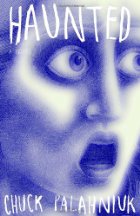 Summary:
A bunch of people sign up, individually, for a writer’s retreat. Telling no one where they’re going, they vow to write the next great American novel. They wind up locked away in the opposite of the lap of luxury, however. Trapped in a dusty old theater, they quickly become focused on an entirely different type of story. What happens to these writers is interspersed with poetry about each person and short stories written by each of them while locked in the retreat.
Review:
I am a huge Palahniuk fan. Fight Club
I struggle with short story collections. I like them to be all connected somehow, even if it’s just by theme, so at first I really liked the idea of a collection of short stories written by people at a writer’s retreat. It’s a good idea, but it’s not executed very well. The short stories are awesome! The connecting bits of narrative aren’t so much. Basically, the writers decide that they should spin what happens at the retreat to be as horrible as possible to help get a movie deal out of it after the fact. So they focus on twisting the facts and committing atrocities against themselves and each other to make for a better story. I totally got what is being said about writers procrastinating by making drama in their own lives instead of actually writing. I liked that part. But there also wasn’t enough realness in the connecting bits to keep me interested. I found myself dreading them whereas I really enjoyed the short stories, which made for an uneven reading experience.
One of the short stories contained in this collection is Palahniuk’s famous “Guts.” The one that makes people faint. (Palahniuk has made it available online for free here). This was definitely the best short story in the collection, and I can see why it became so famous. It also sets the tone for a lot of the stories in the collection. There’s one with people randomly getting smashed in a city. There’s also one about the possible origins of the Sasquatch myth. My second favorite after “Guts” was actually about an inn near a hot springs in the mountains. That one grossed me out *almost* as much as “Guts,” and also had something deeper to say, I think. All of this is to say that if you read and enjoyed “Guts,” you’ll like the short stories in this collection. They’re gross, horrifying, and stick with you.
Overall, it’s an interesting idea for unifying a short story collection. Ultimately, though, I would have liked it better as a straight-up short story collection, maybe even including the writer’s retreat as a short story by itself. This fact might make me rate the book lower, but the inclusion of so many high quality short stories keeps the book itself rating highly. Grab this if you’ve read and enjoyed “Guts.”
3.5 out of 5 stars
Source: Brookline Booksmith

Book Review: Where the Blind Horse Sings: Love and Healing at an Animal Sanctuary by Kathy Stevens (Bottom of TBR Pile Challenge)
 Summary:
When Kathy Stevens decided to change careers mid-life, she wanted to do something that would help animals and let her teach. She landed on the idea of founding an animal sanctuary. But this book is very minimally about Kathy. It is mostly about the animals that came to find a safe haven at the sanctuary she founded. Animals like Rambo the sheep who guards other animals. Paulie a former cockfighting rooster who loves car rides. And of course a blind horse once terrified to move who now goes for trail rides.
Review:
This book wasn’t what I was expecting, which was an account of setting up and running an animal sanctuary. Instead it is a collection of short stories about individual animals who live at Catskill Animal Sanctuary, in the vein of James Herriot, although not quite to that classic’s level.
The stories are roughly grouped based on the situations that led the animals to the sanctuary, their personality, and of course some ultimate peaceful deaths at the sanctuary. I was a bit frustrated that instead of telling one animal’s story end to end, they were split up among sections. I can understand not wanting to end every chapter with an animal’s death, but I also think seeing one animal’s life in a complete story would be more touching. On the other hand, I also appreciated how clearly the different animals’ personalities were drawn without ever venturing into the land of hypothesizing. One doesn’t have to impose their own beliefs on an animal to clearly see the difference between a hurt, abused animal and a happy one. Stevens presents the difference quite clearly without venturing into speculation, which I think will give the book the broadest audience.
In spite of the dark past lives of these once abused animals, the book is a light read, both in spirit and in content. You won’t learn the nitty gritty of founding and running an animal sanctuary, which I think is too bad. It’d be nice if there was even an epilogue about more of the day to day realities of rescuing animals. On the other hand, the light, easy read gives the book a broader audience. It also features a suggested further reading list at the end, as well as links to the sanctuary’s website and invitations to visit, so those who want more can seek it out.
Overall, this is a well-written, feel-good collection of stories of the animals of Catskill Animal Sanctuary. It doesn’t provide much insider information on the running of animal rescue charities, but it does provide insight into the personalities of farm animals. Recommended to animal lovers who enjoy short stories.
4 out of 5 stars
Source: Amazon

Book Review: I Don’t Want to Kill You by Dan Wells (Audiobook narrated by Kirby Heyborne) (Series, #3)
 Summary:
Teenaged John Cleaver had his sociopathy under control but when his town was plagued with two different demons, he had to let it loose a bit to fight them. He invited the demon Nobody to come face off with him, but he and those around him are left wondering if Nobody is real or if John’s sociopathy has just gone out of control. Meanwhile the teenage girls of the town are committing suicide left and right, and John can’t help but wonder why he’s ever tried to save anybody.
Review:
This is one of only a few YA series that I’ve enjoyed reading. The paranormal/youth aspect are almost like a Dexter lite, which is enjoyable. I must say, though, that I was disappointed by the ultimate ending to the series. However, since I write up series review posts every time I finish a series, I’ll leave my analysis of the series as a whole to that post, which will be coming up next. For right now, let’s look at the final book on its own merit.
The plot this time around was disappointingly full of obvious red herrings. I knew within the first chapter where Nobody was hiding, and it was kind of ridiculous that talented, intelligent John was missing it. Similarly, I found the serial killer who John identified as who he could end up being if he made the wrong choices to be a bit heavy-handed. John was already well aware of the risks of his sociopathy from the very first book. It felt a bit unnecessary to make this such a strong plot point. It came across as preachy, which is something that this series had avoided so far. Similarly, John goes to see a priest at one point in his investigations, and his conversations with him felt a bit too heavy-handed, almost like the (known religious) Wells was preaching at the readers through the priest. Authors are allowed their opinions and perspectives, but preachiness is never good writing. Perspective and opinion should be shown eloquently through the plot and characters.
Speaking of characterization, John was still strongly written, but his mother and sister were another story. They felt less like they were doing what was logical and more like they were doing what needed to be done to move the plot forward. On the other hand, I really enjoyed John’s new girlfriend. She was well-rounded and realistic. Plus she was fit while being curvy, which I think is a great thing to see in a book.
In spite of the slightly obvious plot, I still was engaged to get to the end. Even though I knew whether or not there was a demon and who the killer was, I still deeply wanted to see how John would handle it. The audiobook narrator, Kirby Heyborne, helped with this momentum. His narration was just the right amount of tension while still remaining in a teenager’s voice. Be warned, though, that there is some yelling in the book, so the volume does spike considerably at a few points in the narration. You may want to keep the volume a bit lower than usual to accommodate this.
Unfortunately, where the plot ultimately ended up was deeply disappointing to me. It was not at all a satisfying ending, and from a mental illness advocacy perspective, I actually found it distressing. Whereas John’s sociopathy previously was handled with a lot of scientific understanding, I found the ending of this book to be completely out of touch with real sociopathy. While it wasn’t offensive per se, it drastically oversimplifies sociopathy, both its treatment and its causes, which is just as bad as demonizing it. I will address this issue more fully in the series review, but suffice to say that I found the ending to this book’s individual mystery and the series as a whole to be disappointing, particularly given the potential of the book.
Overall, then, this is an average book that wraps up an above average series. If you are someone who is fine with stopping things partway through, I’d recommend just stopping with the previous book in the series, Mr. Monster. But if you are interested in the overall perspective, this book is still an engaging read that doesn’t drag. It just might disappoint you.
3.5 out of 5 stars
Source: Audible

Previous Books in Series
I Am Not A Serial Killer
Mr. Monster
Counts For:

Book Review: Half of a Yellow Sun by Chimamanda Ngozi Adichie (Audiobook narrated by Robin Miles)
 Summary:
The Nigerian-Biafran War (or the Nigerian Civil War, as it is also known) is seen through the intertwining lives of four different people. The daughter of a wealthy Igbo couple, Kainene, with a fierce business sense. Her fraternal twin sister, who is also the beautiful one, Olanna, an academic in love with a revolutionary-minded man named Odenigbo. Kainene’s boyfriend then fiancee, the white English writer Richard. And Ugwu. Olanna’s houseboy who came to them from a rural village. Their lives are irreparably impacted, and in some cases destroyed, by the war for a cause they all believe in, but that the world largely ignores.
Review:
I originally intended this Nigerian book to be my final read for the Africa Reading Challenge 2012, but even though I started it in November, the audiobook took over three months to get through, so it ultimately missed counting for the challenge. I thought it was much longer than my usual audiobook fare, but a quick check of the listen length shows that it is 18 hours and 56 minutes long, which is only about 7 hours longer than my norm. So why did it take me so long to finish? Well, I just didn’t enjoy it that much.
I believe I was expecting something else from Adichie, since I had previously read her book Purple Hibiscus
As far as the plot goes, it was interesting but it was a bit confusing. Part of my confusion could have been because I listened to it, but from my understanding when I was listening, first there was an affair, then we jumped back to before the affair, then we jumped forward, then we jumped back to a different affair that came before the first affair. It was profoundly confusing. Particularly with a child referred to only as Baby (with no explanation about this for quite some time) who also randomly shows up and disappears. There was already so much going on with four different main characters and the war that this non-linear plot felt unnecessarily extraneous and confusing. However, it is possible that this plot is more clear when reading the print version, as opposed to the audio version.
The language of the writing itself is pretty, and I found periodic astute insights that I’ve come to expect and enjoy from Adichie. For instance,
Why do I love him? I don’t think love has a reason. I think love comes first, and the reasons come later.
Passages like these are what helped me enjoy the book to the extent that I did.
There is one plot point in the book that truly distressed me, so I feel I must discuss it. It is a spoiler though, so consider yourself spoiler warned for this paragraph. Throughout the book, the narration style is third person limited, which means that it is told in third person, but the reader knows what is going on in the main character’s head and is generally limited to that character’s perspective. The point of view is switched around among the four main characters, one of whom is Ugwu, the houseboy. We thus get to know him as the houseboy, he gradually grows up, and then later he is conscripted into the Biafran army. At this point, he participates in a gang rape on a waitress in a bar. I read a lot of gritty things. I routinely read books offering up the point of view of sociopaths or serial killers. I’m not averse to seeing the world through a bad person’s eyes, or through the eyes of a person who does bad things. But it has to be handled in the appropriate manner. I felt that there was entirely too much empathy toward Ugwu in the case of the gang rape. Adichie sets it up so that he walks in on his fellow soldiers gang raping this woman, and he says he doesn’t want to participate, they question his manhood, he admits in his head that he is turned on by the view of her pinned to the ground crying with her legs held apart having just been raped by a different soldier, and he participates. I think what disturbed me the most about this passage was how the narration makes it seem so ordinary. Like it’s something any man would do in that situation. Like it’s only natural he’d be turned on and get a hard-on from seeing a woman forcibly pinned to the ground so she can be gang raped by a bunch of men including himself. I think it’s awful to treat men like that. To act like they clearly are incapable of standing up for what’s right or that they’ll get a hard-on any time they see an orifice they can physically bang. Men are human beings and are entirely capable of thinking with more than their penis. Now, obviously there are men who rape, but there has got to be more going on there then I have a hard on and there’s a woman who I can stick it into. To treat rape that simply is a disservice to men and women’s humanity alike. Part of the reason why this reads this way is that we don’t know Ugwu well but we know him well enough to think that he’s an at least moderately decent young man. We don’t see a gradual downfall. No one holds a gun to his head or even implicitly threatens him with death if he doesn’t participate. It makes it seem like war makes men, even moderately good men, rape, as opposed to war simply providing more opportunities for rapists to rape. That is a perspective that I do not endorse, that I do not enjoy having sprung upon me in my literature, and that I found triggering as well. I was shocked to see it in a book by Adichie. Shocked and disappointed. It left me wishing I could scrub my brain of the book. Wishing for those hours of my life that I spent listening to it back.
Now, let me take a moment to speak about the narrator, Robin Miles. Miles is an astounding narrator. Her audiobook narration is truly voice acting. She is capable of a broad spectrum of accents, including Nigerian, British, and American, and slips in and out of them seamlessly. She easily creates a different voice for many different characters. I absolutely adored listening to her, in spite of not enjoying the book itself. Her performance of this book is easily a 5 star one.
Overall, though, the high quality narration simply could not make up for a story that failed to hit the mark with me on so many levels. It covers an important time period in Nigeria, and the highly important human rights issue of the genocide of the Igbo, but the style in which it does simply misses the mark for me. If this was all, I would still recommend the book to others who are more fond of a more impersonal, sweeping narration style. However, I also found the treatment of rape in the book to be simultaneously offensive and triggering. For this reason, I cannot recommend this book, although I do recommend the audiobook narrator, Robin Miles.
2 out of 5 stars
Source: Audible

 Support my work with a tip or browse my shop for curated book club guides, how to guides, cross-stitch patterns, and more!


This work by Amanda Nevius is licensed under a Creative Commons Attribution-Noncommercial-No Derivative Works 3.0 United States License.
 Opinions of a Wolf