
Archive
Book Review: Dead Ever After by Charlaine Harris (Series, #13) (Audiobook narrated by Johanna Parker)
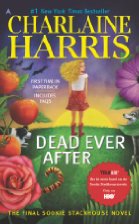 Summary:
Sookie, Eric, and Sam must deal with the fall-out of her using the cluviel dor to save Sam, rather than to save Eric from his arranged marriage with the vampire Queen of Oklahoma. On top of this, someone is out to frame Sookie for murder, and they just might succeed. Sookie even gets arrested and must be bailed out of prison. Her demon godfather, his niece, his grandson, Sookie’s witch friend Amelia, and Amelia’s boyfriend all come to help her.
Review:
You guys. You guys. I finally did it. I finally finished the Sookie Stackhouse series! No longer will Sookie’s book adventures hang over my head….now I just have to finish watching True Blood. The final entry in the series finishes telling the story of what clearly were a defining couple of years of Sookie’s life. Whether or not that’s the story readers wanted to hear, it is the story that gets told.
It becomes abundantly clear early in this book that Sookie has had it with the supernatural world. At least, with pure supes. She’s ok with people who are basically human with a touch of something else (like herself) but she’s over the truly supernatural, like the fairies and the vampires. Anyone who she feels has no humanity, she is done with. As a reader, I appreciate that Harris took the heroine and made her commit firmly to the humans. Many heroines in supernatural books desperately want to be supernatural themselves and commit wholeheartedly to that world. I like that Harris tells a different story, even if I think that ultimately it makes Sookie look a bit prejudiced. That part of Sookie’s character arc makes me sad. She starts out very much in favor of social justice and incorporating the supernatural world into the human one and ends up kind of prejudiced and against change. It’s sad. But, it is an actual character arc, and it makes sense within who Sookie is as a character. Some readers, who are enamored with the supernatural world themselves, might find it irritating or frustrating that Sookie has changed to not wanting to be a part of that world. But it is a well-written character arc that makes sense.
The murder/framing plot at first seems incredibly ho-hum, been there, done that, why is everyone constantly after Sookie she is not that special, although she’s pretty annoying so yeah it kind of makes sense. The plot does at least bring together a bunch of other highly enjoyable characters, such as Diantha and Amelia. Ultimately, there is a plot twist that makes the central whodunit plot more interesting, although I did not like how the twist plays into Sookie’s increasing dislike of supernatural folks who she thinks aren’t human enough.
The boyfriend situation. Well, it makes sense who Sookie chooses, and thank god their sex scenes are better written. The ultimate romance makes sense with who Sookie has become, although it doesn’t read as either titillating or particularly romantic to me. Then again, I decided many books ago that this series isn’t really about the romance, so I can’t say that it bothered me that much. Readers that are more invested in the romantic aspect of the books might be disappointed or elated, depending on who they like.
One oddity of the book is that it alternates between Sookie’s first person narration and an ominous third person narration telling us things that are going on that Sookie doesn’t know about. I don’t recall this happening in the series before, although I read the books over a long period of time, so perhaps it had. In any case, departing from the familiar first person narration probably was an attempt to build tension, with the reader knowing more about what is threatening Sookie than Sookie does. Ultimately, though, it just comes across as simultaneously jarring and like Harris just couldn’t figure out how to tell this story entirely from Sookie’s point of view. It reads odd, not ominous.
The audiobook narrator, Johanna Parker, took an odd turn with this book. Her voice reads as an old woman periodically, which doesn’t suit who Sookie is. I was disappointed, after her very good narration of books 12 and 11.
Overall, the final book in the Sookie Stackhouse series satisfactorily completes Sookie’s story arc and wraps up everything that has happened to her. Those who are secondary to the first person narration of Sookie’s life do not get the attention and wrap-up some readers might be looking for. However, this book series has always been about Sookie. It is told in her voice and is about her life. Some readers may be disappointed with how her life ends up and who she ultimately becomes but the character arc is well told. Recommended that readers who have completed at least half of the series finish the series, keeping in mind that it is really just about Sookie.
4 out of 5 stars
Source: Audible

Previous Books in Series:
Dead Until Dark
Living Dead in Dallas
Club Dead
Dead To The World
Dead as a Doornail
Definitely Dead
All Together Dead
From Dead to Worse
Dead And Gone
Dead in the Family
Dead Reckoning
Deadlocked
Book Review: Deadlocked by Charlaine Harris (Series, #12) (Audiobook narrated by Johanna Parker)

Summary:
Sookie now has to deal with the fall-out of her, Eric, and Pam’s successful plot to kill Victor. And that means entertaining the vampire King of Louisiana. The very first party they host for the King ends with a dead half-shifter girl on the lawn. Meanwhile, Sookie finds out just why Eric has been seeming distant lately, and it might be too much for them to overcome. On top of all this, Sookie has to keep track of and protect the fairie present given to her grandmother, the cluviel dor.
Review:
The penultimate book in the Sookie Stackhouse series has a lot of big reveals, as one would expect. The big reveals at the heart of Sookie’s overarching story make sense and are well-played, although the central mystery of this entry feels a bit ho-hum.
The cluviel dor felt a bit like a deus ex machina from the instant the concept was introduced in book 11. To a certain extent, a powerful magical object that grants one wish will always feel like a deus ex machina, no matter how it is ultimately used. However, of the many options for the use of the wish, I think that how Sooie ultimately uses it is the least like a deus ex machina that it could be. The world is not torn asunder. The events of prior books aren’t canceled out. The instant in which she uses it makes sense, feels real, and is understandable. It reveals a plot point that may irritate some readers, particularly big fans of Eric, but it’s not a development that doesn’t fit in with the characters and world. Meaning that the cluviel dor is not used as a love spell or to undo the existence of vampires or some such nonsense. Those nervous about what would happen with it should rest easy and continue reading the series. You won’t have the rug pulled out from under you.
The central mystery feels kind of repetitive. There’s a dead body, and everyone must figure out what happened. Similarly, Sookie continues to refuse to learn anything from the multiple supernatural situations she has found herself in. She continues to make incredibly dumb mistakes that make it hard to root for her.
The depiction of the vampires, fairies, and werewolves continues on an ever more negative spiral. The good supes are few and far between, whereas humanity is depicted as something to strive for. For instance, having mercy on someone is seen as having humanity, as opposed to just having mercy. One of the things I liked at the beginning of the series was the ambiguity of the supes. Having Sookie feel increasingly negative toward them all is a bit sad.
That said, the book definitely moves the plot forward in a logical way. Many loose ends are addressed and answers given. Plus there is at least one big final question left for the last book in the series.
Overall, if you’ve stuck with the series this far, you should definitely keep reading. The penultimate book answers some question and continues to flesh out the version of Bon Temps in Harris’s mind.
4 out of 5 stars
Source: Audible
Previous Books in Series:
Dead Until Dark
Living Dead in Dallas
Club Dead
Dead To The World
Dead as a Doornail
Definitely Dead
All Together Dead
From Dead to Worse
Dead And Gone
Dead in the Family
Dead Reckoning
Book Review: Dead Reckoning by Charlaine Harris (Series, #11) (Audiobook narrated by Johanna Parker)
 Summary:
When Merlotte’s is firebombed, no one is sure if it’s because the shifters just came out and folks are angry that Sam is one or if it’s a more personal vendetta. As if that wasn’t bad enough, Eric’s vampire boss, Victor, has just opened a new human bar that’s stealing business from Merlotte’s. Sookie knows it’s a direct jab against her, as Eric’s wife. And Victor isn’t just stealing business. He’s punishing Eric via Pam, preventing Pam from turning her dying lover. Eric, Pam, and Sookie all know that Victor has got to go, and with the plotting going on, Sookie can’t be bothered to think too much about the firebombing.
Review:
This time it took me less than a year to return to Sookie, instead of the three year break I took last time. I’ve read so much of the 13 book series; I just have to know how it ends. The Sookie Stackhouse series is utterly ridiculous. But it’s a comfortable kind of ridiculous that’s just right to ease into while you’re cooking dinner. That’s why, when I listened to a sample and realized how perfect the audiobook narrator is for the books, I decided to listen to the end of the series. The warmth and ease of Sookie Stackhouse is perfect for combating cabin fever. This entry in the series has a bit more happen than in book 10, although the resolution to the big mystery feels repetitive.
Most of the ideas and plots in this book will ring familiar to any reader of the series. There might be hate against a newly out group (the shifters this time), some vampire higher ups are causing problems and need to be dealt with, and Sookie is just shocked that someone wants her dead. How she continues to be shocked by everyone hating her or wanting her out of the picture is beyond me, but Sookie isn’t exactly smart. Because many of the plots feel like previously visited territory, in spite of the fact that they’re well-written and active, they’re a bit boring. Something truly new really needs to happen to Sookie. The one plot point that is new, of course, is her interactions with the fae that were left behind when Niall closed off fairy. That plot was very interesting, and I’m glad it’s in the book, as it kept my interest up.
There really isn’t very much sex at this point. I honestly felt like that was a mercy since listening to someone read the awkward sex scene out loud was almost too cringe-inducing to bear. We all know Harris’s sex scenes are a bit….awkward. There’s not much new to say about that except that there’s really only one, and that feels like a good thing. Although Sookie does mention rather frequently Eric’s prowess in bed.
Sookie continues to be a self-righteous hypocrite, but someone close to her finally (finally!) calls her out on it. It happens toward the end of the book, after a lot of build-up of Sookie continuing to think she’s better than everyone else and has more morals than the rest of the supe world. The call-out is written with a perfect amount of ambiguity in the narration, leaving it up to the reader to decide if they agree with Sookie that she’s just holding onto her human morals or with the one who calls her out that she’s committing the acts and refusing to admit this is who she is. I’m not sure what camp Harris falls into, but I appreciated the finesse with which she leaves it open-ended for the reader to form their own opinion of Sookie.
The audiobook narrator, Johanna Parker, does a wonderful job. She truly makes Sookie and Bon Temps her own. There is a clear delineation in my head when listening to her that this is the book Bon Temps, not the True Blood one. She and Anna Paquin (who plays Sookie on tv) each bring their own interpretation, and they are both good and well-suited to the book and tv series, respectively.
Overall, this entry in the series is a bit repetitive. Two of the three main plots are similar versions of things we have seen before. However, Sookie finally gets called out for her hypocrisy and self-righteousness, and the third plot is new enough to keep interest up. Fans of the series will be a bit disappointed but will still find it a moderately interesting, quick read.
3.5 out of 5 stars
Source: Audible
Previous Books in Series:
Dead Until Dark
Living Dead in Dallas
Club Dead
Dead To The World
Dead as a Doornail
Definitely Dead
All Together Dead
From Dead to Worse
Dead And Gone
Dead in the Family
Book Review: Doctor Sleep by Stephen King (Series, #2) (Audiobook narrated by Will Patton)
 Summary:
Danny Torrance didn’t die in the Overlook Hotel but what happened there haunts him to this day. Not as much as the shining does though. His special mental powers that allow him to see the supernatural and read thoughts lead to him seeing some pretty nasty things, even after escaping the Overlook. He soon turns to drinking to escape the terror. But drinking solves nothing and just makes things worse. When he sees his childhood imaginary friend, Tony, in a small New Hampshire town, he turns to AA to try to turn his life around and learn to live with the shining.
Abra is a middle school girl nearby in New Hampshire with a powerful shine. She sees the murder of a little boy by a band of folks calling themselves the True Knot. They travel in campers and mobile homes, seeking out those who have the shine to kill them for it and inhale it. They call it steam. They’re not human. And they’re coming after Abra. Abra calls out to the only person she knows with a shine too, the man she’s talked to before by writing on his blackboard. Dan.
Review:
A sequel that takes the original entry’s theme on overcoming your family origin and ramps it up a notch, Doctor Sleep
The book begins with a brief visit to Danny as a kid who learns that the supernatural creatures exist in places other than the Overlook, and they are attracted to the shine. This lets the reader first get reacquainted with Danny as a child and also establishes that the supernatural are a potential problem everywhere. The book then jumps aggressively forward to Danny as a 20-something with a bad drinking problem. It’s an incredibly gritty series of scenes, and it works perfectly to make Dan a well-rounded character, instead of a perfect hero of the shine. It also reestablishes the theme from The Shining
The way Dan overcomes both his drinking and his temper, as well as how he learns to deal with his shine, is he joins Alcoholics Anonymous (AA). In contrast to his father who tried to quit drinking on his own, Dan attempts it in a group with accountability. This then shows how much easier it is to overcome a mental illness with community support. I appreciated seeing this. I will say, however, that some of the AA talk in the book can get a bit heavy-handed. Some chapter beginnings include quotes from the book of AA, and Dan can sometimes seem a bit obsessed with it when he relates almost everything to something he learned or heard there. AA definitely plays a vital role in many people’s recovery from addiction, and it’s wonderful to see that in a work of fiction. However, it would have been better for the reader to see the role of AA more than to hear quotes from AA so often.
The big bad in this book is a band of supernatural creatures who were once human and still look human. But they change somehow by taking steam and go on to live almost indefinitely. They can die from stupid accidents and sometimes randomly drop dead. The steam is acquired by torturing children who have the shine. The shine comes out of their bodies as steam when they are in pain. They call themselves The True Knot. This troop is a cartoonish group of evil people who try to look like a troop of retirees and some of their family traveling in a camper caravan. The leader of this group is Rose the Hat–a redheaded woman who wears a top hat at an impossibly jaunty angle. I was pleased to see Rose written quite clearly as a bisexual. Her sexuality is just an aspect of who she is, just like her red hair. Seeing a bi person as the big bad was a delight. Her bisexuality isn’t demonized. Her actions as a child killer and eater of steam are. She is a monster because of her choices, not because of who she is. I alternated between finding The True Knot frightening and too ridiculously cartoonish to be scary. I do think that was partially the point, though. You can’t discredit people who seem ridiculous as being harmless.
How Abra is found by The True Knot, and how she in turn finds Dan, makes sense within the world King has created. It doesn’t come until later in the book, though. There is quite a bit of backstory and build-up to get through first. The buildup is honestly so entertaining that it really didn’t hit me until after I finished the book how long it actually took to get to the main conflict. So it definitely works. Abra is a well-written middle school girl. King clearly did his research into what it’s like to be a middle schooler in today’s world. Additionally, the fact that Abra is so much older than Danny was in The Shining
There is one reveal later in the book in relation to Abra that made me cringe a bit, since it felt a bit cliche. It takes a bit of a leap of faith to believe, and I must admit it made me roll my eyes a bit. However, it is minor enough in the context of the overall story that it didn’t ruin my experience with the book. I just wish a less cliche choice had been made.
The audiobook narrator, Will Patton, does a phenomenal job. It was truly the best audiobook narration I’ve heard yet. Every single character in a very large cast has a completely different voice and style. I never once got lost in who was speaking or what was going on. More importantly to me, as a New England girl born and raised, is that he perfectly executes the wide range of New England accents present in the book. Particularly when he narrates the character, Billy, I thought I was hearing one of my older neighbors speak. I could listen to Will Patton read a grocery list and be entertained. Absolutely get the audiobook if you can.
Overall, this sequel to The Shining
4 out of 5 stars
Source: Audible

Previous Books in Series:
The Shining
Counts For:

Book Review: Something Spectacular: The True Story of One Rockette’s Battle with Bulimia by Greta Gleissner (Audiobook narrated by Dina Pearlman)
 Summary:
Greta Gleissner finally achieved her lifelong dream of making a living just from her professional dancing. She landed the prestigious job of being a Rockette in the New York City show. She hoped that this newfound stability and prestige would cure her of her bulimia. What was there to binge and purge about when she was living her dream? But her eating disorder she’d had since a young age won’t just disappear because of her newfound success. Soon, her bulimia is putting her job–and her life–at risk.
Review:
I was immediately intrigued by the elements of this eating disorder memoir that make it different from the, sadly, so many others that exist. Greta’s eating disorder peaks in her 20s, not her teens. She was a Rockette, and she’s a lesbian. An eating disorder memoir about someone in their 20s in the dance industry who is also queer was very appealing to me. What I found was a memoir that gives insight to having an eating disorder, the impact of homophobia, and an inside look at the professional dance world told in a non-linear, honest, and engaging manner.
Greta tells her memoir in the framework of a play. There are scenes, acts, overtures, etc… This lets her address the story in a non-linear way that still makes sense. The overture, for instance, shows a dramatic moment when her eating disorder was at full tilt and destroying her life. Then she backs up to the few months before she became a Rockette. The time of auditioning then being a Rockette is interspersed with flashbacks to help us better understand her life. Finally, she enters an inpatient clinic, where we get flashbacks in the context of her therapy. It’s a creative storytelling technique that brings a freshness to her memoir.
Honesty without cruelty to herself or others is a key part of her narrative voice. Greta is straightforward, sometimes grotesquely so, about her bulimia and what it does to her. The eating disorder is not glamorized. Greta takes us down into the nitty-gritty of the illness. In fact, it’s the first bulimia memoir I’ve read that was so vivid and straightforward in its depictions of what the illness is and what it does. In some ways, it made me see bulimia as a bit of a mix between an addiction and body image issues. Greta was able to show both how something that was helping you cope can spiral out of control, as well as how poor self-esteem and body image led her to purging her food.
Greta also is unafraid to tell us about what goes on inside her own mind, and where she sees herself as having mistreated people in the past. I never doubted her honesty. Similarly, although Greta’s parents definitely did some things wrong in how they raised her, Greta strives to both acknowledge the wounds and accept her parents as flawed and wounded in their own ways. You can hear her recovery in how she talks about both them and her childhood. She has clearly done the work to heal past wounds.
The memoir honestly made me grateful the dancing I did as a child never went the professional route. It’s disturbing how pervasive body policing and addictions in general are in the dance world, at least as depicted by Greta. Similarly, it eloquently demonstrates how parents’ issues get passed down to the children, and sometimes even exacerbated. Greta’s mother was a non-professional dancer who was constantly dieting. Greta also loved dancing but her mother’s body image issues got passed down to her as well. Food was never just food in her household.
One shortcoming of the memoir is that Greta never fully addresses her internalized homophobia or how she ultimately overcomes it and marries her wife. The book stops rather abruptly when Greta is leaving the halfway house she lived in right after her time in the inpatient clinic. There is an epilogue where she briefly touches on the time after the halfway house, mentions relapse, and states that she ultimately overcame her internalized homophobia and met her now wife. However, for the duration of her time in the clinic and the halfway house, she herself admits she wasn’t yet ready to address her sexuality or deal with her internalized homophobia. It was clear to me reading the book that at least part of her self-hatred that led to her bulimia was due to her issues with her sexuality. Leaving out how she dealt with that and healed felt like leaving out a huge chunk of the story I was very interested in. Perhaps it’s just too painful of a topic for her to discuss, but it did feel as if the memoir gave glimpses and teasers of it, discussing how she would only make out with women when very drunk for instance, but then the issue is never fully addressed in the memoir.
Similarly, leaving out the time after the halfway house was disappointing. I wanted to see her finish overcoming and succeeding. I wanted to hear the honesty of her relapses that she admits she had and how she overcome that. I wanted to hear about her dating and meeting her wife and embracing her sexuality. Hearing about the growth and strength past the initial part in the clinic and halfway house is just as interesting and engaging as and more inspiring than her darker times. I wish she had told that part of the story too.
The audiobook narrator, Dina Pearlman, was a great choice for the memoir. Her voice reads as gritty feminine, which is perfect for the story. She also handles some of the asides and internal diatribes present in mental illness memoirs with great finesse.
Overall, this is a unique entry in the eating disorder memoir canon. It gives the nitty gritty details of bulimia from the perspective of a lesbian suffering from homophobia within the framework of the dance world. Those who might be triggered should be aware that specific height and weight numbers are given, as well as details on binge foods and purging episodes. It also, unfortunately, doesn’t fully address how the author healed from the wounds of homophobia. However, her voice as a queer person is definitely present in the memoir. Recommended to those with an interest in bulimia in adults, in the dance world, or among GLBTQ people.
4 out of 5 stars
Source: Audible

Counts For:
Book Review: Sleepless by Charlie Huston (Audiobook narrated by Ray Porter and Mark Bramhall)
 Summary:
In an alternate 2010, the world is slowly falling into disarray, partially due to terrorism, but mostly due to a new deadly illness. SLP makes the sufferer an insomniac, unable to sleep for years, until they fall into a state of insanity known as the suffering. The sleepless, as those with the illness are known, change the structure of society. Movie theaters are now open 24/7, there’s an increase in sales of odd and illicit things, as the sleepless get bored. Most importantly, the sleepless have moved much of their energy into online MMORPGs. Some spending countless hours gold farming there, making a good buck with all their hours of alertness.
Park, an old-fashioned cop, is determined to save the structure of society, one bust at a time. He’s committed to his work, in spite of his wife being sleepless and being increasingly unable to care for their infant daughter. So when his boss asks him to go undercover to look for people illegally selling the one drug that can ease the pain of the sleepless–dreamer–he agrees.
Jasper is an elderly ex-military private investigator without much of an eye for sticking to the rule of the law who is asked by a client to hunt down and return to her a thumb drive that was stolen. He slowly discovers that that thumb drive ended up in the middle of much more than some art thieves and finds himself sucked into the world of illicit dreamer.
Review:
My partner and I both enjoy a good noir story, so when we saw this summary on Audible, we thought it would make an entertaining listen for our 12 hour holiday road trip. The story was so bad, we could only take it for about an hour at a time and eventually just turned it off so I could read out loud to him from a different book. I eventually soldiered on, though, because I honestly just had to finish it so I could review it. In what should be a fast-paced noir, there is instead an overwrought amount of description of unimportant things that slow what could have been an interesting plot down to a crawl.
Noir as a genre is a thriller that generally features a hard-boiled detective (sometimes a hard-boiled criminal). It’s fast-paced and usually short featuring a lot of grit and mean streets. One thing Huston does that puts an interesting twist on the noir is he incorporates both a cop who is being forced to turn detective and a criminal-style private investigator. He features both sorts of main character. This intrigued me from the beginning. However, the writing includes far too much description of unimportant things for a crime thriller. For instance, there is an at least 5 minutes long description of a computer keyboard. I could literally space out for a few minutes and come back to the audiobook that was playing the entire time and miss literally nothing. It would still be describing the same chair. This really slows the plot down.
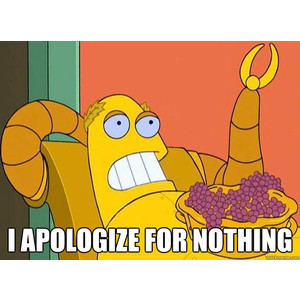
 On top of the overly descriptive writing, the narration is overwrought, like a stage actor trying too hard. The best explanation I can make for the narration is, if you have ever seen Futurama, the narration switches back and forth between being Calculon and being Hedonbot. Now, I admit, the audiobook narrators played these parts perfectly. In fact, I had to check to see if they’re the same voice actors as Calculon and Hedonbot (they’re not). I really think the audiobook narrators are what saved the story enough to keep me reading. I kept laughing at the visual of Calculon and Hedonbot doing this overwrought noir. But that is clearly not what makes for a good noir. The tone and writing style were all wrong for the plot.
In addition to the writing style, there’s the plot. In this world that Huston has imagined, gamers have become all-important. When people go sleepless, they become intense gamers. If they don’t do this then they become zombie-like criminals. I don’t think this is a realistic imagining of what would actually happen if a huge portion of the population became permanent insomniacs. Not everyone is a gamer or a criminal. There’s a lot more options in the world than that. Additionally, in this alternate 2010, the art world now revolves around MMORPGs as well. The art work that is now sold is thumb drives of the characters that people make in the games. There is a long speech in the book about how making a character in an MMORPG is art. Yes, somepeople might think that. But it is incredibly doubtful that the entire world would suddenly overnight start viewing character building in an MMORPG as an art form. I won’t explain how, because it’s a spoiler, but the gamers also come into play in the seedy underworld of illegal drugs. At the expense of a plot that follows the logic of the world the author has created, gamers are made to be inexplicably all-important.
 I also must point out that the science in this book is really shaky. SLP was originally a genetic disease that suddenly becomes communicable. That’s not how diseases work. Communicable and genetic diseases are different, they don’t suddenly morph into one or the other. Additionally, in the real world, there’s no way an illness would be given a scientific name that is an abbreviation for the common name (SLP for sleepless). Think about swine flu. The common name is swine flu, the scientific name is H1N1. Similarly, the drug to treat SLP’s official name is DR33M3R, which is just the street name, dreamer, in leetspeak. This isn’t fiction based in true science.
One thing I did appreciate in the book is that the semi-criminal private investigator, Jasper, is gay. He’s extremely macho, ex-military, and he bangs his also macho helicopter pilot. I like the stereotype-breaking characterization of Jasper. It’s nice to see a gay man given such a strong role in a thriller.
Overall, this alternate 2010 noir gets too caught up in overly long descriptions of mundane things and an overwrought narrative style to keep the plot moving at a thriller pace. The plot features an unrealistic level of importance for MMORPGs and the gamers who play, as well as unsound “science.” One of the hardboiled main characters is a stereotype-breaking gay man, however, which is nice to see. Recommended to those who enjoy an overly descriptive, overacting narration style with gamers featured unrealistically at center stage who don’t mind some shaky science in the plot.
2 out of 5 stars
Source: Audible
Book Review: Love Minus Eighty by Will McIntosh (Audiobook narrated by Kevin T. Collins, Eileen Stevens, and Ali Ahn)
 Summary:
In the future, you can live forever. But only if you can afford to pay to be medically resurrected and any injuries sustained fixed. The rest put everything they have into freezing insurance, getting cryogenically frozen in the hopes that one day, someday, they might get resurrected. At the very least, they wont’ die. But beautiful women who die too young (and too not filthy rich) get a different sort of a second chance. They get awoken and given the choice of going into the cryogenic dating facility. Men will come through and pay to wake them up and talk to them, and if they fall for them, they’ll pay to have them resurrected and their injuries healed.
In this world, three different, yet intertwined stories are told. There’s Rob. A once-musician who accidentally struck and killed a jogger in the middle of his break-up with his reality star-esque wealthy girlfriend. He proceeds to take out a loan to visit the jogger to apologize but slowly the guilt turns into something more. Then there’s Veronika, a dating coach with a bad case of unrequited love and a need to feel like she’s doing some good in the world. And finally, Mira. A lesbian who was placed into the heterosexual cryogenic dating pool back at the beginning before they bothered to wake the women and ask them if they wanted to be there.
Review:
I was immediately intrigued by this book’s premise and then realized I’d already read another scifi book by Will McIntosh and enjoyed it. That book, Soft Apocalypse

The future is a near dystopic mess of most of the wealth being in the hands of the few. While some people have foregone civilization to live off the land, the rest of the have-nots spend their time in body suits, called systems, that are basically like a full-bodied smartphone. They reminded me a bit of Google Glass. Their systems filter out all the unsightly aspects of where they live, including garbage, and they also block pop-up ads that otherwise accost you on the street. Everyone pours their little bit of money into their systems because without one you fall entirely off the social stratum. This is already creative enough to be intriguing, but then McIntosh tosses in this idea that cryogenics and resurrection has been figured out but only the wealthy can afford to be resurrected and everyone else pours all the rest of their money into freezing insurance. Then we get the cryogenic dating program aka bridesicles, and oh wow. Any scifi reader can see what an interesting setting this is.
On top of this setting, McIntosh weaves three different, yet ultimately intertwined narrators. It’s a narrative structure I enjoy but only when done well, and McIntosh mostly pulls it off. Some things sometimes felt a bit like too much of a coincidence, but for the most part the intertwining made sense. All three narrators have unique voices and perspectives. They are well-rounded with flaws, even Mira, who is frozen a lot of the time, but they also are still likable.
The plot is complex and truly had me on the edge of my seat for the last third of the book. I was rooting for the characters and did not know what would happen. An unpredictable, yet satisfying, ending plays in perfectly with the plot.
I am of two minds about the presence of Mira in the story. On the one hand, I appreciate that McIntosh took the time to think about how the heteronormativity of the bridesicle program could affect a lesbian. On the other hand, it frustrates me that she and her girlfriend have their agency removed and spend most of the story frozen and at the whim of the heterosexual people around them. Having lesbians rescued by the straight folks just kind of rubbed me the wrong way. I sort of wish there had been some modern day queer person who helped them out in some way. That was the other thing that bothered me. The only queer presence was from the past in the form of Mira and her frozen girlfriend. In such a sweeping narrative with so many characters that is also set in a city, it seems odd to me we never encountered another queer character. Particularly when one of the main characters is a dating coach.
The narration of the audiobook was wonderful. Having a different voice for each narrator really helped keep the stories straight, and each of the narrators did a wonderful job bringing their characters to life.
Overall, this book presents a richly imagined near-dystopian scifi future that gets the reader to think about if living afraid of death is truly living. The three-narrator structure lends a complexity to the plot that keeps it engaging and consistently moving forward. One of the plot choices might rub some readers the wrong way, but if the world building and narrative structure appeal, it shouldn’t be much of an issue. Recommended to scifi fans who enjoy a city setting and some romance.
4 out of 5 stars
Source: Audible
Book Review: Succubus Revealed by Richelle Mead (Series, #6) (Audiobook narrated by Elisabeth Rodgers)
 Summary:
Seattle’s succubus, Georgina Kincaid, is incredibly happy to be back together with her previously ex boyfriend, Seth Mortensen. But getting back together with him came at the price of hurting his once-fiancee and having to leave her previously loved position managing the bookstore. It’s all worth it to be with Seth, though. But then a transfer notice comes in, sending her to her dream job in Las Vegas. It’d be a dream come true, except Seth can’t come with her because his sister-in-law has cancer. Georgina starts to wonder just why so many elements seem to keep coming together to try to drive her and Seth apart.
Review:
A breathtaking conclusion to the series that reveals not just Georgina’s entire life story but also that the series itself is more than originally meets the eye.
It was obvious in the prior book that a much larger overarching plot was going to be revealed in the final entry in the series. Mead reveals this plot through an artful combination of the characters investigating, flashbacks, and a court case. Normally, I’m not a fan of courtroom drama, but Mead pulls it off beautifully, really playing up the supernatural elements and keeping it moving along at a rapid pace. While I had pretty much already figured out what the big reveal would be, how it was revealed and how the characters reacted was unexpected and complex.
A running theme in the series has been that the characters are not perfect and life doesn’t hand out easy answers or resolutions. The resolutions to the various problems and questions in the plot and in Georgina’s life follow these guidelines as well. It is not a simple reveal that places perfection into Georgina’s life. She has to address her issues, how she has dealt with herself and other people, and she must face the supernatural community as well. It was refreshing to see characters in an urban fantasy have to work toward resolution instead of having it handed to them by virtue of just being lucky or having the right powers.
The romance is in full-swing in this book. Georgina is much more focused on her love life than on being on a succubus. Thus, most of the sex scenes we get are hot in an entirely romantic way. Once again, though, I was more focused on the quality of the plot and characters than on the quality of the sex scenes. The story of Georgina overpowered the juicy bits, and that’s a sign of a great urban fantasy.
The book brings to light the questions of good versus evil, love and what it takes to make a relationship work, soul mates, and the qualities of humanity. And it does it with humor, brightly written characters, sexy sex scenes, and creative settings. An ending to the series as satisfying as a rich dessert that will leave the reader wanting to re-read the series as soon as possible.
5 out of 5 stars
Source: Audible

Previous Books in Series:
Succubus Blues
Succubus On Top
Succubus Dreams
Succubus Heat
Succubus Shadows
Book Review: Succubus Shadows by Richelle Mead (Series, #5) (Audiobook narrated by Elisabeth Rodgers)
 Summary:
Seattle’s succubus, Georgina Kincaid, cannot believe she has been roped into helping plan her ex-boyfriend’s wedding. It’s enough to make anyone depressed. But she can’t afford to be depressed, because every time she starts to feel down, a mysterious force tries to lure her away to what must be a dangerous place. Georgina is fed up with all of these mysterious attacks on Seattle. It just doesn’t make sense. What is making them target Seattle? And seem to be maybe targeting her?
Review:
An excellent penultimate series book that both reveals more of the main character’s past and drives the plot forward.
At first it seems that this book is returning to familiar territory. Weird, dreamy things are happening to Georgina. She and Seth are broken up. Her demon boss is irritated at her. But then Georgina gets kidnapped and forced to relive her past and spy on the present in a dreamlike state, and everything changes. We learn tons more about Georgina’s long succubus life. We also see what happens when Georgina is the one who needs saving for once. It’s an unexpected plot change that plays perfectly in this penultimate book in the series.
In spite of Georgina being kidnapped, there are still plenty of sex scenes via reliving her succubus past. They are well-written and titillating but sex is really not the focus of the book. It says a lot for the plot and how much I came to care for the characters that I barely noticed the relative lack of exciting sex in this entry.
The characters continue to grow and change in a well-rounded, three-dimensional way. Mead handles the multiple characters adeptly and with soul. Similarly, the audiobook narrator continues to read Georgina perfectly.
This entry in the series moves the series firmly from urban fantasy about a sexy succubus to a romance spanning multiple centuries and a greater battle of good versus evil and humans versus the supernatural. It is stunningly satisfying and all-engrossing. I immediately reached for the final book in the series. Fans will not be disappointed.
5 out of 5 stars
Source: Audible
Previous Books in Series:
Succubus Blues
Succubus On Top
Succubus Dreams
Succubus Heat
Book Review: Succubus Heat by Richelle Mead (Series, #4) (Audiobook narrated by Elisabeth Rodgers)
 Summary:
Georgina Kincaid, Seattle’s best succubus, has been a foul mood ever since her break-up with author mortal, Seth Mortensen. Her demon boss, Jerome, has had enough of it and decides to outsource her to Vancouver for a job investigating a group of Canadian Satanists who are drawing the wrong type of attention to Hell. But when Jerome is kidnapped and all the Seattle area hellions lose their powers at the same time as the Satanists do a stunt in Seattle, Georgina starts to wonder if the Satanist group are more than just an annoyance. Maybe they’re part of some bigger plot. Oh, and also, she can now have sex with mortals without stealing any of their life force. Very interesting indeed.
Review:
A tight, intricate plot that links back to the previous books, steamy sex scenes, and an ever-expanding cast of diversely entertaining characters make this entry in the Georgina Kincaid series a delight.
Georgina’s whinyness after her break-up with Seth could get on the reader’s nerves if it wasn’t for the fact that her own friends and colleagues eventually call her out on it. Georgina is a well-rounded character with flaws, and being bad at break-ups is one of them. This book sees her go through the stages of a break-up in an interesting way, from rebounding to whining to anger to finally trying to come to terms with it and remain friends with Seth. The fact that Georgina then gets the ability to have sex with Seth without stealing his life force is a serious temptation. How she and Seth respond might rub some readers the wrong way, but Mead presents it in a very I understand how this could happen way. What happens makes sense within the context both of the story and of who Georgina and Seth are as characters. How they go on to deal with the consequences is also realistic. People don’t get away with things without consequences in Mead’s world, but they also aren’t perfect. Mead strikes the balance well.
The plot is complex and yet is a different problem from the previous books. Taking away powers and having the most powerful demon in Seattle gives the characters an interesting problem to address. Additionally, having Georgina travel to close-by Canada provides some great scenery changes, as well as some good laughs at the expense of the inept Satanist group.
The sex scenes range from brief one-offs with random men for feeding to unfulfilling sex with her bad-hearted rebound boyfriend to guilt-inducing passionate love-making with Seth. Some of the sex scenes are steamy, others a bit dull, and others heart-wrenching. It’s a realistic variety, although the reader does have to wait a while for the most passionate scenes.
One thing that bothered me a bit is that Georgina gets slut-shamed some for one of her brief hook-up choices. Yes, she makes the choice out of her heartbreak, but it’s her body her choice, and I don’t like that even a succubus, apparently, can get slut shamed. I also have to admit that I had figured out the final plot twist long before it happened, so although the plot is a bit complex, the big bad is predictable.
The overarching plot of the whole series, however, continues to grow in unexpected ways. I finished the book intrigued to continue on immediately to the next entry.
The audiobook narrator brings Georgina to life quite willingly, although she does pronounce a couple words, such as “panang,” rather oddly. However, she brings a perfect flow to the story. She also reads the sex scenes beautifully.
Overall, this is an engaging and rewarding entry in the series. Fans will welcome the new plot, variety of sex scenes, and growth of the overarching series plot.
4 out of 5 stars
Source: Audible
Previous Books in Series:
Succubus Blues
Succubus On Top
Succubus Dreams
Counts For:
 Support my work with a tip or browse my shop for curated book club guides, how to guides, cross-stitch patterns, and more!


This work by Amanda Nevius is licensed under a Creative Commons Attribution-Noncommercial-No Derivative Works 3.0 United States License.
 Opinions of a Wolf