
Archive
Book Review: Yesteryear by Caro Claire Burke
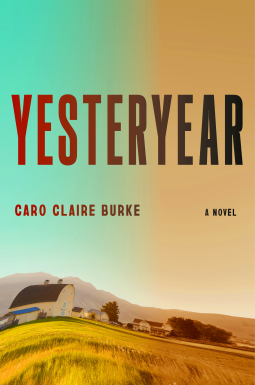
Yesteryear by Caro Claire Burke is an attempted satirical takedown of tradwife influencer culture that ultimately reflects a shallow understanding of fundamentalist Christianity and collapses under the weight of its third act.
This review contains major spoilers and discusses themes of religious fundamentalism, mental illness, and queerness.
Summary:
My name was Natalie Heller Mills, and I was perfect at being alive.
Natalie lives a traditional lifestyle. Her charming farmhouse is rustic, her husband a handsome cowboy, her six children each more delightful than the last. So what if there are nannies and producers behind the scenes, her kitchen hiding industrial-grade fridges and ovens, her husband the heir to a political dynasty? What Natalie’s followers—all 8 million of them—don’t know won’t hurt them. And The Angry Women? The privileged, Ivy League, coastal elite haters who call her an antifeminist iconoclast? They’re sick with jealousy. Because Natalie isn’t simply living the good life, she’s living the ideal—and just so happens to be building an empire from it.
Until one morning she wakes up in a life that isn’t hers. Her home, her husband, her children—they’re all familiar, but something’s off. Her kitchen is warmed by a sputtering fire rather than electricity, her children are dirty and strange, and her soft-handed husband is suddenly a competent farmer. Just yesterday Natalie was curating photos of homemade jam for her Instagram, and now she’s expected to haul firewood and handwash clothes until her fingers bleed. Has she become the unwitting star of a ruthless reality show? Could it really be time travel? Is she being tested by God? By Satan? When Natalie suffers a brutal injury in the woods, she realizes two things: This is not her beautiful life, and she must escape by any means possible.
Review:
What it does well
I love the set-up of this book. A tradwife influencer wakes up in the 1800s she was pretending to want to live back in and has to face the stark reality of that. Told in the tradwife “present,” flashbacks to her life before her influencer status, and flash forwards to her 1800s time travel. I was hooked. I needed to know how the time travel happened. The set-up reminded me of Kindred by Octavia Butler only with a hateable main character.
A note on my perspective:
I was raised a closeted bisexual cis girl in a fundamentalist Evangelical family. I, in modern terms, deconstructed and have become a progressive queer Christian adult. Nattie’s culture is the one I was raised in and am deeply familiar with. I was literally a rurally raised homeschooled girl who wasn’t allowed to wear pants. The author gets a lot wrong.
Religious inaccuracy and cultural flattening:
It is deeply unclear precisely what religion Nattie is. This should be clear, as a twisting of a specific faith into something for the far-right to weaponize is at the core of tradwife influencer culture. She goes to church every Sunday growing up with her mother and sister. She and her young, rich husband share a religion. But she only ever says “Christian.” If we are to assume that it is a fundamentalist version of US American Christianity, then it could broadly be Evangelical, traditional Catholic, or Latter-Day Saint. And that’s not even getting picky about denomination (Non-denominational? Baptist?). Here’s what we do know. She goes to church, not temple, so probably not LDS, even though she’s very clearly inspired by Ballerina Farm who is LDS. She gets full-immersion baptized as a teenager, so not Catholic. However, the book says a PRIEST baptizes her. The only denominations that refer to their leaders as priests do not perform full-immersion baptism. It’s a factual error that made me cringe. A lot.
Later in the book, Nattie crosses herself. She also has a hallucination that is clearly based on confession. Both of these are only done, again, by denominations with priests (Anglicans, Catholics). But she does none of the other things those denominations might do like observe a liturgical calendar or acknowledge saints. Despite this confusion, Nattie is portrayed as truly devout. We see inside her head. She prays a lot. She desires to be close to God. Yet, she never studies her Bible. She never brings her children to church, in spite of going every Sunday herself growing up. And church isn’t replaced by home church with her husband.
Another issue is AFTER she deconstructs, Nattie’s mother tells her she’s simply never been nice enough. The demand to “keep sweet” is a very common demand made of evangelical girls and women. We saw it in the Duggar family, and I lived it myself. Girls and women are supposed to be nice all the time. It makes no sense to me that her deconstructed mother’s main argument against her tradwife influencer daughter is she isn’t nice enough. A deconstructed person would be much more likely to say, “you’re lashing out because you’ve been asked to be something you’re not for so long. I want to know who you really are.” Not “why can’t you be nice?!”
All of these details point to an author writing from outside this culture who did not do the work required to understand it, resulting in a shallow, flattened portrayal of fundamentalist Christianity that borrows its aesthetics without engaging its lived realities. It’s this weird mash-up of things tradwife influencers mention without any understanding that tradwives come from different denominations with different ways of doing things and different belief systems.
Queer representation:
As a queer person myself, I’m deeply bothered by the way Nattie’s assault on her employee, Shannon, is presented. First of all, her first person account seems to be that she attempted to strangle her. But later Shannon says she sexually assaulted her. Which is the truth? The end of the book takes Shannon’s statement as face value. Nattie assaulted her because she’s a closeted lesbian. Nattie never admits to this, but she doesn’t deny it either. Does she think this is less bad than attempting to strangle her? Given her entire family’s response (and my own lived experience of fundamentalist opinions of queer people), it seems unlikely. If it is the case that we’re supposed to read this as Nattie has always been a closeted lesbian, then this is horrible representation. Not that LGBTQ folks can’t ever be the villain, but closeted people don’t automatically abuse their children and assault their employees.
Mental health representation:
Then there is the mental health representation. It is clear that Nattie first starts to fall apart after the birth of her first child when she develops very clear post-partum depression that a nurse expresses concern over and wants to get her help for but her mother intervenes and says she just needs to start running again. Her post-partum depression never gets better, she doesn’t actually enjoy mothering, but she keeps having children both because it’s what God wants and because it’s what her father-in-law demands in exchange for funding their hobby farm.
Ok, so here we get to the full mess. The big twist is that Nattie hasn’t time traveled to the 1800s. She hasn’t been kidnapped. After the big PR disaster of Shannon revealing the assault, her husband tells her that his father wants her to be killed. She suggests instead that what her husband really has always wanted is just to be left alone and they can do that. They can cut themselves off from the world and live like it’s the 1800s. They do just that, with the older children running away, and they are left with just the toddler and the children born after her. She thinks it’s literally the 1800s when she wakes up one day because she has periodic psychotic breaks. She thinks she might be being filmed for a reality tv show because, again, she’s lost her mind.
When her oldest daughter finally shows up years later with a court order for the children (there is no way on earth that would have taken that long, but that’s another tangent for another day), she expresses some sympathy for her mother but the court system prosecutes her and puts her in prison for 30 years for child abuse. Of course she did abuse her children but she is also very clearly very mentally unwell, and many other people boosted up this scheme of hers (her husband, other family that brought food to the edge of the property for the husband to pick up, the husband was escaping to a cabin with electricity and tv every day to watch football while she was actually living like the 1800s). The novel wants to have it both ways: to explain her behavior through mental illness while denying her any meaningful context, care, or accountability framework.
Final verdict:
I saw another review that said this book feels like it was written by one of the “Angry Women” Nattie talks about. The liberal women who are angry at her for existing. You can have a problem with far right culture and tradwife influencers and write a book about it. But you also need to actually understand the culture and not stomp on people with mental illnesses and necessarily closeted LGBTQ folks in the process.
Ultimately, while the satire of influencer culture is sharp, the novel’s handling of fundamentalism, queerness, and mental illness is reductive and stigmatizing. Additionally. its explanation for how Natalie ends up “in the 1800s” is far less imaginative and less effective than a true speculative or magical realist turn would have been.
If you found this review helpful, please consider tipping me on ko-fi, checking out my digital items in my ko-fi shop, buying one of my publications, using one of my referral or coupon codes, signing up for my free microfiction monthly newsletter, or tuning into my podcast. Thank you for your support!
2 out of 5 stars
Length: 400 pages – average but on the longer side
Source: NetGalley
Buy It (Amazon or Bookshop.org)
Book Review: The Death of Mrs. Westaway by Ruth Ware

A moody, character-driven thriller about survival, intuition, and the blurry line between opportunity and deception.
Summary:
On a day that begins like any other, Hal receives a mysterious letter bequeathing her a substantial inheritance. She realizes very quickly that the letter was sent to the wrong person—but also that the cold-reading skills she’s honed as a tarot card reader might help her claim the money.
Soon, Hal finds herself at the funeral of the deceased…where it dawns on her that there is something very, very wrong about this strange situation and the inheritance at the centre of it.
Review:
I’m a big fan of Ruth Ware. With this book, I’ve now read eight of hers (all but two—I’m currently reading her newest release), although I’ve only reviewed four on my blog. When I spotted one I hadn’t read yet at the library, I figured it would be the perfect way to scratch my summer thriller itch while waiting for her latest.
As I was reading, I wondered if it was one of her earlier books. Although the main character is quite young, the writing itself also felt like a newer author’s voice. It turns out this was her fourth book. My hunch was right! I liked it more than the other early ones I’ve read—though I enjoy all of her work.
The book does a good job of making Hal likeable and well-rounded. She doesn’t believe in the tarot, but she’s not out to scam people either. She’s just trying to survive, doing her best with what she inherited from her mother. Both the booth on the pier and the knowledge to read cards (and people). Her grief, youth, and trouble with a loan shark add a sense of urgency and vulnerability that draws you in.
It would be easy to write the Westaway family as wealthy caricatures, but each of them (with the possible exception of the housekeeper) is written with a mix of strength and flaws. Even the housekeeper gains complexity later in the book.
That said, the plot depends heavily on a coincidence: Hal’s mother and her cousin had the exact same name—Margarida Westaway. That’s a pretty specific and unusual name for two relatives to share, especially in an upper-class British family. A quick explanation or justification for that naming choice could have made the premise easier to accept.
I didn’t figure out every twist, but I had the gist pretty early on. Some elements felt like things Hal probably should’ve picked up on too. But of course, it’s easier to put things together when you’re not the one in danger. The twists were still fun, and the ending was satisfying, even if it wrapped up quickly.
I especially liked how the tarot was integrated. Hal doesn’t believe in it literally, but she respects it as something people find meaning in, and she does her best to be helpful. It also connects her to her mother—not through magic, but through memory. When she recalls how her mother approached readings, it offers a window into her grief and her past.
There’s no racial or ethnic diversity in this book. That’s a missed opportunity, especially among the secondary characters or romantic partners. One of the uncles is gay and has a bisexual partner, but the bisexual representation is frustrating. The partner cheats, and it’s presented as an even worse betrayal because it’s with a woman. Oof. Hal acknowledges she developed problem drinking habits after her mother died and by and large chooses no longer to imbibe. (There is one night when she does).
There’s no sex in the book. The violence is mild by thriller standards: one drawn-out survival fight, a few off-page murders, and a jump-scare involving a dead body.
About the twists…spoilers in this paragraph.
It was fairly easy to guess that some sort of mix-up had happened between Maud and Maggie—both nicknames for Margarida. I suspected from early on that the woman who died in the car crash wasn’t Hal’s biological mother. That twist didn’t surprise me. The others—the fate of Hal’s bio mom and her father’s identity—were partially predictable. I guessed the mother was murdered and suspected the father did it. I thought it was the grandfather, given how no one mentioned him and how angry the grandmother was about the pregnancy. So I was surprised to learn it was actually the youngest uncle, Abel. The book frames him as the golden child—the one least abused by the family matriarch, but perhaps the most like her. That worked, even if it felt a little like older sibling wish fulfillment. But this also means Hal is the child of two first cousins, and the book doesn’t address that at all. Hal doesn’t even seem fazed. I had to remind myself that cousin marriage is legal in the UK, although it’s illegal in most U.S. states. Still, I would’ve liked at least a moment of acknowledgment or emotional reaction to this knowledge.
Overall, this was a fun thriller that delivered chills and mystery without being too gory or scary. About half the twists were predictable, but the rest kept me guessing. Strong characters and the layered use of tarot added depth. It’s not a perfect read, and it lacks diversity, but it’s a solid summer pick for fans of slower-paced, atmospheric thrillers.
If you found this review helpful, please consider tipping me on ko-fi, checking out my digital items in my ko-fi shop, buying one of my publications, using one of my referral or coupon codes, signing up for my free microfiction monthly newsletter, or tuning into my podcast. Thank you for your support!
4 out of 5 stars
Length: 368 pages – average but on the longer side
Source: Library
Buy It (Amazon or Bookshop.org)
Rereading the Chronicles of Narnia as a Progressive, Queer Christian Adult – Books 1 & 2

What does The Chronicles of Narnia look like through the eyes of a queer, progressive Christian rereading the series as an adult?
Summary:
The Lion, the Witch, and the Wardrobe – Four children sent to the countryside to escape the bombing of London of WWII open a door in their host’s home and enter Narnia. In the land beyond the wardrobe, the children meet the White Witch, discover the Magic, and meet Aslan, the Great Lion, for themselves. In the blink of an eye, their lives are changed forever.
Prince Caspian – Narnia . . . where animals talk . . . where trees walk . . . where a battle is about to begin.
A prince denied his rightful throne gathers an army in a desperate attempt to rid his land of a false king. But in the end, it is a battle of honor between two men alone that will decide the fate of an entire world.
Review:
This post kicks off a new kind of review for me—a reread series. I was raised in a fundamentalist Christian household, but through a long and winding journey, I’ve found my spiritual home in progressive Christianity, which affirms queer folks like me and focuses on social justice. Over the years, people from all backgrounds have asked me what I think of Narnia. I’ve been surprised by how widely beloved it is—even among children who weren’t raised in Christian environments.
My strongest early memory of Narnia comes from Jesus Camp, where it was one of the few books counselors were allowed to read to us. I remember sitting around the fire, half-listening to something about a silver chair. At the time, I didn’t connect with the stories. I often reject things that feel forced on me, and Narnia was everywhere. Maybe I also felt misled—there’s a hint of World War II at the beginning, which is one of my special interests, but the story quickly shifts to an icy kingdom ruled by a talking lion. Later, I heard critiques of how C.S. Lewis portrayed female characters and wondered if I had sensed that as a child, too.
This year, I decided to revisit the series through audiobooks. I’m reading in publication order, rather than chronological. I want to experience the books as readers did when they first came out—and hear Lewis’s voice as it developed over time.
Before I go further, I want to be clear: I don’t dislike all of Lewis’s work. I loved The Screwtape Letters—I’m a sucker for a good epistolary story—and I found Mere Christianity thoughtful and compelling during my faith journey. So this isn’t a hit piece. It’s an honest reflection on how these stories read to me now, as an adult queer woman of faith.
So what stood out to me in The Lion, the Witch, and the Wardrobe?
I can absolutely see the appeal. The idea of a secret world just through the wardrobe—a place full of talking animals that needs a savior—is enchanting. The allegory of Aslan’s sacrifice on the stone table, often critiqued by secular readers as too jarring and confusing, struck me as a strong, nuanced theological metaphor. It makes sense within Christian theology, and Lewis presents it with clarity.
But I now also understand why I didn’t enjoy these books as a child: the representation of gender roles. The female characters feel flat and constrained. Susan comes off as petty and unlikable. Lucy, while kind, is so passive that her forgiveness becomes a personality trait. The girls aren’t allowed to fight because “that’s not what girls do,” as the narrator—not a character—tells us. That omniscient narration gives the sexism an unchallenged authority. The White Witch is the only powerful female character, and of course, she’s the villain. Her assertiveness and autonomy are equated with evil.
As a progressive Christian who attends a church led by a woman pastor, I find this particularly disheartening. From the very beginning, Jesus uplifted women—Mary Magdalene, Martha, the Samaritan woman. Early church leaders like Lydia and Phoebe helped shape the faith. But those stories often get overshadowed by patriarchal interpretations. I see that dynamic echoed in Narnia.
Another theme that troubled me is the normalization of violence—especially how it’s gendered. Peter is praised for killing a wolf. Boys are encouraged to wield swords and lead armies. Meanwhile, Jesus rebuked Peter for cutting off a soldier’s ear and modeled nonviolence, even in moments of great personal risk. Paul and Silas stayed in a prison after an earthquake freed them, sparing the jailer’s life. Their faith led them to protect others, not conquer them.
In Prince Caspian, the battles escalate. The girls observe from a distance. And we learn that the children’s prior reign left Narnia in ruins, with many of the original inhabitants dead or scattered. The colonial undertones are hard to ignore. The children are outsiders who arrive, rule, and leave—upending the local ecosystem and political structure in the process. Even as a fantasy, it raises hard questions about heroism and power.
As a child, I didn’t like being told what girls couldn’t do. As an adult, I feel equally uneasy watching kind-hearted Peter be shaped into a glorified conqueror. The lens Lewis offers here reflects more about the cultural assumptions of his time—especially about gender and empire—than it does the radical love and subversive power of the Gospel.
That said, I’m curious to keep going. I remember The Silver Chair more vividly than the others, and I’m interested to see how it holds up. I’m not reading these books expecting them to reflect my beliefs. But I am reading them with both a theological imagination and a desire to understand the appeal of these stories. Perhaps we can craft new, long-lasting fables for our youth full of the values of equality and social justice.
If you found this review helpful, please consider tipping me on ko-fi, checking out my digital items in my ko-fi shop, buying one of my publications, using one of my referral or coupon codes, signing up for my free microfiction monthly newsletter, or tuning into my podcast. Thank you for your support!
3 out of 5 stars (The Lion)
3 out of 5 stars (Caspian)
Length: The Lion: 180 pages – average but on the shorter side; Caspian: 240 pages – average but on the shorter side
Source: Library
Buy It (The Lion: Amazon or Bookshop.org; Caspian: Amazon or Bookshop.org)
Book Review: Soul Surfer: A True Story of Faith, Family, and Fighting to Get Back on the Board by Bethany Hamilton

A powerful disability memoir about faith, resilience, and healing after a shark attack.
Summary:
They say Bethany Hamilton has saltwater in her veins. How else could one explain the passion that drives her to surf? How else could one explain that nothing—not even the loss of her arm—could come between her and the waves? That Halloween morning in Kauai, Hawaii, Bethany responded to the shark’s stealth attack with the calm of a girl with God on her side. Pushing pain and panic aside, she began to paddle with one arm, focusing on a single thought: “Get to the beach….” And when the first thing Bethany wanted to know after surgery was “When can I surf again?” it became clear that her spirit and determination were part of a greater story—a tale of courage and faith that this soft-spoken girl would come to share with the world.
Soul Surfer is a moving account of Bethany’s life as a young surfer, her recovery after the attack, the adjustments she’s made to her unique surfing style, her unprecedented bid for a top showing in the World Surfing Championships, and, most fundamentally, her belief in God. It is a story of girl power and spiritual grit that shows the body is no more essential to surfing—perhaps even less so—than the soul.
Review:
In many of the circles I’m in, “recovery” means recovery from addiction. But it can also mean recovery from trauma—and for many of us (studies suggest around 75%), those things are intertwined. That’s part of why memoirs about recovering from trauma resonate so deeply with me. I’m especially drawn to the ones that focus not on the traumatic event itself, but on the response to it—the healing, the resilience, the rebuilding. This is that kind of memoir.
I remember when the news broke in 2003: a teenage surfer in Hawaii had lost her arm to a shark attack. I was in high school myself, and even though I lived in Vermont (far from any waves), I immediately felt heartbroken for her, losing not just a limb, but the ability to pursue something she loved. Years later, when I learned Bethany was not only surfing again but competing professionally, I was stunned—and moved.
Bethany knows that readers will come to her story expecting to read about the shark attack, and she doesn’t shy away from it. But she also doesn’t sensationalize it. It’s described early in the book with striking clarity and calm. There’s no melodrama—just presence, perspective, and truth. It’s a credit to both her and her editorial team that this tone is preserved. Her calm focus in the water (“Get to the beach…”) is echoed in how she writes.
What carries Bethany through, more than anything, is her deep faith. She was a girl of faith before the attack, during recovery, and continues to lean on her faith throughout her life. Her story isn’t preachy, but it is grounded in that spiritual strength. Her family, too—supportive parents and brothers—play a major role, along with a strong friend group that surrounds her in the aftermath.
One of my favorite moments in the book is her description of working with a blind therapist during her recovery. That peer connection—being guided by someone who also lives with a disability—felt powerful and familiar. Coming from the world of recovery, I saw that moment as a type of peer support. Rather than being told how to heal by someone without shared experience, Bethany was supported by someone who understood. It’s a powerful reminder of why peer-based healing matters.
Bethany also takes care to honor Hawaiian culture. As a white surfer growing up in Hawaii, she shares what she’s learned about the Indigenous roots of surfing, respectfully credits Hawaiian words and traditions, and speaks with admiration about her Hawaiian coach. This kind of cultural awareness—especially in faith-based memoirs—is both rare and welcome.
Later in the memoir, she explores what it was like to become famous almost overnight. From media appearances to a Hollywood movie adaptation, Bethany shares the highs and lows with honesty—including awkward encounters with strangers and challenging public questions.
I listened to the audiobook, which includes a charming guitar riff at the end of each chapter—a small touch that added to the overall tone and kept me engaged.
Overall, this is an uplifting, engaging memoir of trauma, recovery, and spiritual grit. It doesn’t just tell the story of a shark attack. It tells how we can recover. If you’re interested in memoirs, faith-based stories of resilience, or narratives about disability and healing, this one’s worth the read.
If you found this review helpful, please consider tipping me on ko-fi, checking out my digital items in my ko-fi shop, buying one of my publications, using one of my referral or coupon codes, signing up for my free microfiction monthly newsletter, or tuning into my podcast. Thank you for your support!
4 out of 5 stars
Length: 222 pages – average but on the shorter side
Source: Library
Buy It (Amazon or Bookshop.org)
Book Review: The Girl Who Drew Butterflies: How Maria Merian’s Art Changed Science by Joyce Sidman

A beautifully illustrated middle grade biography of Maria Merian—the 17th-century artist-scientist who transformed our understanding of butterflies, nature, and the role of women in science.
Summary:
Bugs, of all kinds, were considered to be “born of mud” and to be “beasts of the devil.” Why would anyone, let alone a girl, want to study and observe them?
One of the first naturalists to observe live insects directly, Maria Sibylla Merian was also one of the first to document the metamorphosis of the butterfly. In this nonfiction biography, illustrated throughout with full-color original paintings by Merian herself, author Joyce Sidman paints her own picture of one of the first female entomologists and a woman who flouted convention in the pursuit of knowledge and her passion for insects.
Review:
For my birthday in 2024, I went to The Butterfly Place in Westford, Massachusetts—a magical indoor garden filled with butterflies. In the gift shop, I found this stunning book, and my husband bought it for me. It was gorgeous just sitting on my shelf, but when I finally read it, I was even more blown away.
Told in lyrical yet accessible prose, it is structured around the butterfly life cycle, with chapter titles that mirror each stage from egg to molting to flight. It begins with a short glossary of entomological terms that makes the rest of the book easier to navigate, especially for younger readers.
Every page includes illustrations—historic images that ground us in Maria’s time, reproductions of her own scientific watercolors, and thoughtfully placed modern visuals. The full-color format is truly stunning, making this a standout book for readers of any age.
Maria Merian was born in 1647 in Frankfurt, Germany, into a world where women were expected to remain in the home or quietly assist with family businesses. Her father was a publisher, and, after he passed away, her stepfather was a painter—giving her rare early exposure to both printing and art. Yet as a woman, she was denied access to many materials and was considered a “hobbyist,” painting in watercolors, which were viewed as an inferior medium.

From childhood, Maria was drawn to caterpillars and butterflies—despite the scientific consensus at the time that butterflies spontaneously emerged from mud. She collected caterpillars, documented their transformations, and painted them in astonishing detail. She published a caterpillar book that was well-received. Shortly after this, she left her husband and moved into a Labadist community – a secluded religious group. This allowed her to eventually achieve a divorce for religious reasons. Six years after joining the Labadist community, she left for Amsterdam where she established a business of art supplies, art, and preserved insects with her two daughters.
Years later in her 50s, she did the unthinkable—she self-funded a trip to Suriname to study tropical insects firsthand. The journey took a toll on her health, but she returned with the materials to publish her most famous scientific work. She died a few years later, having defied nearly every expectation placed on women of her time.
The writing is geared toward a middle grade audience. While accessible for the young, it’s also rich enough for adults. Difficult topics are handled with sensitivity: the challenges of being a woman in science, the expectations of motherhood, and Maria’s time in Dutch-colonized Surinam. The author acknowledges Maria’s reliance on local knowledge and her resistance to the sugar trade, while also honestly confronting her complicity in a system of enslavement.
While reading, I couldn’t help but imagine this book sitting on the shelf of one of the characters in Bloemetje, my own literary space fantasy about a Dutch company colonizing Venus—lush with plants, bees, and quiet rebellion. Perhaps I should have included a few more butterflies too.
Overall, this is a beautiful, immersive read that educates about butterflies, art, and women’s history all at once. It’s a remarkable tribute to a woman who saw the natural world differently—and helped change how the rest of us see it too. Highly recommended.
If you found this review helpful, please consider tipping me on ko-fi, checking out my digital items in my ko-fi shop, buying one of my publications, using one of my referral or coupon codes, signing up for my free microfiction monthly newsletter, or tuning into my podcast. Thank you for your support!
5 out of 5 stars
Length: 120 pages – short nonfiction
Source: Gift
Buy It (Amazon or Bookshop.org)
Book Review: Steering the Craft by Ursula K. Le Guin
An essential, genre-inclusive writing guide packed with practical advice and thoughtful exercises for writers at any stage.
Summary:
From the celebrated Ursula K. Le Guin, “a writer of enormous intelligence and wit, a master storyteller” ( Boston Globe ), the revised and updated edition of her classic guide to the essentials of a writer’s craft.
Completely revised and rewritten to address modern challenges and opportunities, this handbook is a short, deceptively simple guide to the craft of writing.
Le Guin lays out ten chapters that address the most fundamental components of narrative, from the sound of language to sentence construction to point of view. Each chapter combines illustrative examples from the global canon with Le Guin’s own witty commentary and an exercise that the writer can do solo or in a group. She also offers a comprehensive guide to working in writing groups, both actual and online.
Masterly and concise, Steering the Craft deserves a place on every writer’s shelf.
Review:
Ten chapters. Ten essential elements of writing craft. Each paired with clear, focused exercises designed to sharpen your skills—no matter your genre.
I first borrowed the ebook from my library, but found it so helpful I requested the print version as a holiday gift. Now it lives on the shelf with my most trusted writing resources, right alongside The Emotion Thesaurus.
Despite her legendary status, Le Guin never talks down to the writer. Her tone is accessible, encouraging, and—when needed—direct. It’s the kind of guidance that feels both generous and grounded. Though best known for speculative fiction, she pulls examples from across genres and even tailors prompts for nonfiction writers, especially memoirists.
The topics span everything from grammar and punctuation to big-picture fundamentals like point of view. One of my favorite prompts came from Chapter 1, “The Sound of Your Writing.” I used it to write Pumas, Coffee, and Writing About Grief, a microfiction piece that became one of the most popular episodes on my podcast. That’s the power of this book—it doesn’t just teach; it unlocks ideas.
The final chapter on running peer workshops is full of practical wisdom. If you’re thinking of starting a group (or reviving one that’s fizzled), it’s worth reading for that section alone.
Overall, this is a resource I’ll return to again and again. If you’re a writer at any stage of the journey, I can’t recommend it enough.
If you found this review helpful, please consider tipping me on ko-fi, checking out my digital items in my ko-fi shop, buying one of my publications, using one of my referral or coupon codes, signing up for my free microfiction monthly newsletter, or tuning into my podcast. Thank you for your support!
5 out of 5 stars
Length: 160 pages – average but on the shorter side
Source: Gift
Buy It (Amazon or Bookshop.org)
Book Review: Beautiful Ugly by Alice Feeney
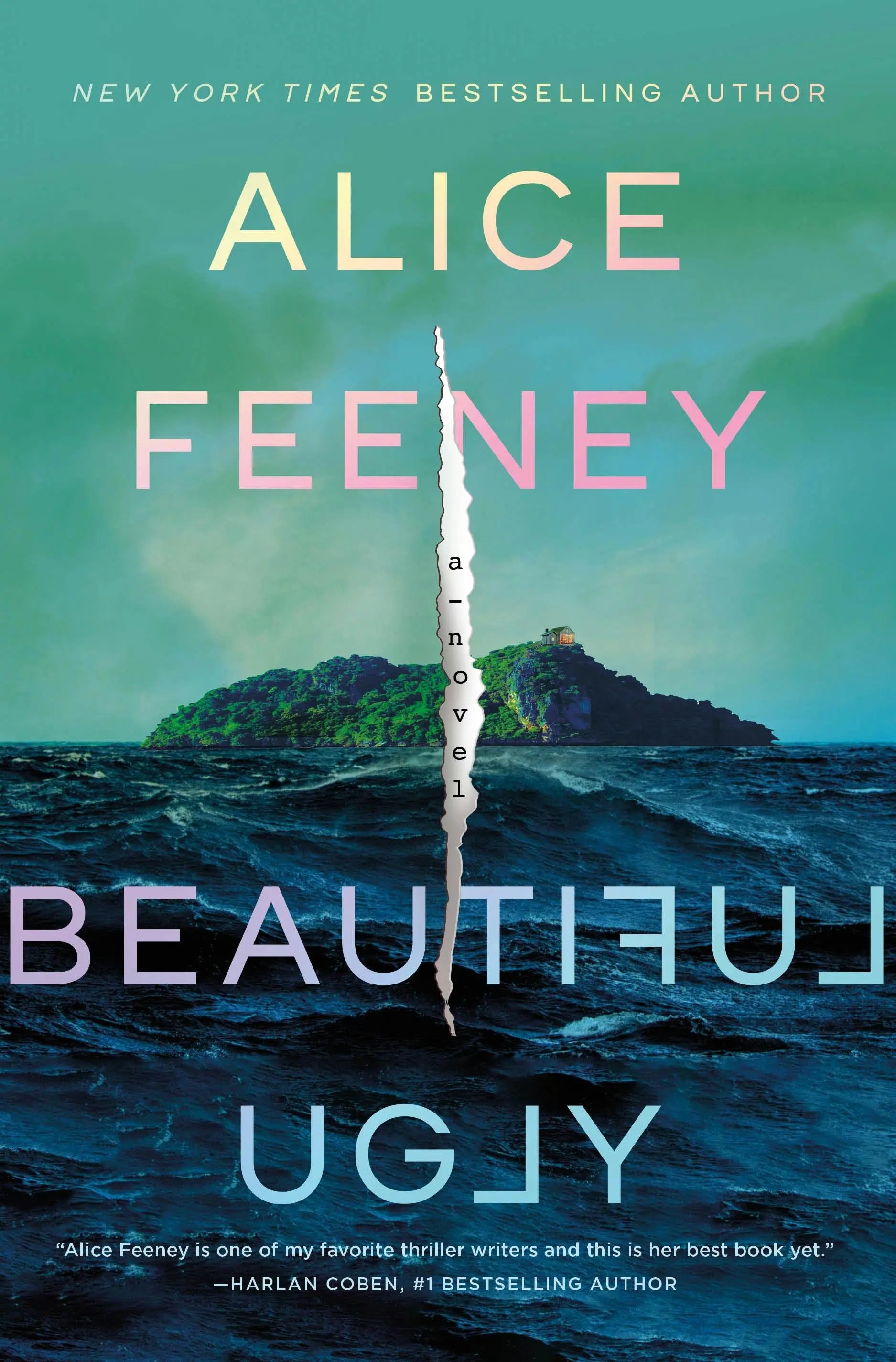
A psychological thriller about a grieving husband who sees his missing wife’s double on a remote Scottish island.
Summary:
Author Grady Green is having the worst best day of his life.
Grady calls his wife to share some exciting news as she is driving home. He hears Abby slam on the brakes, get out of the car, then nothing. When he eventually finds her car by the cliff edge the headlights are on, the driver door is open, her phone is still there. . . but his wife has disappeared.
A year later, Grady is still overcome with grief and desperate to know what happened to Abby. He can’t sleep, and he can’t write, so he travels to a tiny Scottish island to try to get his life back on track. Then he sees the impossible — a woman who looks exactly like his missing wife.
Wives think their husbands will change but they don’t.
Husbands think their wives won’t change but they do.
Review:
My memory told me I loved Alice Feeney’s thrillers—but after reading Beautiful Ugly and looking back at my past reviews, it turns out I only truly loved one (Rock Paper Scissors) and was lukewarm on another (Daisy Darker). With this latest being a miss, I probably won’t be rushing to pick up her next.
Right away, I was thrown a bit off course by the main character. When I reach for a thriller by a woman author, I typically expect a woman protagonist. Here, we follow Grady, a grieving husband and struggling novelist. We do get flashbacks to his wife before her disappearance, but Grady’s perspective never quite worked for me. I also rarely enjoy main characters who are writers—it often feels too navel-gazey (with the notable exception of Misery). That worked against Grady, too.
When Grady travels to a remote Scottish island—sent there by his agent-slash-his-wife’s-godmother—it should have been an atmospheric pivot. But while the setting is strange, it didn’t strike me as compelling. The book leans heavily on Grady’s alcoholism to make him an unreliable narrator, a device that can be effective (as in The Girl on the Train), but here felt more like a trope than an integral part of the story.
And unfortunately, it wasn’t just Grady. I didn’t connect with any of the characters—not the wife, the godmother, the ferrywoman, or the shopkeeper. That can still work if it’s a “love to hate them” type of book, but this wasn’t that. And when a book doesn’t give you characters to root for, you need a satisfying plot to carry the weight. Instead, I felt let down.
The book hinges on two major twists, and both left me feeling frustrated. One relies on the main character deliberately withholding information from the reader, which feels like a cheat—especially when we’re in his head for much of the book. The second twist is more straightforward, but felt over-the-top and unearned.
That said, there are a few bright spots. I appreciated the inclusion of a woman pastor and a same-sex couple among the tiny island’s population. The cast also includes a bit of racial and ethnic diversity. Also Grady’s dog is a breath of fresh air in every scene he’s in. However, the second twist somewhat undercut those thoughtful touches in a way that felt disappointing.
Content notes: CSA, death of children, infertility treatment, and murder.
Despite my frustrations, I’ll give the book credit for being readable and engaging. I wanted to know what happened, and I did enjoy the shifting points of view and timelines.
Overall, this is a thriller for readers who don’t mind a twist that plays unfairly with what the narrator reveals, and who enjoy mysterious settings and shifting perspectives—even if there’s no one to root for.
If you found this review helpful, please consider tipping me on ko-fi, checking out my digital items in my ko-fi shop, buying one of my publications, using one of my referral or coupon codes, signing up for my free microfiction monthly newsletter, or tuning into my podcast. Thank you for your support!
3 out of 5 stars
Length: 306 pages – average but on the longer side
Source: Library
Buy It (Amazon or Bookshop.org)
Book Review: A Bánh Mì for Two by Trinity Nguyen

A sweet, closed-door sapphic romance set in Sài Gòn, where two foodie 18-year-olds fall for each other while uncovering family secrets and rekindling a love of food writing.
Summary:
In Sài Gòn, Lan is always trying to be the perfect daughter, dependable and willing to care for her widowed mother and their bánh mì stall. Her secret passion, however, is A Bánh Mì for Two, the food blog she started with her father but has stopped updating since his passing.
Meanwhile, Vietnamese American Vivi Huynh, has never been to Việt Nam. Her parents rarely talk about the homeland that clearly haunts them. So Vivi secretly goes to Vietnam for a study abroad program her freshman year of college. She’s determined to figure out why her parents left, and to try everything she’s seen on her favorite food blog, A Bánh Mì for Two.
When Vivi and Lan meet in Sài Gòn, they strike a deal. Lan will show Vivi around the city, helping her piece together her mother’s story through crumbling photographs and old memories. Vivi will help Lan start writing again so she can enter a food blogging contest. And slowly, as they explore the city and their pasts, Vivi and Lan fall in love.
Review:
I love a sweet, closed-door sapphic romance (see my review of Hani and Ishu’s Guide to Fake Dating), so when I heard about A Bánh Mì for Two, it was an easy add to my wishlist. The focus on food blogging and Vietnamese street food—both eating it and running a street food cart—was just the icing on the cake. This story strikes a delicate yet exquisite balance between lighthearted sweetness and the very real multigenerational trauma caused by the Vietnam War (referred to in Vietnam as The War Against the Americans to Save the Nation).
Told in alternating first-person perspectives between Lan and Vivi, the book avoids the common pitfall of muddled voices. While both characters are kind and thoughtful, they each have distinct ways of seeing the world, which keeps their narration clear and engaging. The romance is a sweet, slow burn, beginning with Vivi’s admiration of Lan’s food blog and blossoming into real-world chemistry after a chance encounter in Sài Gòn.
I especially appreciated the queer representation. There’s no on-page angst about being queer. Vivi does talk briefly with her friend Cindy (a Mexican American character) about how coming out can be complicated with conservative parents, but by the time the story begins, both girls’ families are accepting. It was also refreshing to see Vivi clearly identify as bisexual—representation that could’ve been easily overlooked since her only relationship in the book is with Lan. It’s affirming and intentional, which I loved.
The food descriptions are vivid but never overdone. They strike just the right balance between informing the reader (especially for dishes that might be unfamiliar) and keeping the flow natural. (I’ve eaten many a bánh mì in my life, and still found the food writing delightful!) I also really appreciated that this is a story about two 18-year-olds, and college isn’t presented as the only post–high school option. Lan’s mom encourages her to pursue school if she wants to, but also supports her jumping right into a career—a rare and welcome take in YA-adjacent fiction.
Vivi’s experience as a Vietnamese American studying abroad in Vietnam adds a beautiful emotional layer. She’s not a tourist—she’s searching for a kind of homecoming. She’s exploring why her mother kept so many details about Vietnam and their family a secret. This process is a powerful lens for the reader to learn about the war’s impact on Vietnamese families without the book ever feeling preachy. The historical context emerges naturally—through conversations, shared meals, and street encounters. It’s excellent writing.
The romantic progression between Lan and Vivi is tender and believable. One of my favorite parts was the motorbike rides around Sài Gòn—evocative, cinematic, and intimate. Even the third-act conflict felt justified. It wasn’t a contrived misunderstanding but a believable clash of cultural differences and personal pain. No one is villainized, and the resolution feels earned.
That said, a few elements pulled me out of the story. For example, Vivi’s study abroad program is mentioned as her reason for being in Vietnam, but we never actually see her attend class or study. This absence feels like a missed opportunity—readers might expect the study abroad setting to include some academic context. Similarly, while the book opens with several references to Vivi lying to her mom about her location—including photoshopping photos—the tension fades away later in the book. I found it a bit hard to believe that her mom wouldn’t catch on sooner.
The book is richly diverse, featuring Vietnamese and Vietnamese American characters, a Mexican American side character, and a sapphic romance at the center. Lan’s mother has a chronic illness, and her father passed away young from a stroke. The book also explores difficult family dynamics, grief, and healing across generations.
Overall, this is a fun, sweet sapphic romance featuring the beloved tropes of slow burn and study abroad, while offering thoughtful reflections on Vietnamese culture, family history, and the legacy of war. It’s beautifully steeped in food, healing, and love. Recommended for anyone looking for a sweet, queer romance with emotional depth, cross-cultural exploration, and heartwarming food moments.
If you found this review helpful, please consider tipping me on ko-fi, checking out my digital items in my ko-fi shop, buying one of my publications, using one of my referral or coupon codes, signing up for my free microfiction monthly newsletter, or tuning into my podcast. Thank you for your support!
4 out of 5 stars
Length: 224 pages – average but on the shorter side
Source: Library
Buy It (Amazon or Bookshop.org)
Book Review: Sula by Toni Morrison

A lyrical and haunting novel about two Black women whose lifelong friendship is tested by betrayal, love, and the weight of their small-town community’s judgment.
Summary:
Sula and Nel are two young black girls: clever and poor. They grow up together sharing their secrets, dreams and happiness. Then Sula breaks free from their small-town community in the uplands of Ohio to roam the cities of America. When she returns ten years later much has changed. Including Nel, who now has a husband and three children. The friendship between the two women becomes strained and the whole town grows wary as Sula continues in her wayward, vagabond and uncompromising ways.
Review:
This was my second Toni Morrison novel—the first being The Bluest Eye, which I read back in college. Morrison’s prose is deeply lyrical, which makes her books swift reads on the surface, even when they delve into painful and challenging themes. Sula is no exception.
Each chapter is titled with the year it takes place in, but only covers a brief vignette from that year. Despite spanning several decades, this is a short novel, structurally and in page count. Though the title suggests a singular character focus, Sula is as much about a place—the Bottom, a Black neighborhood in a Southern state situated on the hillside, land the white residents had no interest in. The reason for its ironic name is revealed in the first chapter through a racist tale, setting the tone for the book’s critique of systemic racism.
Indeed, one of the novel’s most striking accomplishments is how clearly it shows that systemic racism ruins lives, whether characters comply with social expectations or resist them. For me, Nel represents compliance while Sula represents defiance—yet neither of them leads a life free from pain. Every person in their orbit suffers in some way, and that suffering is deeply entangled with the racist systems surrounding them.
The edition I read included an introduction in which Morrison writes: “Female freedom always means sexual freedom, even when—especially when—it is seen through the prism of economic freedom.” While I respect Morrison’s craft, I don’t personally agree with this framing. Throughout the book, the freest female characters are also the most sexually unrestrained, choosing partners without regard to consequences. For me, this reflects the central tensions I’ve often felt when reading Morrison’s work: I recognize the literary prowess but don’t agree with this belief. As someone who values intentionality in relationships and ethical sexuality, I believe there is freedom in discernment. My personal worldview differs from Morrison’s here, and I think that’s worth naming—especially since this quote helped me finally articulate why I sometimes feel at odds with what I’m “supposed” to take away from her narratives.
Of course, I also acknowledge that I am not Morrison’s intended audience. She has stated clearly that she writes for Black people—and I am a white woman. I honor that intention, while also appreciating the beauty, lyricism, and cultural specificity of this novel. Morrison evokes a place, a time, and a community with precision and poetry, showing rather than telling how racial injustice permeates generations.
For readers in recovery, or those who love someone with substance use disorder or alcohol use disorder, be advised that this book contains a disturbing scene involving the violent death of a character who struggles with addiction. A mother sets her son on fire, intentionally killing him because of his drug use. It’s a horrific and deeply stigmatizing portrayal. While I understand that literature doesn’t require characters to always make the “right” choices, scenes like this can be deeply harmful and may reinforce stigma around addiction. To anyone reading this who is struggling: You don’t deserve to die. You are not disposable. You can recover. We do recover. I acknowledge that the story is set in a time when resources for addiction recovery were nearly nonexistent, especially for a Black man. But violence is never the answer, and stories like this can perpetuate dangerous beliefs about addiction and worth.
With regards to diversity, the book explores colorism in the Black community, as well as racism faced by Black folks coming from immigrant white communities. It has multiple characters who fought in World War I who struggle with mental health afterwards. It also has a character who uses a wheelchair and is missing a limb. There is not any LGBTQIA+ representation that I noticed.
This is a novel that quietly devastates, not through high drama, but through its unflinching portrayal of how systemic racism, personal grief, and societal expectations shape lives over time. It’s beautifully written, deeply character-driven, and emotionally complex. Whether or not you’re part of Morrison’s intended audience, Sula is a compelling and powerful read. If you’re in recovery or close to someone who is, approach with care due to the painful and stigmatizing depiction of addiction. For those looking for fiction that treats mental health and recovery with care, check out my novel Waiting for Daybreak.
If you found this review helpful, please consider tipping me on ko-fi, checking out my digital items in my ko-fi shop, buying one of my publications, using one of my referral or coupon codes, signing up for my free microfiction monthly newsletter, or tuning into my podcast. Thank you for your support!
3 out of 5 stars
Length: 174 pages – average but on the shorter side
Source: Library
Buy It (Amazon or Bookshop.org)
Get the Book Club Discussion Guide
A beautifully graphic designed 2 page PDF that contains: 1 icebreaker, 9 discussion questions arranged from least to most challenging, 1 wrap-up question, and 3 read-a-like book suggestions
View a list of all my Book Club Guides.
Book Review: Pink Slime by Fernanda Trías translated by Heather Cleary
A quiet dystopian novel from a Uruguayan author about a woman navigating love, caregiving, and survival as a mysterious plague and environmental collapse unravel the world around her.
Summary:
In a city ravaged by a mysterious plague, a woman tries to understand why her world is falling apart. An algae bloom has poisoned the previously pristine air that blows in from the sea. Inland, a secretive corporation churns out the only food anyone can afford—a revolting pink paste, made of an unknown substance. In the short, desperate breaks between deadly windstorms, our narrator stubbornly tends to her few remaining with her difficult but vulnerable mother; with the ex-husband for whom she still harbors feelings; with the boy she nannies, whose parents sent him away even as terrible threats loomed. Yet as conditions outside deteriorate further, her commitment to remaining in place only grows—even if staying means being left behind.
Review:
You might be asking, “What possessed you to pick up a book about a plague, Amanda? Haven’t you seen enough of that in the last five years?” Fair question. When I saw Pink Slime on NetGalley, the description there led me to believe the focus wasn’t so much on the plague, but rather on the pink slime—something in the vein of Soylent Green. If you’re not familiar, the horror in Soylent Green centers on a disturbing twist about what people are unknowingly consuming. That’s the kind of dystopian horror I could be in the mood for.
Alas, Pink Slime isn’t really about the pink slime at all. It’s more about environmental collapse and the slow unraveling of society due to a strange, algae-driven plague.
I appreciated the way the main character’s life is quiet but emotionally complex. She still feels responsible for her recently ex-husband, who’s now in a clinic suffering from a chronic form of the plague that usually kills its victims. She visits him, possibly because she still loves him, at least a little. Her mother lives nearby in the same unnamed coastal South American city and demands occasional visits. And most pressingly, she periodically cares for a young boy with Prader-Willi Syndrome, whose wealthy parents provide food allotments but largely leave him in her care.
Her relationships with all three are emotionally layered—she provides meals, bathes, and protects them, yet often feels completely alone. It’s a quiet reminder of how caregiving can be both deeply intimate and deeply isolating. (If you’re interested in another take on post-apocalyptic isolation—this time with zombies—check out my own novel, Waiting for Daybreak, where a woman navigates survival and mental health in the midst of a very different kind of plague.)
I also found the plague itself intriguing. While the government claims it’s contagious, most cases appear to stem from exposure to toxic algae blooms, blown in by ocean winds. Residents are alerted by alarms to rush indoors and seal their windows. This unique concept allowed me to read the story from a dystopian distance rather than sending me back into pandemic fatigue.
That said, the novel’s language and structure make it a challenging read. Each chapter begins with a poem. The prose is often flowery and nonlinear, with frequent shifts in time and tense. While this might feel beautifully disorienting for some, for me it made the already slow, quiet apocalypse feel even slower. I suspect the translation was a difficult task. Though well-crafted, I imagine this book reads more naturally in its original Spanish. And while I’d love to do a comparison, my Spanish isn’t up to the task—so I’ll have to leave it to bilingual readers to weigh in. Readers more familiar with Uruguayan culture or more comfortable with poetic, nonlinear narratives may connect more deeply with the text than I did.
Diversity in the book is limited. No characters’ races are clearly described, and there are no overt LGBTQIA+ identities represented. The child with Prader-Willi Syndrome adds some disability representation, which I found compelling. It’s rare to see this condition, in which children lack a full signal and thus feel hungry all the time, represented in fiction. The narrator clearly loves and cares for the child, even while grappling with the challenges of caregiving. Readers should be aware, however, that some descriptions veer into fatphobic or ableist territory. Still, the overall portrayal felt realistic in terms of how society often responds to visible disabilities.
Overall, this is a quiet dystopian novel that offers a unique perspective on care, collapse, and isolation. It’s a challenging read on multiple levels: structurally, linguistically, and emotionally. But for readers curious about contemporary Latin American literature, especially from Uruguay, it offers insight into a distinct literary voice. Just don’t go into it expecting Soylent Green.
If you found this review helpful, please consider tipping me on ko-fi, checking out my digital items in my ko-fi shop, buying one of my publications, using one of my referral or coupon codes, signing up for my free microfiction monthly newsletter, or tuning into my podcast. Thank you for your support!
3 out of 5 stars
Length: 240 pages – average but on the shorter side
Source: NetGalley
Buy It (Amazon or Bookshop.org)
 Support my work with a tip or browse my shop for curated book club guides, how to guides, cross-stitch patterns, and more!


This work by Amanda Nevius is licensed under a Creative Commons Attribution-Noncommercial-No Derivative Works 3.0 United States License.
 Opinions of a Wolf