
Archive
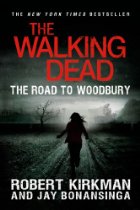
Book Review: The Walking Dead: The Road To Woodbury by Robert Kirkman and Jay Bonansinga (Series, #2) (Audiobook narrated by Fred Berman)
 Summary:
Lilly Caul’s father shoved her into a bus escaping town just as the doors were closing. They closed on him and zombies ate him while she watched. Haunted by the feeling that everyone caring for her puts their own lives in danger, she’s struggling to survive among a rag-tag group of survivors, including her high school friend, Megan. Slowly her small group of friendly survivors, headed by a big strong black man, Josh Lee, who has feelings for her, breaks off from the main group and find their way to Woodbury. There, the sinister side of the town gradually reveals itself.
Review:
My understanding of this print companion series to the graphic novel one was that it was going to follow the life of the villain The Governor. The first book told the backstory of The Governor and brought him to Woodbury, so I was expecting a book showing how he came to rule the town with an iron fist. Instead this entry covers the backstory of Lilly Caul, and how she comes to Woodbury. Although it’s always fun to visit this post-apocalyptic land that Kirman and Bonansinga have created, this entry just didn’t have the energy and appeal of the first book in the series.
I have to admit, although I recognized the name Lilly Caul, I couldn’t for the life of me remember who she was at first, so I spent quite a bit of time scratching my brain trying to figure out why we were following her around. I finally remembered that she’s one of the gang of Woodbury folks who go head-to-head with Rick Grimes’s gang in the graphic novels. A check of the wiki reminded me that she’s the one who shoots and kills Lori and Judith. Eh, this explains why I have no strong feelings about her. I hated Lori and felt nothing about Judith, so I certainly didn’t view her as a memorable villain. I now get it that the series is trying to show how all of Woodbury happened, not just the tale of The Governor. But the thing is that if you could tell the story of a compelling figure like The Governor why talk about the girl next door? It made for a boring book. There is nothing extraordinary about Lilly. She’s just a cowardly girl trying to survive an apocalypse, and she does it by leeching on to people who care for her but she seems to be lacking the ability to truly care about anyone besides herself. She also spends a lot of time slut shaming her “best friend” Megan, which pissed me off to no end. So we have a woman playing with people’s hearts for protection but simultaneously judging Megan for sleeping with people for protection. Yuck. Given all of these aspects of her character, I also found it really unbelievable that she would *spoiler warning* lead a rebellion against The Governor. *end spoilers*
When we finally do get to Woodbury, The Governor is already in charge, although he has yet to call himself The Governor. We do get to see what led to the establishment of the gladiator-style arena with the zombies, and we also see more reasons as to why the town folk trust and respect him. But we see all of this through Lilly, Megan, and Bob’s eyes. I honestly wanted to know more of the inner workings of The Governor, so I found this third person perspective disappointing.
There’s nothing new or ground-breaking in the horror. There is one massive swarm of zombies that is clearly supposed to be terrifying, but it did nothing for me. Maybe I’m just getting acclimated to this world, but neither the characters nor the level of horror increased the intensity enough for me.
That said, even though I didn’t enjoy which characters were focused on or how the plot was constructed, we do learn more about the world of Woodbury, and the post-apocalyptic world in general. We learn how and why the gladiator ring started, how The Governor won people over, and more about how the weather impacted the survivors on that particular winter. Long-time fans will find value in reading this book, even though it is by no means a thrilling or thought-provoking entry in the series. Skim it quickly to get the important bits and move on. For that reason, I would recommend the print over the audio, in spite of Berman’s talent as a narrator. He was better than the book he was given.
3 out of 5 stars
Source: Audible

Previous Books in Series
The Walking Dead: Rise of the Governor
Book Review: Deeper than the Dead by Tami Hoag (Series, #1) (Bottom of TBR Pile Challenge)
 Summary:
When four children stumble upon the displayed body of a dead woman, they and their teacher are pulled into the investigation. But when this murder is connected to others, that makes it a potential serial killer, and that means the FBI wants to get involved. Quietly. Of course, it’s only 1985, the edge of modern forensics, so they must pursue their murderer with a combination of science and old-fashioned detective work.
Review:
I wish I could remember how this thriller made it into my TBR Pile. It’s a unique entry into the serial killer/forensics sector of the genre due to the time period Hoag chose to set it in. She states in her author’s introduction that she wanted to set her thriller in the 80s due to a personal nostalgia for the time but only after starting her research did she realize what an important time period it was for forensics. I think it’s yet another example of an author following her interests and getting a unique work out of it.
The plot alternates perspectives between the four children, their teacher, the older FBI agent on the case, and the killer (without revealing who the killer is), all in the third person. The changing perspectives help keep the plot complex and moving, as well as give us multiple plausible theories on who the killer is. That said. I was still able to predict the killer, and I honestly felt the killer to be a bit stereotypical.
The serial killings themselves are all of young women who either are currently at or have recently left the local halfway house. The murder/torture methods are sufficiently grotesque without going over the top. Fans of the genre will be satisfied.
The characters are a bit two-dimensional, particularly the older FBI agent, the young cop on the force, and all of the murder suspects. I also, frankly, didn’t appreciate the fact that an expert in the field calls one of the mothers a crazy borderline. She was presented as entirely the flat, evil representation of people with BPD that we problematically see in the media. This is why writing two-dimensional characters can be problematic. We only see the woman being overly dramatic and demanding. We never see her softer or redeeming qualities. I’d have less of a problem with this presentation of this woman with BPD in the book if it was a first person narration or a third person narration that maintained one perspective. Then it could be argued that this is that one character’s perception of the woman. But given that multiple perspectives are offered, presenting so many people in a two-dimensional way is rather inexcusable, and it’s irresponsible to write mental illness in this way. I’m not saying every character with a mental illness needs to be written in a positive light, but they should be written as three-dimensional human beings, not monsters (with, perhaps, the exception of sociopathy).
This is a book, then, with an interesting idea and fairly good plot but shaky characterization. Some people don’t mind that in their thrillers. I admit I speed-read, eager to find out who the killer was. But I also was bothered by the flatness of the characters. If you think this won’t bother you, then you will probably enjoy this book. Those with a mental illness should be warned that the representation of mental illness in the book could be upsetting or triggering.
3 out of 5 stars
Source: PaperBackSwap

Book Review: Dead in the Family by Charlaine Harris (Series, #10) (Bottom of TBR Pile Challenge)
 Summary:
With the Fae war at an end, Sookie tries to return to some semblance of normal, working on both physical and emotional rehab. Although she has feelings for Eric, she is uncomfortable with his insistence that she is his wife, even if she technically is by vampire law. Plus, his maker and his new vampire-brother show up, putting a strain on the relationship. Meanwhile, the ramifications of the shifters coming out are beginning to be felt, and Sookie’s fae cousin, Claude, moves in with her, missing the presence of other fairies.
Review:
I just need to take a moment to point out two things. 1) The last time I read/reviewed a Sookie Stackhouse book was in October of 2010. This is why I started the Bottom of TBR Pile Challenge for myself. Books (even series books!) were getting lost in the pile! 2) Every time I look at that cover I think for a brief moment that Eric is bald. Something is just off in that painting. Now, on to the book.
Even though I read it almost three years ago (seriously, holy shit), I still clearly remember really enjoying the ninth book of the series. It was action-packed with lots of development of both plot and character. It reinvigorated the series for me so much so that even this much later, I was excited to pick up the next book. I should have known it would fizzle some after the action of the last book. It’s not easy to keep that much tension and action going, and it’s not like there weren’t any lulls earlier in the series. What I can mostly say about this book is that nothing much happens. Seriously. It’s longer than some of the books but less happens. I suppose technically things do happen. Eric’s maker shows up with a new vampire-brother for Eric, the hemophiliac Romanov brother, who is just not quite right in the head. This leads to some interesting development of Eric’s background, but not a ton. And it just isn’t all that intriguing. Similarly, even though logically it should be very interesting that Claude shows up at Sookie’s and the weres sniff out two fairies around, but it just isn’t. They sound interesting on the surface, but when you’re reading the book it mostly feels like you’re hanging out at Sookie’s house eating a cookie and wondering if the calories are worth it to listen to her yammer on.
I think the crux of the problem might be that neither Sookie nor Harris is comfortable with Sookie being with Eric, in spite of the reader liking Sookie being with Eric. If it’s not within the character for her to be with Eric, then a break-up needs to happen, regardless of what the readers like seeing. It’s important to keep characters acting within character. Interestingly, Sookie has started to notice that she is aging and thinking about what it will be like to slowly grow old and die. She seems to be seriously considering her vampire options. But we all know Sookie doesn’t want to be a vampire. Sookie wants children. If she gives that up to be a vampire, it will make the series take an incredibly dark turn. The next book will be an important one. It’s basically a shit or get off the pot moment for character development, and in spite of the ho hum nature of this entry in the series, I am interested to see if things pick up in the next book in this regard. They tend not to slump for long in Sookie Stackhouse-land.
There’s not too terribly much else to say about the book. Weaknesses that are there earlier in the series are still there. Sookie isn’t very smart and is kind of annoying. The sex scenes continue to be cringe-inducing. But the world is complex and fun to visit, even when not much is happening there. Sookie does need to start taking some agency soon though, or being stuck with her first person narration may become a bit too much to handle. Readers of the series will be disappointed by this dull entry, although it won’t come as a surprise since lulls happen earlier in the series. Enough happens to keep some interest up to keep going with it though.
3 out of 5 stars
Source: PaperBackSwap

Previous Books in Series:
Dead Until Dark
Living Dead in Dallas
Club Dead
Dead To The World
Dead as a Doornail
Definitely Dead
All Together Dead
From Dead to Worse
Dead And Gone
Book Review: The Isle of Blood by Rick Yancey (Audiobook narrated by Steven Boyer) (Series, #3)
 Summary:
Will Henry states that this is a story that Dr. Warthrop did not want told…and proceeds to tell it anyway. When a British man shows up with a package being delivered under duress, Dr. Warthrop is ecstatic to realize it is the nest of the Magnificum–the holy grail of monstrumology. Dr. Warthrop decides to leave Will Henry in New York while he pursues this beast. But when his monstrumologist companion returns claiming that Warthrop is dead, Will Henry and two fellow monstrumologists travel to Europe to track him–or his body–down.
Review:
Not as engaging or thought-provoking as the first two books in the series, I can only hope that this third entry is suffering from the common penultimate book malady where the book which must set everything up for the finale of the series can sometimes drag.
There are two problems in this entry that make it fail to be as engaging or thrilling as the first two books. First, Will Henry is left behind in New York for a significant portion of the novel. We are thus left with a whiny teenager bemoaning Warthrop’s choice to be responsible for once and keep him out of danger. We also are left with very little action for far too large a portion of the book. The second issue is perhaps a bit of a spoiler but suffice to say that the monster is disappointing and its disappointment is easily predicted. If we had a lot of action with a disappointing monster, that’s still engaging. If we had less excitement with a surprising, phenomenal monster, that’s still thrilling. The combination of the two, though, prevents this thriller from being as thrilling and engaging as it should be.
Of course there are other elements that still worked, which is why I kept reading it. Yancey’s writing is, as ever, beautiful to read (or listen to) and contains much depth.
“So many times we express our fear as anger…, and now I think I wasn’t angry at all, but afraid. Terribly, terribly afraid.”
The settings are unique, and the characters are strong and leap off of the pages. Will Henry becomes more fully fleshed-out in this entry as we start to see his descent into a love affair with monstrumology. We also get to see Warthrop at what he himself perceives of as his lowest point. It’s a dark bit of characterization but it works very well for the story Yancey is telling.
Overall, I was a bit disappointed, purely because the first two entries in the series were so phenomenal. The third book is still a very good book. Fans might be a bit disappointed, depending on how attached they are to the unique thriller aspect of the series, but the characters and writing still make this well worth the time. Fans will remain in eager anticipation of the final entry in the series.
4 out of 5 stars
Source: Audible

Previous Books in Series
The Monstrumologist
The Curse of the Wendigo
Series Review: The John Cleaver Series by Dan Wells
Introduction:
I post series reviews after completing reading an entire series of books. It gives me a chance to reflect on and analyze the series as a whole. These series reviews are designed to also be useful for people who: A) have read the series too and would like to read other thoughts on it or discuss it with others OR B) have not read the series yet but would like a full idea of what the series is like, including possible spoilers, prior to reading it themselves or buying it for another. Please be aware that series reviews necessarily contain some spoilers.
 Summary:
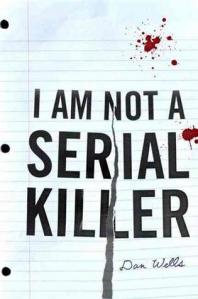
Fifteen-year-old John Wayne Cleaver is not a serial killer. At least not yet. John’s therapist believes he has Antisocial Personality Disorder, commonly known as sociopathy, although he can’t legally deliver the official diagnosis until he’s 18 years old. But both his therapist and himself hope John can learn to control his illness in the meantime. An illness John refers to as Mr. Monster. This becomes more difficult as a serial killer shows up in his town. John starts to wonder if he can harness Mr. Monster to find and kill the killer. A killer he soon learns is supernatural and ultimately faces. The demons continue coming to his town, and John feels his grasp on control and an ability to function in average society slipping. Are there really more and more demons coming to his town? Or is it just his sociopathy getting the better of him?
Review:
This trilogy starts with an incredible bang, but makes a slow trajectory downward to end on a whimper.
The first book is incredible. It bashes ableism on its head by featuring a main character who is a teenager struggling with a mental illness, and not an easy one to identify with either. People with APD lack empathy, which can make it difficult to empathize with them in return. Wells carefully crafts a realistic yet sympathetic teenager with APD. His struggles to defeat his mental illness and be a functioning member of society are great to see in a novel period, let alone in a YA one. On top of this, we have a single mother running a business with the help of her just graduated high school daughter and part-time help of her teenage son. It’s the perfect mix of non-traditional and yet not off the wall family to have as a backdrop for John. We have all this, then, with a thriller plot that starts with the hint of a serial killer then deliciously builds to the revelation that the killer is a demon. This fantasy element fits perfectly in with what is hot in YA right now, giving an interesting, unique main character an appealing wrapping.
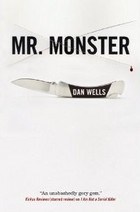 I was stoked after reading this and had high hopes for the trilogy. The middle book maintains some of the elements that made the first book amazing but missed on others. On the plus side, John is still who he was in the first book, although with more confidence. He tries to date, and his family has their own struggles. Although the thriller pacing is less deftly done, it still works in the context of this book, particularly since the middle book of a trilogy is traditionally setting things up for the last hurrah of the final book. Plus this book manages to accomplish two things. It has John learning more about himself and his mental illness and it shows him learning more about demons. It ends on a powerful note with him inviting one of the demon’s friends to Clayton County to face off with him. He’s tired of waiting for things to come to him and is ready to go on the offensive. Thus, although this book wasn’t as strong as the first, I had high hopes that it was setting us up for a powerful final book in the trilogy.
Things really fall apart in the final book, which is what makes the trilogy taken as a whole disappointing. Everything is building toward the final book. Toward what John ultimately learns and what he ultimately becomes. Unfortunately the answers to both of those questions are a major let-down after the unique and albeism-smashing features of the first two books. In the climactic scene, John’s mother sacrifices herself to save her son. When he loses her, he realizes that he is feeling feelings. He’s feeling the pain of losing her. When he realizes this, the lightbulb goes off in his head that he stopped feeling feelings when his father abandoned them. It was just him trying to deal with his broken family. I shit you not. And then he decides he has been healed by his mother’s death. His mother’s sacrifice opens him up to letting himself feel things again. What. The Fuck.
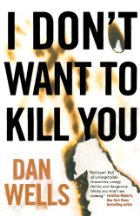 First of all, going numb after being badly emotionally hurt is a real thing. But it’s not a real thing that would be mistaken by a therapist as Antisocial Personality Disorder. And being numb doesn’t mean a person starts daydreaming about killing everyone around him and the girls he has crushes on in particular. Numb is not the same as lacking empathy, and it honestly doesn’t even take a therapist to see that. Numb looks and feels different from sociopathy. They are not the same thing and simply could not be mistaken for each other. If we decide that perhaps Wells didn’t mean to imply that John was simply numb and didn’t have sociopathy, then we can only read this as saying that John’s father abandoning the family *caused* his son’s sociopathy and that his mother’s sacrifice cured it. I’m sorry, but your dad running off does not give people Antisocial Personality Disorder, and it certainly isn’t cured in the span of 10 minutes by someone sacrificing their life for yours. (By the way, does anyone see the heavy-handed religious symbolism in that? Because it is definitely there). The cause, as with many mental illnesses, is officially unknown but is believed to be a combination of genetics and severe environmental factors such as child abuse (source). Since John is not abused, then we can only assume that in his case his APD is genetic. It is utterly ridiculous to present the matter as his APD being caused by something as simple as a parent leaving. Similarly, there is no cure for APD. People do not get magically better overnight. It can be managed so a person may have a healthy, normal life, but it does not just disappear. The symptoms do sometimes become less severe on their own in a person’s 40s (according to the DSM-IV-TR), but John is not 40, and he doesn’t suddenly get better thanks to aging. The whole climax of the series turns the series from being about a person with a mental illness learning to function and do positive things into a story about how a father abandoning his family destroyed them and almost ruined his son for life. The former is unique and powerful. The latter is heavy-handed and preachy. Plus that whole dynamic belittles mental illness and makes it out to be just overcoming a bad part of your life, rather than the very real illness that people deal with every day.
So what we have here is a trilogy that starts as one thing and ends as another. It starts as a thriller with a unique main character demonstrating dealing with mental illness in an engaging, realistic manner. It ends with a thriller that quickly goes from spine-tingling to heavy-handed and preachy. It is unfortunate that this preachiness also gets the facts about a mental illness wrong and presents these false ideas to a YA audience in such an attractive, fantastical thriller wrapping. Ultimately the writing is good but the last book in the trilogy takes a nose-dive when it comes to facts and the realities of having and living with a mental illness. Thankfully, one can read the first or first two books in the trilogy without reading it all. There are not major cliffhangers that compel the reader to continue on, and the first two books stand on their own well enough. I’m disappointed that the series as a whole is not something I can recommend whole-heartedly. I’m disappointed that after starting out so strong, Wells went so far astray. That doesn’t change the quality of the first two books, though, so I still recommend them. But only if you’re capable of leaving a series partly unread.
3 out of 5 stars
Source: PaperBackSwap, Audible
Books in Series:
I Am Not A Serial Killer
Mr. Monster 
I Don’t Want to Kill You
Book Review: I Don’t Want to Kill You by Dan Wells (Audiobook narrated by Kirby Heyborne) (Series, #3)
Summary:
Teenaged John Cleaver had his sociopathy under control but when his town was plagued with two different demons, he had to let it loose a bit to fight them. He invited the demon Nobody to come face off with him, but he and those around him are left wondering if Nobody is real or if John’s sociopathy has just gone out of control. Meanwhile the teenage girls of the town are committing suicide left and right, and John can’t help but wonder why he’s ever tried to save anybody.
Review:
This is one of only a few YA series that I’ve enjoyed reading. The paranormal/youth aspect are almost like a Dexter lite, which is enjoyable. I must say, though, that I was disappointed by the ultimate ending to the series. However, since I write up series review posts every time I finish a series, I’ll leave my analysis of the series as a whole to that post, which will be coming up next. For right now, let’s look at the final book on its own merit.
The plot this time around was disappointingly full of obvious red herrings. I knew within the first chapter where Nobody was hiding, and it was kind of ridiculous that talented, intelligent John was missing it. Similarly, I found the serial killer who John identified as who he could end up being if he made the wrong choices to be a bit heavy-handed. John was already well aware of the risks of his sociopathy from the very first book. It felt a bit unnecessary to make this such a strong plot point. It came across as preachy, which is something that this series had avoided so far. Similarly, John goes to see a priest at one point in his investigations, and his conversations with him felt a bit too heavy-handed, almost like the (known religious) Wells was preaching at the readers through the priest. Authors are allowed their opinions and perspectives, but preachiness is never good writing. Perspective and opinion should be shown eloquently through the plot and characters.
Speaking of characterization, John was still strongly written, but his mother and sister were another story. They felt less like they were doing what was logical and more like they were doing what needed to be done to move the plot forward. On the other hand, I really enjoyed John’s new girlfriend. She was well-rounded and realistic. Plus she was fit while being curvy, which I think is a great thing to see in a book.
In spite of the slightly obvious plot, I still was engaged to get to the end. Even though I knew whether or not there was a demon and who the killer was, I still deeply wanted to see how John would handle it. The audiobook narrator, Kirby Heyborne, helped with this momentum. His narration was just the right amount of tension while still remaining in a teenager’s voice. Be warned, though, that there is some yelling in the book, so the volume does spike considerably at a few points in the narration. You may want to keep the volume a bit lower than usual to accommodate this.
Unfortunately, where the plot ultimately ended up was deeply disappointing to me. It was not at all a satisfying ending, and from a mental illness advocacy perspective, I actually found it distressing. Whereas John’s sociopathy previously was handled with a lot of scientific understanding, I found the ending of this book to be completely out of touch with real sociopathy. While it wasn’t offensive per se, it drastically oversimplifies sociopathy, both its treatment and its causes, which is just as bad as demonizing it. I will address this issue more fully in the series review, but suffice to say that I found the ending to this book’s individual mystery and the series as a whole to be disappointing, particularly given the potential of the book.
Overall, then, this is an average book that wraps up an above average series. If you are someone who is fine with stopping things partway through, I’d recommend just stopping with the previous book in the series, Mr. Monster. But if you are interested in the overall perspective, this book is still an engaging read that doesn’t drag. It just might disappoint you.
3.5 out of 5 stars
Source: Audible
Previous Books in Series
I Am Not A Serial Killer
Mr. Monster
Counts For:

Book Review: The Long Quiche Goodbye by Avery Aames (Series, #1) (Bottom of TBR Pile Challenge)
 Summary:
Charlotte Bessette is ecstatic that her slightly eccentric French grandfather and grandmother have handed over the running of their small town cheese shop to her and her cousin, Matt. She and Matt have redecorated the place for the 21st century and have added a wine annex. Everyone is excited for the grand re-opening but when their landlord turns up dead on their doorstep stabbed with one of their cheese knives and Charlotte’s grandmother standing over him, both the shop and the family are at risk.
Review:
Cozies are, by their very nature, absolutely ridiculous and difficult to explain. I generally default to an explanation like, “It’s murder! With arts and crafts and cooking! But not too much blood and no sex! And the titles are puns!” At this point the person I’m talking to generally looks at me like I’m nuts and wanders off. But even though the cozy genre is ridiculous and tough to explain, there are things that work for it and things that don’t. This book is definitely a cozy but it combines the cozy elements oddly, making it fall short of awesome into the decidedly meh category.
Most cozies have a moderately ridiculous plot involving a dead body being found and a woman ultimately amateur investigating the crime. The crime in this one was odd. A landlord who nobody likes is stabbed directly in front of the cheese shop on grand reopening night. Oh, and he’s stabbed with a cheese knife. Sometimes I think authors just don’t research and realize how hard it actually is to stab someone in the chest. A cheese knife wouldn’t cut it. (See what I did there?) So that had me rolling my eyes from the start. The ultimate whodunit was also a bit bizarre and had me scratching my head. It made some sense but it also sort of felt a bit like the author just chose whoever would be the most surprising as the killer, instead of really thinking through the logic and motivation. It’s also a bit problematic to have the murder victim be some sleaze everybody in town hates. This felt like a choice to give the mystery more easy suspects rather than, again, based on thinking through logic, motivation, and real crimes.
Then there’s the issue of the main character, Charlotte, who ultimately investigates. She doesn’t really have the get up and go gumption necessary for someone to start investigating something on her own. She’s….kind of snooty and prissy. A good cozy main character should be into her arts and crafts but also possess a lot of independent spirit and gumption. Charlotte is surrounded by people like that–her grandmother, her shop employee–but she herself isn’t like that at all. Yes, her grandmother is accused of a crime she didn’t commit and that’s a big impetus to do something, but it just feels out of character for Charlotte to do investigation. Similarly, Charlotte’s romantic interest felt forced and fake, which was awkward. In a genre where we get no sex scenes, the romance should be very well done, which it was there, but it wasn’t truly engaging.
The quirky characters in the town, besides Charlotte and her love interest, were interesting and just the right blend of quirks and reality to suit a cozy. Similarly, I was glad to see some cheese-heavy recipes in the back. I also thought the pun title was great and played in well to the mystery without giving too much away.
Personally, I think there are better, more engaging and funny cozy series out there to invest my time in. However, if you are a huge cozy fan and don’t mind the oddly snooty, timid main character and a slightly silly mystery plot, then you should give it a go. The cheese angle is certainly unique.
3 out of 5 stars
Source: PaperBackSwap

Book Review: Braided by Elora Bishop (Series)
 Summary:
A lesbian retelling of Rapunzel. Gray, a witch’s daughter, visits Zelda every day. The witch switched Gray’s fate into Zelda, so now Zelda is the one entwined with the spirit of the tree that the people worship. She must live on the platform and every day lower her hair for people to tie ribbons and prayers into. Gray feels horrible guilt over their switched fates, but she’s also falling in love with Zelda.
Review:
I’m a sucker for fairy tale retellings, although I can be fairly picky about whether or not I like them. But Rapunzel is a tale that is not redone often enough, in my opinion, and the fact that it was a lesbian version made me jump at this novella.
It’s nice that the retelling doesn’t just change the genders of the main romantic pairing and leave it at that. In the original version, a married couple steal from a witch’s garden and in payment they must give her their unborn child who she then locks up into a tower. She would let her long hair down for her witch/mother to use as a ladder to get into the tower. A prince years later hears her singing in the tower and helps her escape. In this retelling, the people worship a tree. When the tree starts to die they tie its spirit into a person. That person lives on a platform in the tree and the people pray to him/her. When the person dies, the fate to be tied to the tree randomly chooses a baby by putting a tree pattern on their chest. This fate is supposed to be Gray’s, but her mother somehow acquires another baby, Zelda, and with magic cuts the fate out and ties it to her instead. Gray knows this and at first visits Zelda out of guilt but eventually falls in love with her. This version, surprisingly, is actually a lot more fantastical and magical. There is even a quest within an alternate dimension/dream world. I enjoyed the increase in the otherworldly feel, and I liked that it lent the twist of a parent trying to protect her child rather than a mother smothering her child.
The writing has an earthy, magical quality to it. It’s definitely language that is looking to be pretty, and it mostly succeeds. The romance between Zelda and Gray is sweet and very YA. Their passion revolves entirely around kissing and holding. I like that it gives a soul and connection to the romance without ignoring the physical aspect. It’s the perfect balance for this type of story.
While I enjoyed reading the story, I must admit it wasn’t my ideal retelling of Rapunzel. I didn’t like the religious aspect that was drawn into it, and I did feel that Zelda falling for Gray was a bit fast, particularly given the fate switching aspect of the story. I was also disappointed to see that in spite of all the other changes in the story, the Rapunzel character is still blonde. I’m not sure why no one ever seems to change this when retelling Rapunzel.
Overall, this is a fun retelling of Rapunzel, particularly if you’re looking for a non-heteronormative slant or enjoy a more magical feel. Note that this is part of a series entitled Sappho’s Fables
4 out of 5 stars
Source: Amazon

2012’s 5 Star Reads!
Last year I decided to dedicate a separate post from my annual reading stats post to the 5 star reads of the year. I not only thoroughly enjoyed assembling that post, but I also still go back to it for reference. It’s just useful and fun simultaneously! Plus it has the added bonus of giving an extra signal boost to the five star reads of the year.
Please note that if the 5 star went to a book in a graphic novel series, I am just listing the whole series. If it’s a non-graphic series, then the individual book is listed with a note about what series it is in. With no further ado, presenting Opinions of a Wolf’s 5 Star Reads for 2012!
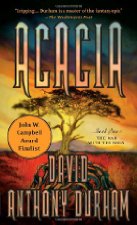
Acacia: The War with the Mein
By: David Anthony Durham
Publication Date: 2007
Publisher: Doubleday
Genre: Fantasy
Themes: the complexities of good and evil
Summary:
The Akarans have ruled the Known World for twenty-two generations, but the wrongfully exiled Meins have a bit of a problem with that. They enact a take-over plot whose first action is assassinating the king. Suddenly his four children are flung to different parts of the Known World in exile where they will need to come to terms with who they are, who the Mein are, and the wrongs past generations of Akarans committed in order to help the Known World make a change for the better.
Current Thoughts:
I have to catch myself whenever I start to say I don’t like high fantasy now, because I do like it. I like it when done right. When it questions patriarchy and race and tradition in the context of a fantastical world. I definitely feel like this book has cross-over potential, so I recommend it to anyone with an interest in multi-generational epics.
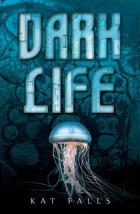
Dark Life
By: Kat Falls
Publication Date: 2010
Publisher: Scholastic Press
Genre: YA, Post-Apocalyptic, Scifi
Themes: ocean exploration, pioneering
Summary:
Ty was the first person born subsea. His family are settlers on the bottom of the ocean, a new venture after global warming caused the Rising of the seas. Ty loves his life subsea and hates Topside. One day while adventuring around in the dark level of subsea, he stumbles upon a submarine and a Topside girl looking for her long-lost older brother. Helping her challenges everything Ty believes in.
Current Thoughts:
I still sometimes think back to the delightfully creative underwater world that Falls presents in this book. This is a YA book that manages to avoid the painful tropes that a lot of them fall into, plus it has a great setting. I will definitely be reading the rest of the series.
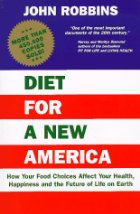
Diet for a New America
By: John Robbins
Publication Date: 1987
Publisher: Stillpoint Publishing
Genre: Nonfiction–Diet, Nonfiction–Environmentalism, Nonfiction–Science
Themes: health, responsible choices
Summary:
John Robbins was born into one of the most powerful corporations in America–Baskin-Robbins. A company based entirely on selling animal products. Yet he took it upon himself to investigate the reality of animals products and their impact on Americans, American land, and the world overall. This book summarizes his extensive research, including personal visits to factory farms.
Current Thoughts:
Although I already knew a lot of this information before reading this book, I believe that Robbins does an excellent job both of writing it out clearly and backing it up with respected, academic citations. It’s my go-to book to hand to people who want to know why I’m so against factory farming and what the scientific arguments in favor of vegetarianism are.

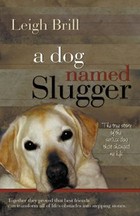
A Dog Named Slugger
By: Leigh Brill
Publication Date: 2010
Publisher: Bell Bridge Books
Genre: Nonfiction–Memoir
Themes: animal/human relationships, disability studies
Summary:
Leigh Brill recounts in her memoir her life before, during, and after her first service dog, Slugger, a golden retriever with a heart just as golden. Leigh had no idea her cerebral palsy could even possibly qualify her for a service dog until a similarly disabled fellow graduate student gave her some information. Her touching memoir tracks her journey, as well as the life of Slugger.
Current Thoughts:
My love for animals means that any book about relationships with them tends to top my list. This one stands out for its focus on issues for the disabled, and I believe that Brill’s love for her dog, both for his personality and how he helps her, really shine through. I’d recommend this to any animal lover or to those curious about life with a service animal.

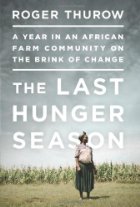
The Last Hunger Season: A Year in an African Farm Community on the Brink of Change
By: Roger Thurow
Publication Date: 2012
Publisher: PublicAffairs
Genre: Nonfiction–Social Justice
Themes: hunger, farming, global warming, putting a face onto the issues
Summary:
Smallholder farmers make up the majority of Kenya’s food production and yet they face multiple challenges from inefficient planting techniques to bad seed markets that lead to an annual wanjala–hunger season. One Acre Fund, an ngo, saw the gap and came in with a vision. Sell farmers high quality seeds and fertilizers on credit, delivered to their villages, on the condition they attend local farming classes. Roger Thurow follows four families as they try out becoming One Acre farmers.
Current Thoughts:
I credit this book with giving me perspective in the worldwide hunger and GMO debate, and of course with giving me that ever-useful reminder that in some ways I have been very lucky. What I tell people in order to get them to read this book is one of two things. Either read this book because it will show you the true face of hunger or read this book to understand why some GMOs are necessary. Most of all, I recommend it to anyone with an interest in the worldwide food debate.

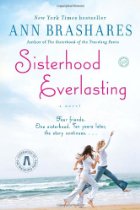
Sisterhood Everlasting
By: Ann Brashares
Publication Date: 2011
Publisher: Random House
Genre: Contemporary Fiction
Themes: the pain of growing up and maturing, changing relationships
Summary:
The Septembers are all 29 years old now and spread out all over the globe. Bee is expending her energy biking up and down the hills of San Francisco while Eric works as a lawyer. Carmen has a recurring role on a tv show filming in NYC and is engaged to Jones, an ABC producer. Lena teaches art at RISD and lives a quiet life in her studio apartment, except for the one day a week she practices Greek with an elderly woman. Tibby took off to Australia with Brian months ago, and everyone else is in limbo waiting for her to get back. They all feel a bit disconnected until Tibby sends Bee, Carmen, and Lena tickets to come to Greece for a reunion. What they find when they arrive is not what anyone expected.
Current Thoughts:
It’s unfortunately rare that a series grows up with the characters, but Sisterhood has. Although a lot of women’s fiction with similar themes frustrates me, this series works because I started reading it as a teenager when the women were teenagers. I understand where they’re coming from and am more willing to give them a chance. If you ever read any of the Sisterhood books but neglected to finish the series, definitely pick them back up. It’s worth it.
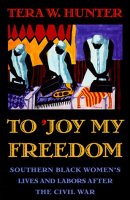
To ‘Joy My Freedom: Southern Black Women’s Lives and Labors after the Civil War
By: Tera W. Hunter
Publication Date: 1997
Publisher: Harvard University Press
Genre: Nonfiction–History
Themes: race, class, gender, Atlanta, domestic workers
Summary:
Hunter examines the lives of southern black women, particularly southern domestic workers, by narrowing her focus in on the development of the city of Atlanta after the Civil War. Since many ex-slaves moved to Atlanta and then migrated again north during the Great Migration decades later, this makes for an excellent focal point for the topic. By examining black women’s lives in Atlanta both in and out of their employer’s homes, she is able to dissect the roles of race, class, and gender in the elite’s attempts to maintain dominance in America.
Current Thoughts:
This book not only gave me the thought-provoking examination of the intersection of race, class, and gender, but it also gave me an awesome historical introduction to the city of Atlanta. I always think of this book whenever Atlanta comes up. It’s also a great example of readable, accessible nonfiction history writing.

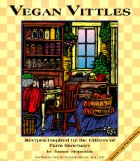
Vegan Vittles: Recipes Inspired by the Critters of Farm Sanctuary
By: Joanne Stepaniak
Publication Date: 1996
Publisher: Book Publishing Company (TN)
Genre: Nonfiction–Cookbook–Vegan
Themes: down-home cruelty-free cooking
Summary:
A farm sanctuary is a farm whose sole purpose is to save animals from farm factories and slaughter. The Farm Sanctuary in upstate New York was started in 1986. In this cookbook, one of the proprietors has gathered vegan recipes inspired by farm life. Think down-home cooking that is cruelty-free.
Current Thoughts:
The recipes I selected out of this cookbook have solidly entered my repertoire and are repeated hits with omnis and veg*ns alike! They are simple, easy, and adaptable. They also fill that comfort food niche I had honestly been missing. Highly recommended to anyone who loves comfort food.

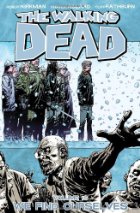
The Walking Dead
By: Robert Kirkman
Publication Date: 2010
Publisher: Image Comics
Genre: Graphic Novel–Horror
Themes: creation of a new society, living in fear, unjust wars, truthiness, self-protection, zombies, Georgia, survival
Summary:
When cop Rick wakes up from a coma brought on by a gun shot wound, he discovers a post-apocalyptic mess and zombies everywhere. He sets off for Atlanta in search of his wife, Lori, and son, Carl, and soon teams up with a rag-tag group of survivors camped just outside of Atlanta.
Current Thoughts:
I’m still working my way through this series, but it just progressively gets better and better. Although the beginning is cliche, it does not take Kirkman long to become unique, surprising, and thought-provoking. This now also features a spin-off, non-graphic, prequel series about the villain, The Governor. I consider these to all be the same series, in spite of different formats, and I’m finding that spin-off just as enjoyable.

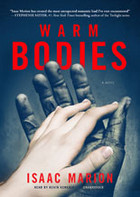
Warm Bodies
By: Isaac Marion
Publication Date: 2010
Publisher: Blackstone Audio
Genre: Post-Apocalyptic
Themes: hope, love
Summary:
R is a zombie, and he remembers nothing about his life before he was one–except that his name starts with the letter R. He and his group of the other living dead inhabit an old abandoned airport and are ruled by the bonies. They hunt the living not just for the food, but also for the memories that come from ingesting their brains. It’s like a drug. One day when he’s out on a hunt, R eats the brain of a young man who loves a young woman who is there, and R steps in to save her. It is there that an unlikely love story begins.
Current Thoughts:
This book reminds me that even a post-apocalyptic story can be hopeful. I also still look back on R’s unlikely love story with a warm heart and smile. I recommend it to those looking for an off-beat love story or a different take on zombies.
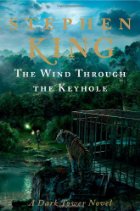
The Wind Through the Keyhole 
By: Stephen King
Publication Date: 2012
Publisher: Scribner
Genre: Fantasy, Horror
Themes: growing up, leaving aside childish things
Summary:
There’s a tale we have yet to hear about the ka-tet in the time between facing the man in the green castle and the wolves of the Calla. A time when the ka-tet hunkered down and learned a special billy-bumbler talent, an old tale of Gilead, and the first task Roland faced as a young gunslinger after the events at Mejis.
Current Thoughts:
The Dark Tower is just a series that is flat-out worth getting into a fan girling over. I could never ever perceive of reading and re-reading it as being a waste of time. I’ve also noticed that growing up is a recurring theme in King’s books, and apparently is one that I enjoy.
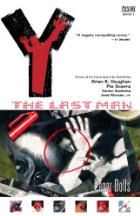
Y: The Last Man
By: Brian K. Vaughan
Publication Date: 2003
Publisher: Vertigo
Genre: Graphic Novel–Scifi–Post-apocalyptic
Themes: gender, gender norms, organization of society, Boston, United States, Israel, coming of age
Summary:
The world is changed overnight when all the men and boys in the world mysteriously drop dead. Factions quickly develop among the women between those who want the world to remain all female and those who would like to restore the former gender balance. One man is mysteriously left alive though–Yorick. A 20-something, underachieving magician with a girlfriend in Australia. He desperately wants to find her, but the US government and the man-hating Amazons have other ideas.
Current Thoughts:
Another series that I am currently in the middle of. It is also steadily improving from the first volume. It is colorfully illustrated, consistently funny, and thought-provoking.

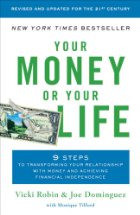
Your Money or Your Life: 9 Steps to Transforming Your Relationship with Money and Achieving Financial Independence: Revised and Updated for the 21st Century
By: Vicki Robin and Joe Dominguez
Publication Date: 2008
Publisher: Penguin Books
Genre: Nonfiction–Lifestyle
Themes: getting what you want out of life, debt slavery, finances
Summary:
Dominguez achieved Financial Independence at the ripe old age of 30 and proceeded to provide his method to friends who encouraged him to offer it as a class. He finally wrote a book, and this edition is revised and updated for modern times by his friend and fellow achiever of Financial Independence, Vicki Robin. Offering steps and mind-set changes, not magic formulas, they promise that if you follow the steps, you can be Financially Independent in 5 to 10 years, no matter how much debt you are currently in or how much money you make.
Current Thoughts:
This is definitely not a quick-fix book. It’s a realistic look at your finances and debt and ways to come out on top financially independent. Following the steps is time-consuming and, admittedly, difficult to do on a month-to-month basis, but even just reading the book and following the steps for a bit gave me more of a solid structure for my finances. I paid down a significant amount of my debt in 2012 and am hopeful to pay down even more in 2013. I’m not sure I’d have been so successful with that without this book. Plus it gives hope when you’re feeling buried in debt.

Book Review: Blackbirds by Chuck Wendig (Series, #1)
 Summary:
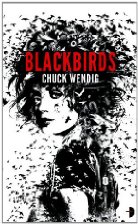
Miriam Black is an early 20-something drifter with bleach blonde hair and a surprising ability to hold her own in a fight. She also knows when and precisely how you’re going to die. Only if you touch her skin-on-skin though. And it’s because of this skill that Miriam became a drifter. You try dealing with seeing that every time you touch someone. But when a kind trucker gives her a lift and in her vision of his death she hears him speak her name, her entire crazy life takes an even crazier turn.
Review:
This is one of those books that is very difficult to categorize. I want to call it urban fantasy, but it doesn’t have much supernatural about it, except for the ability to see deaths. The world isn’t swimming in vampires or werewolves of goblins. I also want to call it a thriller what with the whole try to stop the trucker from dying bit but it’s so much more than chills and whodunit (or in this case, who will do it). Its dark, gritty style reminds me of Palahniuk, so I suppose what might come the closest would be a Palahniuk-esque urban fantasy lite thriller. What I think sums it up best, though, is a quote from Miriam herself:
It starts with my mother….Boys get fucked up by their fathers, right? That’s why so many tales are really Daddy Issue stories at their core, because men run the world, and men get to tell their stories first. If women told most of the stories, though, then all the best stories would be about Mommy Problems. (location 1656)
So, yes, it is all of those things, but it’s also a Mommy Problems story, and that is just a really nice change of pace. Mommy Problems wrapped in violence and questioning of fate.
The tone of the entire book is spot on for the type of story it’s telling. Dark and raw with a definite dead-pan, tongue-in-cheek style sense of humor. For instance, each chapter has an actual title, and these give you a hint of what is to come within that chapter, yet you will still somehow manage to be surprised. The story is broken up by an interview with Miriam at some other point in time, and how this comes into play with the rest of the storyline is incredibly well-handled. It’s some of the best story structuring I’ve seen in a while, and it’s also a breath of fresh air.
Miriam is also delightful because she is unapologetically ribald and violent. This is so rare to find in heroines.
We’re not talking zombie sex; he didn’t come lurching out of the grave dirt to fill my living body with his undead baby batter. (location 2195)
As a female reader who loves this style, it was just delightful to read something featuring a character of this style who is also a woman. It’s hard to find them, and I like that Wendig went there.
While I enjoyed the plot structure, tone, and characters, the extreme focus on fate was a bit iffy to me. There were passages discussing fate that just fell flat for me. I’m also not sure of how I feel about the resolution. However, I’m also well aware that this is the beginning of a series, so perhaps it’s just that the overarching world rules are still a bit too unclear for me to really appreciate precisely what it is that Miriam is dealing with. This is definitely the first book in the series in that while some plot lines are resolved, the main one is not. If I’d had the second book to jump right into I would have. I certainly hope that the series ultimately addresses the fate question in a satisfactory way, but at this point it is still unclear if it will.
Overall, this is a dark, gritty tale that literally takes urban fantasy on a hitchhiking trip down the American highway. Readers who enjoy a ribald sense of humor and violence will quickly latch on to this new series. Particularly recommended to readers looking for strong, realistic female leads.
4 out of 5 stars
Source: Netgalley

 Support my work with a tip or browse my shop for curated book club guides, how to guides, cross-stitch patterns, and more!


This work by Amanda Nevius is licensed under a Creative Commons Attribution-Noncommercial-No Derivative Works 3.0 United States License.
 Opinions of a Wolf