
Book Review: The Saga of the Bloody Benders by Rick Geary

A true crime graphic novel telling of a family of serial killers in the 1870s.
Summary:
Out on a deserted stretch of Kansas road linking newly forming towns, a mysterious family stakes a claim and builds an inn for weary visitors. Soon, reports multiply of disappearances around that area. Generally, those who disappear have plenty of cash on them. A delicious tale of a gruesome family fronted by a beguiling lass who led their victims on…
Review:
I first heard about the Bloody Benders in an American Indians in Children’s Literature blog post about what Laura Ingalls Wilder left out of the Little House books. Essentially, Laura said she left out some aspects of her childhood because she didn’t think they belonged in a book written for children,…one of which is how Pa probably participated in mob justice against the Benders. American Indians in Children’s Literature does a great job breaking down how problematic it is that depicting white serial killers in her books wasn’t ok but depicting the horrifying treatment of Indigenous peoples was. In any case, I got curious about the Bloody Benders, and the internet said this was one of the better books written about the topic, so I picked it up from my public library.
The artwork is nice. I particularly enjoyed this depicted of the Bender family’s one-room grocery and inn to demonstrate how they pulled off the serial killings.
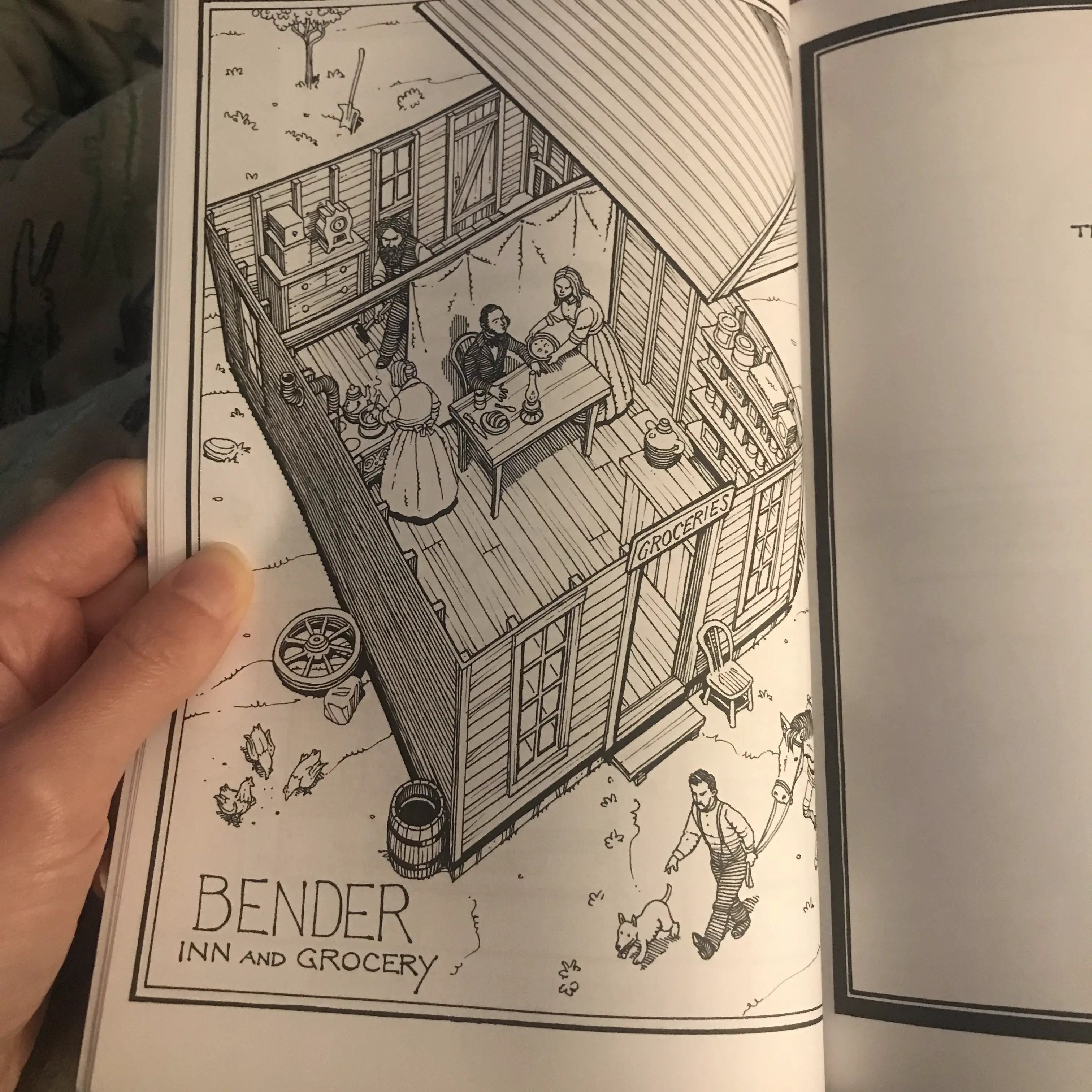
The content is factual and is careful to steer clear of using quotes in the panels when we don’t actually know what anyone said.
What made me dislike the book, though, was how it treated both Indigenous peoples and women. I understand that sometimes in historic nonfiction if a quote is being used or documents from the time period that it will use offensive language. However, this book used offensive language in parts that were narration written by the modern day author. It was published in 2007, and I truly feel someone on this book team should have been more thoughtful. A near-victim of the Benders was a Catholic missionary to the Osage people. Instead of saying it this way, though, the book says he, “dedicated his life to converting the savages.” This is the use of both a dehumanizing term and a glossing over of how missionary work was used as a weapon against Indigenous peoples in the Americas. This is a book about serial killers – I think whoever is reading it should be able to handle at least a footnote illuminating the complexities of this person’s missionary work.
With regards to the treatment of women, this is mostly in regards to how Kate Bender is discussed in the book. She is one of the four Bloody Benders, so I certainly don’t expect her to be discussed kindly, however while most of the book strives to stick closely to the truth as far as we know it, there is one part of the book that breaks down how folks determined the Benders pulled off their killings, based on the layout of the room, the trap door found, and reports of survivors. Most of this sticks to the facts, but then it gets to the part where Kate feeds the person sitting down at the guest table and says, “Does Kate also offer sexual favors as part of the package? No certain answer will ever be known.” What an unnecessarily and misogynistic supposition. Nothing that we know about Kate from survivors and those who knew her suggests she was promiscuous at all. In fact, earlier in the book it mentions she entertained suitors who ran errands for her but the suitors were never successful with her. Later when the book discusses possible endings for the various Benders that the rumor mills supposed, one proposed for Kate is as “a whore in Montana.” I trust that this was a true rumor, but it could have very easily said prostitute or sex worker.
True crime writing has the opportunity to analyze a crime and the society that surrounded it through a current lens. It can highlight both the good and the bad of that society and look at how this crime managed to occur, and, in the case of some crimes, go unstopped for so long. This book doesn’t do that, making it a beautifully illustrated reporting of what happened, lacking any analytical meat.
If you found this review helpful, please consider tipping me on ko-fi, checking out my digital items available in my ko-fi shop, buying one of my publications, or using one of my referral/coupon codes. Thank you for your support!
2 out of 5 stars
Length: 76 pages – short nonfiction
Source: Library
Buy It (Amazon or Bookshop.org)
Book Review: The Sentence by Louise Erdrich
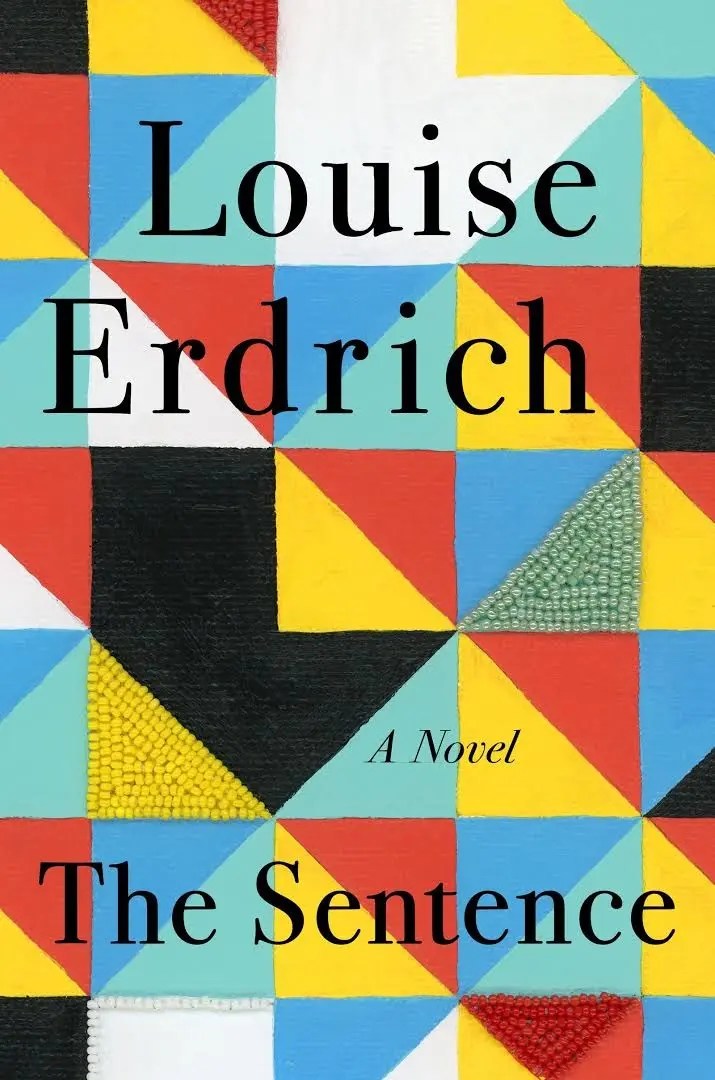
A previously incarcerated Indigenous woman loves her job at an independent bookstore focused on Indigenous literature right up until the store’s most annoying customer dies and begins haunting it.
Summary:
A small independent bookstore in Minneapolis is haunted from November 2019 to November 2020 by the store’s most annoying customer. Flora dies on All Souls’ Day, but she simply won’t leave the store. Tookie, who has landed a job selling books after years of incarceration that she survived by reading with murderous attention, must solve the mystery of this haunting while at the same time trying to understand all that occurs in Minneapolis during a year of grief, astonishment, isolation, and furious reckoning.
Review:
It’s a good thing I didn’t see that this book is magical realism or I wouldn’t have picked it up. You see, I had a serious misunderstanding of what magical realism is and thought I didn’t like it. In fact, I like it very much. I only wish I had first been introduced to it by the excellent explanation from Master Class originally. I’m excited that this book has helped me see past the magical realism label.
The thing that I love structurally about this book is how the title has so many different meanings. There’s the sentence that Tookie serves for her crime. There’s the sentence found within the book that Flora is reading when she dies. And there’s many other sentences throughout the book. I love when one title has many meanings.
The book starts with Tookie thinking back briefly on her incarceration and what landed her there. Part of what made the beginning so readable was how Tookie told this story. It was like speaking with a friend about a piece of their past. Raw and real but quick and to the point. It got me invested in the book right away. Then we jump to Tookie’s present, working in the bookstore, and the haunting, and this is utterly engaging right away as well. Tookie is flawed but so relatable. I think most readers will find her to be this way because she’s such a huge reader herself.
I also found her relatable because she’s in long-term recovery. I like how she sometimes thinks about how she was but it’s not like any single bad day gives her an urge she has to fight. A lot of times in literature and movies only early sobriety is shown, and the fact is, the experience in long-term recovery is different. I was so glad to see that in Tookie, and to see her breaking the multi-generational disease. But I also appreciated the very realistic depiction of her being concerned about talking about the haunting with her husband, Pollux, for fear he would think she had relapsed. I also should mention that both Tookie and her niece are bisexual. Their sexual fluidity is never judged or questioned. It’s just a part of who they are, which I really appreciated.
The book centers around a difficult question that it doesn’t provide answers for. Flora is a “wannabe Indian.” She’s a white woman who claims Indigenous heritage based on one photo she says is of a great-grandparent. The Indigenous community is dubious but doesn’t want to tell her she can’t belong. She spends much of her life working for the betterment of Indigenous people, including even taking in an unhoused teenager and caring for her so much that when she’s grown she refers to her as mother. So everyone has complex feelings about her. There are also some scenes that show white people behaving in offensive ways and smoothly depict how hard it is for Indigenous people to deal with these aggressions on a regular basis. One that really stuck in my mind was the white woman who shows up at the Indigenous bookstore and talks about her grandmother reassembling Indigenous bones she found on her land and winning a blue ribbon for it. She doesn’t understand why this is offensive to the Indigenous people she’s speaking with. To me the examples like this throughout the book demonstrate two types of white people who are hurtful to Indigenous people. The book is never preachy with these scenes. They come across as very realistic depictions of, unfortunately, regular interactions between Indigenous people and white people. If you yourself aren’t sure why these two types of interactions are hurtful, then I think this book would show you.
I wasn’t sure how I would feel reading a fictional book set during the first year of the pandemic. Overall, even though Tookie’s experiences and mine were different from each other (she was much older than me and had an essential worker, public facing job), I still found it realistic and relatable. The book never dwelled too much on any individual aspect of the pandemic but had scenes that were necessary reminders of how things were in the early days, like when Tookie goes to the grocery store to stock up just in case and ends up buying the best she can from what’s left, such as a tube of cookie dough. Similarly, Minneapolis was where George Floyd was killed and followed by the protests that spread throughout the country in 2020, and so this had to be a part of the book. At the start of the book it’s established that Tookie’s husband, Pollux, is who actually arrested her. By the time she was out of prison, he had left the tribal police force. But her household still must deal with the complex situation of having a previously incarcerated person and an ex-cop in the same household during this tumultuous time. There’s also the nice addition of Pollux’s niece, Hetta, living with them and, as a young person, being more involved in the protests. This thoughtful characterization allowed for multiple perspectives on the protests. For example, while there is support, there is also sadness and concern about the small businesses being impacted.
In spite of all that comes in the middle, the last part of the book deals mainly with Tookie’s relationship with Pollux and Tookie dealing with Flora’s ghost. This provides closure even while the reader knows the difficulties didn’t end in November 2020. In many ways I found this to be a story about relationships and reconciliation.
Overall, this is a strong piece of contemporary magical realism. If you’re ready to read a book featuring the pandemic while not being about the pandemic itself, this is a great place to begin.
If you found this review helpful, please consider tipping me on ko-fi, checking out my digital items available in my ko-fi shop, buying one of my publications, or using one of my referral/coupon codes. Thank you for your support!
4 out of 5 stars
Length: 387 pages – average but on the longer side
Source: Library
Buy It (Amazon or Bookshop.org)
Get the Reading Group / Book Club Discussion Guide
A beautifully graphic designed 2 page PDF that contains: 1 icebreaker, 9 discussion questions arranged from least to most challenging, 1 wrap-up question, and 3 read-a-like book suggestions
View a list of all my Discussion Guides.
Book Review: Long Story Short: 100 Classic Books in 3 Panels by Lisa Brown
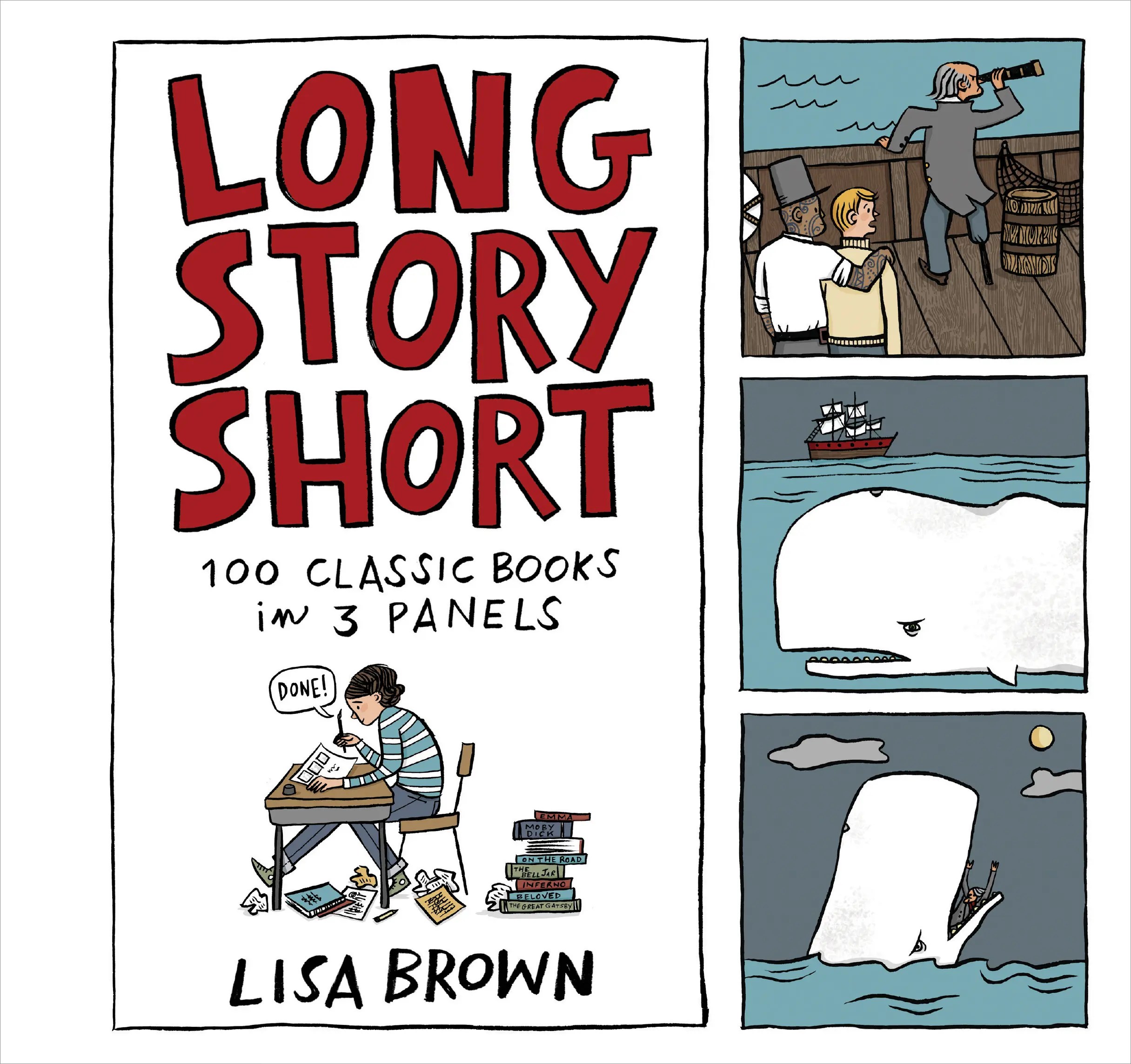
For English literature lovers who want to explain why they loved…or hated…a classic in one comic.
Summary:
100 pithy and skewering three-panel literary summaries, from curriculum classics like Don Quixote, Lord of the Flies, and Jane Eyre to modern favorites like Beloved, The Brief Wondrous Life of Oscar Wao, and Atonement, conveniently organized by subjects including “Love,” “Sex,” “Death,” and “Female Trouble.”
Review:
I became interested in this book because the amazing website American Indians in Children’s Literature described the comic about Little House on the Prairie but when I checked out the link I found the comic gone and a prompt about the book. In fairness, it had been more than 12 years since that article was published so I’m not too surprised Lisa Brown got a book deal in the meantime. It came in quite quickly for me from the library, and I read it in less than 30 minutes.
Rather than being organized by time period, the classics are organized by topic like “Love” and “Death.” This is also an inclusive definition of classics including ancient literature like Beowulf to modern pieces like The Fault in Our Stars. I like her illustration style. It’s colorful and engaging. You can see examples of actual panels from the book on her website. (It doesn’t include the Little House one but it does include one of my other favorites from the book – Edgar Allan Poe.)
You might think this is a way to Sparknotes your way through 100 books. This is not the case. The comics that were the funniest and most meaningful were the ones for books I had read. The ones for pieces I hadn’t fell kind of flat for me. This is actually sort of like a collection of inside jokes from one reader to another, and in order for the inside joke to make sense, you have to have read the book in question. That said, a couple of the comics for books I had read fell flat for me because I felt like they missed the point of the book. For example, I felt like the comic summary of Their Eyes Were Watching God was a very poor summary of an absolutely amazing book. So my experience of the comics was kind of all over the place.
Overall, this is an interesting collection of short comics drawn in an engaging manner. Recommended to big readers who want a couple of inside joke style chuckles. It could also make a good gift to a big reader you know.
If you found this review helpful, please consider tipping me on ko-fi, checking out my digital items available in my ko-fi shop, buying one of my publications, or using one of my referral/coupon codes. Thank you for your support!
3 out of 5 stars
Length: 80 pages – novella
Source: Library
Buy It (Amazon or Bookshop.org)
Book Review: Never Ever Getting Back Together by Sophie Gonzales

If you’ve ever wished that two of the women – any two of the women – on a reality tv dating show would just get with each other instead of pining over the questionable man they’re supposedly there for, this one is for you.
Summary:
It’s been two years since Maya’s ex-boyfriend cheated on her, and she still can’t escape him: his sister married the crown prince of a minor European country and he captured hearts as her charming younger brother. If the world only knew the real Jordy, the manipulative liar who broke Maya’s heart.
Skye Kaplan was always cautious with her heart until Jordy said all the right things and earned her trust. Now his face is all over the media and Skye is still wondering why he stopped calling.
When Maya and Skye are invited to star on the reality dating show Second-Chance Romance, they’re whisked away to a beautiful mansion—along with four more of Jordy’s exes— to compete for his affections while the whole world watches. Skye wonders if she and Jordy can recapture the spark she knows they had, but Maya has other plans: exposing Jordy and getting revenge. As they navigate the competition, Skye and Maya discover that their real happily ever after is nothing they could have scripted.
Review:
I’m revealing my age here, but in high school I definitely watched the very first season of The Bachelor (and a few of the following ones). I wasn’t yet out to myself, but even so found myself wondering why the women were such better catches than the man. Apparently, long after I stopped watching, in 2016 two of the women contestants got together with each other. But this happens far less frequently than one might imagine. In any case, when I saw the plot description for this book, let me tell you, I smashed the request button on NetGalley without paying too much attention beyond – two women on a reality tv dating show get together.
Beyond the reality tv show wrapping, this uses the enemies to lovers romance trope. I’ve historically avoided this trope because I had a hard time conceptualizing how I could root for someone to get together with someone they start off disliking strongly. This book showed me otherwise, though. Although it starts in Maya’s perspective in just a couple of chapters it shifts to Skye’s so it becomes easy to see how these two women have come to dislike each other based on a bad misunderstanding. So there’s not actually something enemy-worthy about either of them. That said, both of them are flawed (as are well all) but with the enemies to lovers they start out only seeing the flaws then start to see what’s great about each other. It makes for a really realistic depiction of a healthy relationship at the end, because it’s not all rose-colored glasses. Also, I really like how they move from enemies to women supporting women to women loving each other.
This book is also hysterically funny. I legitimately laughed out loud multiple times while reading it. Representation is decent. Two of the secondary characters are people of color, and one is gay. Both Skye and Maya are bisexual. Because Jordy hid his two-timing ways easily since his family moved all over the world, his exes are also international. Chalonne is funnily contrived in much the way Genovia from The Princess Diaries was. (Incidentally, this got me to wondering if European writers set books in fake countries in the Americas the way we seem to make up fake European monarchies. It seems like most of them that do exist are more of an alternate history where either fascism takes over or the colonies never won independence sort.)
There were three things I wasn’t so keen on in the book that held me back from five stars. First, I just didn’t feel like these characters were 18. They read as more like just out of college than just out of high school to me. It was easy for me to give that a pass, though, because I just headcanoned them older. Related to my mistaken belief that they were older when I started reading it, in the first scene, Maya is at a bar and not drinking. Oh nice! I thought. Representation of sobriety in a romance. But no. She was just under the drinking age in the US. As soon as she gets to Chalonne, where the drinking age is 18, she starts drinking. A lot. Just not wine because she thinks it’s icky. So that was disappointing to me. I also wish that the scene where she has too many vodka jello shots was more realistic. Binge drinking for people assigned female at birth is 4 drinks in one sitting. She has way more than that. She should have been very sick as opposed to having a mild hangover that passed by lunchish. I refuse to believe this reality tv show would have gone light on the vodka when we all know they like for contestants to get drunk. To be clear, while I personally would like to see more romances depicting sober people, I understand it’s realistic to show people drinking. But if we’re going to show them drinking and drinking too much in one night is a plot point, let’s be realistic about how much is too much for a person in a body assigned female at birth. Last, while I get it that Jordy needs to be the bad guy, he’s such a bad guy that I struggled to understand how all these nice women fell for him at all to begin with. I understand from Maya’s perspective he’s gross for valid non-physical reasons (the cheating, the lying, etc…) but we do have the chance to see Skye’s perspective as well, and it’s not clear to me from hers what she sees in him either. Maybe even if just in one of the first scenes where Jordy takes his shirt off Maya found herself attracted to him in spite of knowing his douchey ways, that would have helped me to understand. But she even seems to be turned off by his looks. It left me scratching my head a bit.
Overall, this book was a breath of fresh air, featuring two women bisexual leads who fall for each other surrounded by a very humorous reality tv setting. While some of that setting was a bit difficult to believe, the enemies to lovers plot was so enjoyable that it was easy enough to just focus on them.
If you found this review helpful, please consider tipping me on ko-fi, checking out my digital items available in my ko-fi shop, buying one of my publications, or using one of my referral/coupon codes. Thank you for your support!
4 out of 5 stars
Length: 384 pages – average but on the longer side
Source: NetGalley
Buy It (Amazon or Bookshop.org)
Book Review: Daisy Darker by Alice Feeney
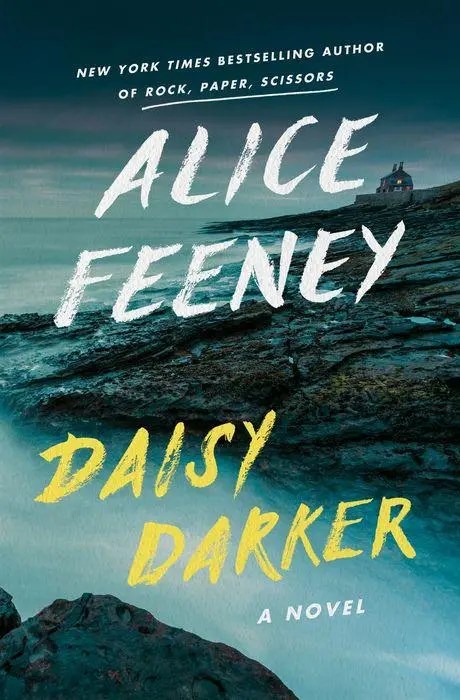
When Daisy and her family go to her grandmother’s island home for her 80th birthday, they’re surprised when the family members start dropping dead, one an hour. Who has it in for the Darker family?
Summary:
After years of avoiding each other, Daisy Darker’s entire family is assembling for Nana’s 80th birthday party in Nana’s crumbling gothic house on a tiny tidal island. Finally back together one last time, when the tide comes in, they will be cut off from the rest of the world for eight hours.
The family arrives, each of them harboring secrets. Then at the stroke of midnight, as a storm rages, Nana is found dead. And an hour later, the next family member follows…
Trapped on an island where someone is killing them one by one, the Darkers must reckon with their present mystery as well as their past secrets, before the tide comes in and all is revealed.
Review:
*This review is going to contain many spoilers for the twists in Daisy Darker. If you do not wish to be spoiled, please click away!*
This book is a send-up to the Agatha Christie classic And Then There Were None without the ties to the hideously racist children’s counting rhyme and minstrel song (note that link reveals the original racist language used in Agatha Christie’s). The similarities are clear: people are invited to an island where they then start dying off one by one. But if you are familiar with that book then one of the big plot twists in this one will not be a plot twist to you – the majority of the people invited to this island are responsible either for murder or for covering it up. Rather than using a pre-existing nursery rhyme, this book uses a brand-new poem written in the style of a nursery rhyme to predict the deaths of the characters. Another similarity includes the use of a red herring to deflect suspicion from the real person (or in this case, people) orchestrating the deaths. A big difference here, though, is that this a family drama. It’s not seemingly disconnected strangers. They are a family with…problems.
This is what I thought the twist was going to be: it was Conor’s dad who had faked his own death previously to get away from the Darker family. So I really wasn’t expecting the simultaneous reveal of Trixie holding the smoking gun while telling Aunt Daisy that she’s a ghost. I felt like I’d been Sixth Sensed all over again. Then the backstory of how Daisy was killed is revealed, and I realized…this book is And Then There Were None crossed with The Sixth Sense crossed with I Know What You Did Last Summer.
I’ve been wrestling with why I felt, as I said in my immediate quick GoodReads review, bamboozled by this book. I went back and checked a few key scenes to make sure it was possible for Daisy to have been a ghostly presence. For example: the reading of the will. But she inherited something! I thought. No, Nana just mentioned donating to some of Daisy’s favorite charities. So, in all the scenes I thought of, it was possible for Daisy to be a ghost. This was well done narratively. So why did I feel so bamboozled? I think for me it came down to this: this is told in the first-person from Daisy’s perspective, and it all hangs on her not remembering she’s a ghost. (This is a lot like The Sixth Sense). We’re supposed to believe she doesn’t remember she’s a ghost because the level of trauma from how she died is too hard to bare so she blocks it out, and she’s always been isolated so it’s not strange to her that people don’t talk to her or notice her. Ok, fine, but where does she live? She thinks she’s an adult who pops over to take care of Trixie routinely when she’s not volunteering in an elder care facility. Where is she when she’s not with Trixie? Does she just drop off the face of the planet? Wouldn’t she realize she never goes home? That she has nowhere to call home whatsoever?
The other thing is that the character of Conor I feel acts incredibly out of character for who he’s been presented to be the night of the I Know What You Did Last Summer incident. He has been shown to be a kind boy who is madly in love with Rose. But he sleeps with Lily then convinces everyone to throw Daisy into the ocean to save his future. Whereas Rose going along with what everyone else suggested without protesting too much and Lily being fine with it made sense to me because they both bullied their little sister, Conor being the instigator did not. For me, I needed more evidence of the fact he would be capable of such a thing from the very many home movies the crew watched over the course of the night. He was in them, but there was no sign of this selfish, mean, self-preservation streak whatsoever. In fact, the only time he sort of lied was when he didn’t want to admit to Nancy that he got beat up at school because he got into a fistfight trying to defend Lily’s honor. (This also further demonstrates how strange it is that he slept with Lily that same night.)
My other issue is that I get the vibe we’re supposed to like Nana, but I don’t. In fact, I think she has far more culpability than the narrative wants us to feel. She’s the matriarch of this atrocious family. She absolutely favored one of the Darker girls over the others. I think we’re supposed to think that’s fair and justified since Nancy favored Rose and Lily over Daisy but that’s not how it works. Two wrongs don’t make a right. Favoring one child over others creates a hateful environment for them all. The bullying of Daisy from Rose and Lily, and Daisy’s secret attacks back at them could have been worked on if any one adult stepped in and tried to do so. Nana knew what was going on and didn’t do anything about it. She just allowed Daisy to get her revenge. I do get it that part of the point of the book is this is a terrible family but I also think we’re supposed to see Nana in a positive light. But the terribleness must have started somewhere. Similarly, even though I felt sympathy for Daisy in flashbacks, in the moment (when I thought she was a grown-up and not a ghost), she seemed overwrought, dramatic, and annoyed me. I’m also confused about what she thinks she did wrong to Conor that warrants her needing to apologize.
Overall, I found this book to be a good thriller. I think it could have moved into great thriller territory with characters acting more within character (or better explained out of character behavior) and a ghost who knows she’s a ghost. In all honesty, I could have really gotten behind a story where Daisy shows up on Halloween night when the space between worlds is thin and watches as her family starts to drop dead while discovering her niece can speak to her. I don’t think the extra twist of finding out she’s a ghost was actually necessary.
If you found this review helpful, please consider tipping me on ko-fi, checking out my digital items available in my ko-fi shop, buying one of my publications, or using one of my referral/coupon codes. Thank you for your support!
3 out of 5 stars
Length: 352 pages – average but on the longer side
Source: Library
Buy It (Amazon or Bookshop.org)
Book Review: The Path to Peace: A Buddhist Guide to Cultivating Loving-Kindness by Ayya Khema
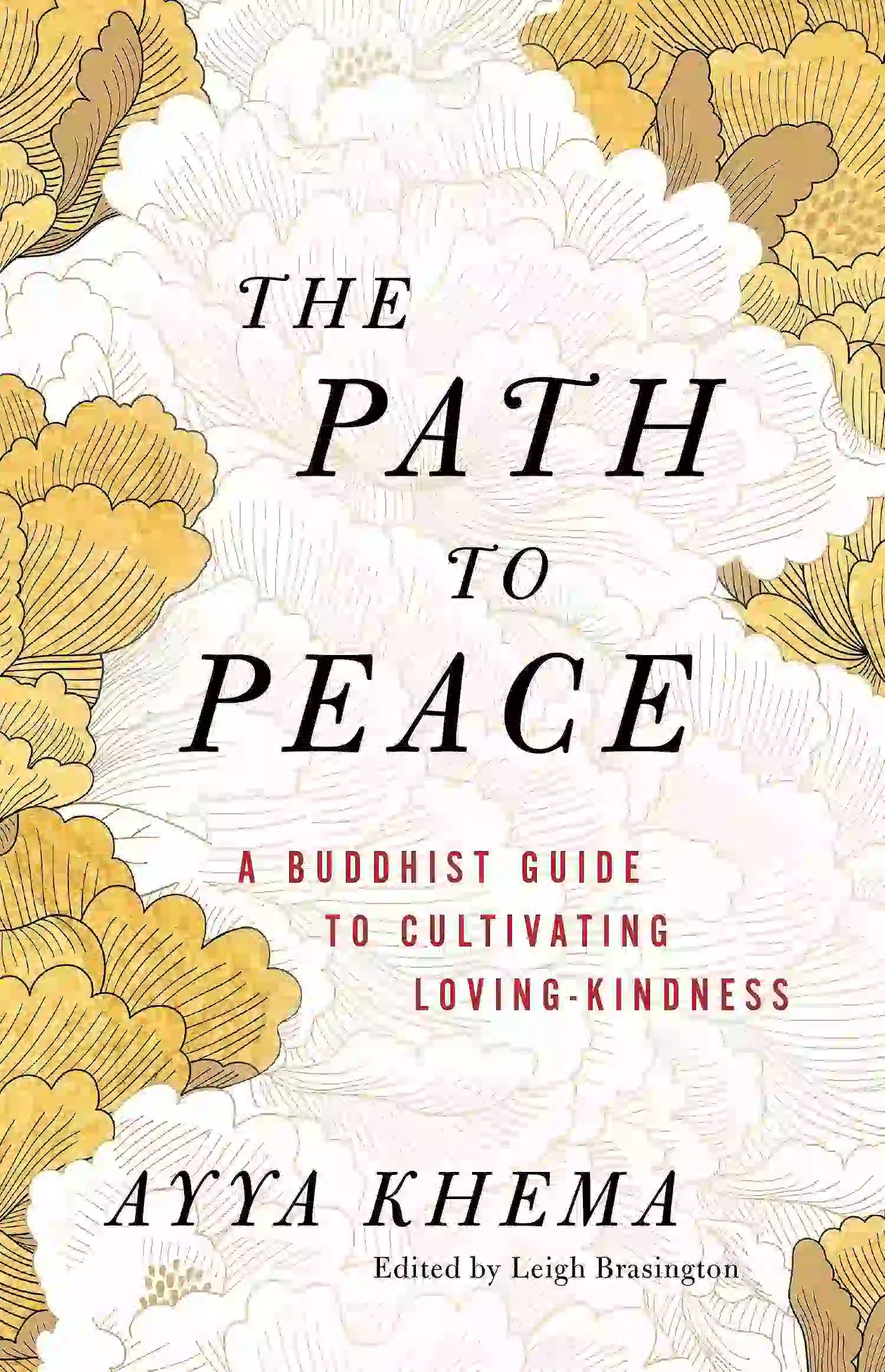
Learn about the Buddhist 15 Wholesome qualities and a collection of visualization-based loving-kindness meditations lovingly transcribed from talks given by Ayya Khema.
Summary:
Having escaped Nazi Germany in 1938, Ayya Khema has singularly profound perspective on creating peace, unconditional love, and compassion. She gently teaches that inner peace is not necessarily natural or innate. Instead, peace should be considered a skill that needs intentional practice—every day. Peace is the sum of many parts, namely the fifteen wholesome qualities the Buddha himself noted in the Metta Sutta, including usefulness, mildness, humility, contentment, receptivity, and others. In the first part of the book, Ayya Khema expertly guides us through each individual condition, using her trademark humor and personal narrative, to help each reader shape their own path to self-transformation. The second part of the book includes an eye-opening discussion of metta (loving-kindness) as both a morality and concentration practice, as well as ten meditation practices using visualizations.
Review:
Ayya Khema was an impactful Buddhist nun, who established a forest monastery in Australia, a training center for Sri Lankan nuns in Colombo, and a monastery and Buddhist center in Germany. Ayya Khema’s early life, escaping Nazi Germany with her Jewish family, could easily have led to bitterness. Instead she worked out of love to help others. While she wrote many books during her lifetime, this book was put together posthumously as transcripts from some of her talks.
The first part of the book is a transcript from a talk she gave on the Buddhist 15 Wholesome Qualities. I found this section to be ideal to read right before bed. Each Wholesome Quality was like reading a short devotion, and each section gave me something to think about as I fell asleep. Here is an example of the sort of discourse found in each section, from the section on the sixth Wholesome Quality – Mild:
Not looking after oneself, both mind and body is a lack of compassion, a lack of compassion for this person who is having all sorts of difficulties. And if we don’t look after ourselves, and aren’t mild towards ourselves, then it will be difficult to do this with others.
loc 324
This section also introduced to me to a new sutta I’d not heard of before – the Maha-Mangala sutta, which Ven. Khema states is popular in Asian Buddhist communities. Something I liked about how this speech is structured is while some content is there in its fullness, others are mentioned in passing, and if you’re interested you need to go look it up for yourself and study it. These aren’t talks for beginners – for instance, dukkha is never explained (it is the Buddhist term for suffering), but they helped me dive deeper into my studies in new ways.
The visualization-based loving-kindness meditations in the second part were interesting. I have seen some visualization-based loving-kindness meditations before, but I particularly liked “The Golden Light” and “Forgiveness” versions given here. This section is useful to both new and established meditators, as visualization is one of the more engaging forms of meditation for beginners, but also the different structure can introduce some variety to established meditators.
There were a few statements Ven. Khema made that I disagreed with, but that’s to be expected from any discourse. We don’t all agree on everything, that’s why it’s discourse. Nothing she said was something I found majorly disagreeable, just minor things like why people are shy, for example.
Overall, this was an interesting book of discourses from a well-respected Buddhist nun. The first part is perfect for bedtime reading, and the second part may be used either as an introduction to loving-kindness meditation or a way to introduce some variety to an already established practice.
If you found this review helpful, please consider tipping me on ko-fi, checking out my digital items available in my ko-fi shop, buying one of my publications, or using one of my referral/coupon codes. Thank you for your support!
4 out of 5 stars
Length: 173 pages – average but on the shorter side
Source: NetGalley
Buy It (Amazon or Bookshop.org)
Book Review: Pray for a Brave Heart by Helen MacInnes

A 1950s spy novel written by a woman that intermixes early Iron Curtain fears and post-WWII concerns about missing Nazi loot.
Summary:
It was 1953, and nothing could shake Bill Denning’s resolve to leave the army and return to the States. Nothing, except one of the largest diamond hauls ever – which, in the wrong hands, on the wrong side of the Iron Curtain, was a potentially lethal force. In a small village in the Swiss mountains, Denning discovered that there was not only a jewelry robbery at stake. In the ruthless world of espionage and international conspiracy his adversaries were the most unlikely people – and the most dangerous.
Review:
I picked this up antiquing with the cover you see here, and a blurb that revealed that a woman was being watched by a chinless man, and nothing else. I was expecting a romantic suspense based on those two but instead this is a spy novel. I had no idea Helen MacInnes is known as the “Queen of Spy Writers.”
The book uses third person omniscient narration style, which I hadn’t read in a while. It was interesting to see how the intrigue managed to remain when perspectives shifted to essentially everyone in the scene. How could this be so, I wondered in retrospect? Well, in spite of being omniscient, we never take the perspective of the bad guys. So we only ever take the perspective of the good guys, none of whom have everything figured out. While we go inside all of the good guys’ heads, the perspectives we take the most often are Bill Denning, his friend’s wife Paula, and her friend from school days Francesca.
The narrative device works to subtly other the Communist characters. If a character is a Communist, we never enter their head. We never see their perspective. Francesca is the sole character who shows some empathy toward those with viewpoints different from her own, and the narrative is certain to punish her for that and have her see the error of her ways. It’s an interesting example both of the Red Scare era and how writing styles can be used to reenforce viewpoints.
I felt this book was low on action. A lot of the scenes are characters talking in a room together trying to puzzle out what’s going on. The last few chapters really picked up on the action, and I wished the rest of the book was action-packed like that. There’s even a couple of scenes where characters stop to read poetry or discuss Latin. On the one hand, the literary aspect was nice. I found myself checking out a book of translated German poetry from the library. But, on the other hand, I wouldn’t call that an action packed scene.
The Swiss and Berlin settings are beautifully rendered. You really feel as if you are there. I also liked the insertion of German phrases without explanation for what they mean. In books where characters are bilingual or traveling this should really be done more often. It gives more of a sense of the travel. Plus the reader can look up the phrases if they really want to.
Overall, this is a decent spy novel, if a bit slow-paced. It’s a good view into the Red Scare era. Others suggest that if you are interested in Helen MacInnes’s writing to start with one of her WWII spy novels such as Above Suspicion or Assignment in Brittany.
If you found this review helpful, please consider tipping me on ko-fi, checking out my digital items available in my ko-fi shop, buying one of my publications, or using one of my referral/coupon codes. Thank you for your support!
3 out of 5 stars
Length: 284 pages – average but on the shorter side
Source: purchased
Buy It (Amazon or Bookshop.org)
Book Review: The Thorn Puller by Hiromi Itō

One of Japan’s most prominent women writers writes of a contemporary woman’s life split between caring for her much older British husband in California and her aging parents in Japan and her three daughters in both places.
Summary:
The first novel to appear in English by award-winning author Hiromi Ito explores the absurdities, complexities, and challenges experienced by a woman caring for her two families: her husband and daughters in California and her aging parents in Japan. As the narrator shuttles back and forth between these two starkly different cultures, she creates a powerful and entertaining narrative about what it means to live and die in a globalized society.
Ito has been described as a “shaman of poetry” because of her skill in allowing the voices of others to show through her. Here she enriches her semi-autobiographical novel by channeling myriad voices drawn from Japanese folklore, poetry, literature, and pop culture. The result is a generic chimera—part poetry, part prose, part epic—a unique, transnational, polyvocal mode of storytelling. One throughline is a series of memories associated with the Buddhist bodhisattva Jizo, who helps to remove the “thorns” of human suffering.
Review:
I picked this up from my library’s new books shelf, and for some reason I misunderstood and thought it was creative nonfiction. Since the main character shares the author’s first name, I stayed under this belief for quite some time, right up until the main character does something that shocked me. Then I investigated and realized it’s fiction heavily inspired by the author’s own life. I mention this to say that this reads like very modern creative nonfiction. It’s a mix of poetry, vignettes, and factual asides and doesn’t use quotation marks ever. Each chapter ends with a note of what works inspired that particular chapter. I was honestly impressed at this fictional creative nonfiction.
While each chapter vaguely goes in order of a year or two or Hiromi’s life, each also explores other parts of her life. And some weeks may be dropped in-between. The point isn’t a linear story but rather an exploration of how Hiromi deals with being in the sandwich generation with the added factor of her husband being at least 20 years older than her and so, he is aging more rapidly than she and requires more caregiving than he might otherwise. Hiromi thus deals with universal themes of caring for others while struggling to care for yourself. Of trying to give space to others to make their own decisions about their lives while worrying about them and wanting them to stick around.
Another major theme is Hiromi’s global life. She’s Japanese, living part-time in California, raising three daughters all of whom are American, one of whom is biracial (it’s unclear from the story if the older two daughters are biracial or not), living with a husband who is a British immigrant to the US who is also an older generation than her. There are so many cultural and generational differences for Hiromi to deal with. She struggles with Japanese perceptions of her husband, her husband’s perceptions of Japan, her own daughter’s difficulties to speak Japanese fluently, and more. What I found the most interesting was her husband’s misguided belief that because she was Japanese she wasn’t religious at all, only to become very angry at her when he finds out she took their daughter to visit a shrine. He thinks of this as religious. She thinks of it as simply a way of being. This thus explores the very interesting question of how much, if any, of spirituality is cultural?
Jizo and Jizo’s shrine are interwoven throughout the book. Hiromi feels a particular affinity for Jizo and so we see her memories of the shrine and also see her visiting the shrine in present time. Jizo is a Bodhisattva who is believed to help relieve suffering. Bodhisattva is a term used in two ways. It can mean anyone who is working in this life toward enlightenment. But it also can mean souls that have attained enlightenment but delays going to nirvana to help ease the suffering of others. This book takes up the latter definition, because the main character most strongly identifies with Pure Land Buddhism, which is a branch of Mahayana Buddhism that uses this definition of Bodhisattva. Although I have familiarity with Buddhism (as you can see in one of my short stories), I don’t think you have to in order to appreciate how Jizo is interwoven in the story. Hiromi is dealing with very difficult aspects of life, and when she’s struggling, she leans on a comfort from childhood – Jizo and his shrine. This is a very relatable emotional choice. It’s so relatable, in fact, that one cannot help but empathize with Hiromi when her husband struggles to understand why she feels an attachment to Jizo’s shrine when she’s dealing with her father’s aging and her mother’s slow death from a stroke. (Honestly, her husband is infuriating, even while you can see that he does indeed love Hiromi.)
As you can probably tell, this book does deal with difficult topics. Be aware that Hiromi’s mother’s stroke and its impact on her body is quite central to the story. Her father’s aging is depicted honestly, without any gentling of the more difficult aspects. Hiromi mentions in passing having had multiple miscarriages and abortions in the past. A character has a cancer scare that leads to a rather graphic scene of bleeding. Another character has a heart issue. Eating disorders are mentioned although not depicted graphically. Racism and xenophobia are both depicted on screen. Finally, and what was to me the most shocking, Hiromi engages in a violent act against her husband at one point. I thought all of these were dealt with in an even-handed and fair way except for how Hiromi treats her husband. That I felt was glossed over a bit too easily, especially for a character who believes suffering can come from a human killing spiders. Her lack of guilty feelings felt out of character to me.
Overall, this is an engaging read that merges creative nonfiction and fiction in fascinating ways and provides perspective on Japanese, American, and British cultures. For those less familiar with Japan, the translator offers an introduction to help understand what you might need to in order to enjoy the book fully. I also appreciate the translator’s note at the end that describes the translation process and how the author had some say in it.
If you found this review helpful, please consider tipping me on ko-fi, checking out my digital items available in my ko-fi shop, buying one of my publications, or using one of my referral/coupon codes. Thank you for your support!
4 out of 5 stars
Length: 300 pages – average but on the shorter side
Source: Library
Buy It (Amazon or Bookshop.org)
Book Review: Deep Work: Rules for Focused Success in a Distracted World by Cal Newport
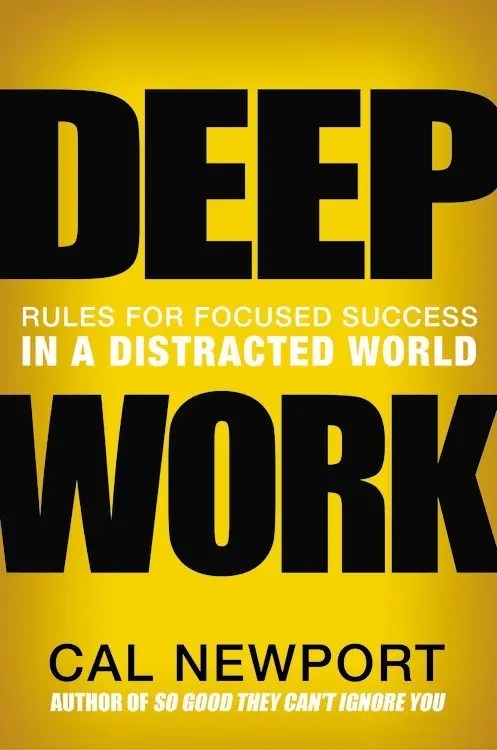
A computer science professor discusses why working distraction-free can set you apart and how he applied these techniques in his own career.
Summary:
Deep work is the ability to focus without distraction on a cognitively demanding task. Dividing this book into two parts, the author first makes the case that in almost any profession, cultivating a deep work ethic will produce massive benefits. He then presents a rigorous training regimen, presented as a series of four “rules,” for transforming your mind and habits to support this skill.
A mix of cultural criticism and actionable advice, Deep Work takes the reader on a journey through memorable stories-from Carl Jung building a stone tower in the woods to focus his mind, to a social media pioneer buying a round-trip business class ticket to Tokyo to write a book free from distraction in the air-and no-nonsense advice, such as the claim that most serious professionals should quit social media and that you should practice being bored.
Review:
A drive for traditional academic and corporate success tinges the majority of this book. But if you are able to see past it, there are some good facts and tips as well.
It’s easy to feel plagued by distraction in this world, no matter if your goals are traditional or nontraditional. Part of that is by design. Most of us at this point carry a smartphone, and they’re designed to be addictive. Even if your goal is to relax watching a movie with a loved one, you might find yourself reaching for your smartphone repeatedly throughout the movie instead of focusing on enjoying simply the movie and the moment with your loved one. Times of deep focus is what this book terms “deep work.”
A strength of this book is the discussion of the benefits of spending some time in a deep work (focus) state. It lets you master difficult things at a faster rate. It leads to greater satisfaction because when we’re unfocused we skew more toward pessimism rather than optimism. And, something I personally think should be talked about more, our worldview is based on what we pay attention to. So, we should be more mindful about what we are paying attention to. These are all good points and motivators to take the power back from addictive devices over our time. But then the author goes into a work-obsessed left field.
There is a palpable sense throughout this book that any negativity a worker may feel about their workplace is all down to the worker not focusing in the correct way. Even a simple mismatch between the worker and the work’s goals is somehow something the worker can just focus past in the author’s mind.
You don’t need a rarified job; you need instead a rarified approach to your work.
loc 1012
People deserve to do work that makes them feel good. And we are all blessed with different talents, skills, and gifts. A job might not suit one person but suit another. A job doesn’t need to be rarified to be satisfying. And a worker doesn’t need to be rarified to excel at their job. I might also question, why the pressure to excel? Why can’t we simply do our jobs well and complete the day satisfied?
Toward the end of the book, the author describes a year in which he really pushed himself as he was about to come up for tenure. He states that during this year he was “a deep work machine” (loc 2908). He literally thought about work in every spare moment – when going on walks, when raking leaves. He had at least one young child at home, and he still spent all this time engaged in deep thinking…about work. Why? Because he didn’t get an opportunity his colleagues did. He does at one point express that maybe he went a little too far, but he also discusses how much work success it brought him and seems generally pleased with the outcome. I find it interesting that he talks so much about bringing focus to his job but not about spending focused time with his child or wife, for example. In spite of the fact that the same techniques for focus he uses for work could be applied to many other aspects of our lives. But he only seems to see their use in climbing the academic crab bucket.
If we choose to see past the toxic application of focus in only career, what are the tips given in this book for developing focus? These are what stuck out to me. Schedule times of deep focus. When in your scheduled deep focus times, focus on things that are, to you, wildly important. Keep a tally of the deep focus time you have accomplished – not the tasks, but the time. Review this weekly to help yourself understand what’s interfering with your deep focus time and adapt. On the flip-side of scheduled focus times, schedule times for distraction. So, for example, pick a 30 minute window where you will browse Instagram, and that’s the only time you do it that day. To hone your skills, select a task you want to accomplish and set a timer for slightly less time to finish it than you think you will need. See if you can beat that time. This will help you focus more deeply and become faster over time.
Overall this book has some interesting explanations of why focus matters and tips on how to bring more focus into your life. But you will need to look past the lack of work/life balance present in many of the examples given, instead extracting solely what is best for your own focus goals in your own, well-balanced life.
If you found this review helpful, please consider tipping me on ko-fi, checking out my digital items available in my ko-fi shop, buying one of my publications, or using one of my referral/coupon codes. Thank you for your support!
3 out of 5 stars
Length: 296 pages – average but on the shorter side
Source: Library
Buy It (Amazon or Bookshop.org)
Book Review: She and Her Cat by Makoto Shinkai and Naruki Nagakawa
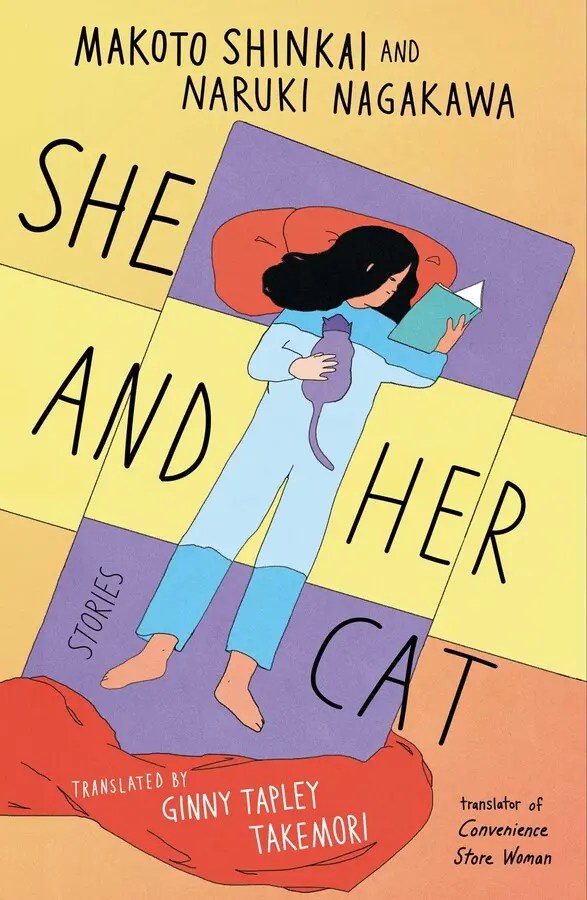
Interconnected short stories explore the relationships between women and their cats in a Japanese city.
Summary:
Lying alone on the edge of the sidewalk in an abandoned cardboard box, a nameless narrator contemplates the indifferent world around him. With his mother long gone, his only company is the sound of the nearby train. Just as he fears that the end is near, a young woman peers down at him, this fateful encounter changing their lives forever.
So begins the first story in She and Her Cat, a collection of four interrelated, stream-of-conscious short stories in which four women and their feline companions explore the frailty of life, the pain of isolation, and the limits of communication.
With clever narration alternating between the cats and their owners, She and Her Cat offers a unique and sly commentary on human foibles and our desire for connection.
Review:
When I saw this collection of interconnected short stories about women and their cats, I couldn’t hit the request button fast enough. One of my favorite short story collections is James Herriott’s Cat Stories. I’m always on the lookout for something similar. This delivered in more ways than I was anticipating. I didn’t realize the stories would be interconnected, and that really adds something to the collection as a whole. Makoto Shinkai is a well-known animator and filmmaker. His most recent anime is Suzume no Tojimari but this book was actually originally an anime short in 1999 as well.
The stories alternate between a human and a cat perspective. Whether it’s a human or a cat is indicated by the section break. If it’s a human, it’s a usual decorative scene break. If it’s a cat, it’s the silhouette of a cat. The first story opens from the perspective of a cat who is the runt of a litter in a cardboard box listening to the sound of a train. The cat is clearly about to die but then a woman’s face appears and takes him in. He becomes an indoor/outdoor cat. I won’t spoil the trajectory of the whole story, but where the interconnectedness comes in is that this cat (Chobi) meets a young cat while outside who shows him a woman who feeds her fish when she shows up in her yard. The next story is then this cat’s perspective. And so all of the stories have these connections between the cats, but also slowly the humans come to be connected, largely thanks to their cats.
The stories offer subtle but insightful commentary both into universal aspects of human nature and into more specific aspects of Japanese culture that impacts these women’s lives. I’m not an expert by any means on Japan, but I do know, for example, that there’s a problem with toxic work cultures where people stay at the office overnight and don’t come home. This is one of the issues addressed in the stories. The animals also offer commentary on human nature and bigger life questions (like what happens after we die). it reminded me a little of animal fables in that it was the animals offering these lessons to each other, wanting to help humans, and yet the humans couldn’t understand them.
Where the stories really shine, though, is in showing the relationship between, as the book says, she and her cat. The unconditional love of the cats for their owners is heart-wrenching and left me near tears. This line in particular shone to me. It’s from the perspective of a cat with an owner who is struggling with loneliness.
I couldn’t do anything about her problems. I just lived my days at her side.
loc 443
There were two things that held me back from five stars. First, sometimes I did get confused about who was speaking. This is because in some stories it’s not just the owner who is a human perspective. So it’s not a straightforward swap back and forth between the cat and her owner – sometimes there were other humans in there too. Second, one male cat calls his owner his girlfriend and that gave me the heebie-jeebies. Perhaps that was a translation issue, though.
Overall, this is a delightful collection of short stories that is sure to please any cat lover. With full page illustrations throughout, it would make a great gift.
If you found this review helpful, please consider tipping me on ko-fi, checking out my digital items available in my ko-fi shop, buying one of my publications, or using one of my referral/coupon codes. Thank you for your support!
4 out of 5 stars
Length: 144 pages – novella
Source: NetGalley
Buy It (Amazon or Bookshop.org)
 Support my work with a tip or browse my shop for curated book club guides, how to guides, cross-stitch patterns, and more!


This work by Amanda Nevius is licensed under a Creative Commons Attribution-Noncommercial-No Derivative Works 3.0 United States License.
 Opinions of a Wolf